
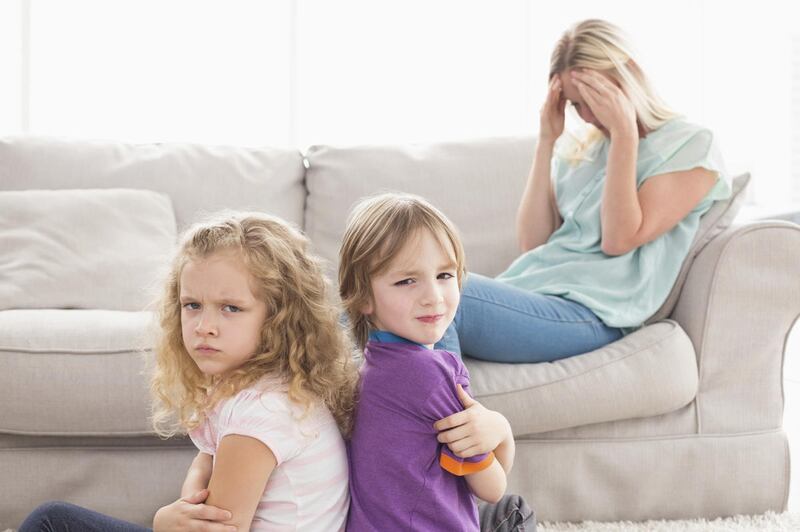
The thing I love about summertime is that we get to spend so much time together as a family. The problem is, we spend so much time together as a family. In the final stretches of the day, on those lazy, hot afternoons, I feel like I should be wearing a black-and-white-striped uniform and carrying a whistle. Yet, the more I play referee, the crankier everyone seems to get — especially me. But what else can I do? This referee role is such a knee-jerk reaction. It’s hard to think beyond it, especially in the heat of the moment, but I do have other options. Although they may seem to take a little more time and effort, I have found them more effective than calling foul.
1. Cruise director
After reading "Nurture Shock," an excellent book I highly recommend, I decided to try being a cruise director.
In "Nurture Shock," the authors describe Dr. Laurie Kramer’s work. She is a therapist and researcher who teaches siblings how to get along. She doesn’t focus on conflict resolution as much as playing together effectively. Inevitably, she says, adults will come to her and say, “My sister and I fought like cats and dogs, but now we get along great.” She explains this is very common (doesn’t this give us hope?) and not unreasonable to expect because, really, it’s the net sum of your relationships that matter. So, you fought with your sister. You also shared a room with her and had slumber parties and late-night snacks. In the end, these positive memories of playing and interacting, and working together outnumbered the bad.
As a result, I stop constantly trying to prevent fights from erupting. Instead, I focus on creating some positive memories to balance out those fights. As the cruise director, I enthusiastically shuttle people from activity to activity. Cooperative games, meaningful work, family excursions and consistent family traditions are the things kids remember. The long afternoons of fighting will fade. Then, as an added bonus, when they whine and complain about family activities, they are ganging up against me instead of each other. I can take it.
2. Translator
"Siblings Without Rivalry" is another book that has helped me think differently about my role when my kids fight. It was originally published in the '80s, but it has some timeless parenting advice. One piece of advice it gives is to get yourself out of the referee role by acting as a translator instead.
Nobody is good at listening when he or she is in a fight, not even adults. When your temper flares, you are defensive and impatient, and basically terrible at communicating. How can we expect kids to be different? Instead of just saying (OK, yelling), “Stop fighting!” we need to help them talk so they can come to a resolution.
It looks like this:
“Mae, Lalo is saying he wants you to stop taking away his dinosaur. What do you say to that?”
“Lalo, Mae is saying she really wants a turn with the dinosaur. What can you tell her?”
It feels a little contrived at first, but I was amazed at how quickly they calmed down. When they felt heard and understood, even if it was just by me, it was a lot easier to discuss the problem. And sometimes, just sometimes, they come to a resolution without me making any suggestions.
3. Casting agent
Understanding that children need help breaking out of roles is another lesson I learned from "Siblings Without Rivalry." For example, my oldest daughter is always the brain behind the play. She directs and her brother mostly follows. But when he gets tired of being the “audience” instead of the “rock star,” the fighting begins.
So I’m a casting agent. This afternoon, we are going to let Lalo be the brain. We have planned out what we are going to play and the roles everyone will have. Mae writes it all down for us so we can stick to the plan. (She likes making sure we stick to the plan). We set the timer for 20 minutes and follow his lead.
4. Cheerleader
Lalo, my 5-year-old, does something incredible. Any time he gets some candy, like at the bank or the doctor’s office, he will save the last bite to share with his older sister. His little hands get sticky and chocolatey as he holds on to his gooey, half-eaten gift.
When I catch my kids getting along or doing something nice like that, I am extremely complementary. I shower them with praise and thanks. When Lalo hands Mae his last bite, I know she doesn’t appreciate it half as much as I do, so I cheer and cheer.
Why is that? Why does it make me so happy when my kids get along? Why does it drive me crazy when my kids fight? I don’t know, but I do know reacting emotionally just escalates the problem. I try to react creatively, deliberately and differently than I have in the past. I’m the adult, so I can.
As with so many parts of mothering, the easiest thing to do is not always best. We can do what comes naturally and put on our referee uniforms and bark out orders like, “Knock it off!” or we can think a little deeper and try something new. A peaceful house, especially in the summer, is worth it.
This article is courtesy of Power of Moms, an online gathering place for deliberate mothers.