


Soccer superstar David Beckham is back in the news, but it’s not for a delightful free kick or a reckless red card. Rather, Beckham’s been under fire for his parenting strategies — specifically for letting his daughter use a pacifier even though she’s 4 years old, CNN reported.
Beckham first received criticism from the Daily Mail, which called Beckham’s parenting style into question after a photo of his daughter Harper sucking on a pacifier surfaced online.
"Experts warn David and Victoria Beckham's little girl may end up with 'speech or dental issues' if she continues to use one," the Daily Mail story read.
But Beckham hit back at the article in an Instagram post, in which he explained that his daughter used the pacifier because it made her feel safe and comfortable.
"Why do people feel they have the right to criticize a parent about their own children without having any facts??" he asked in the post.
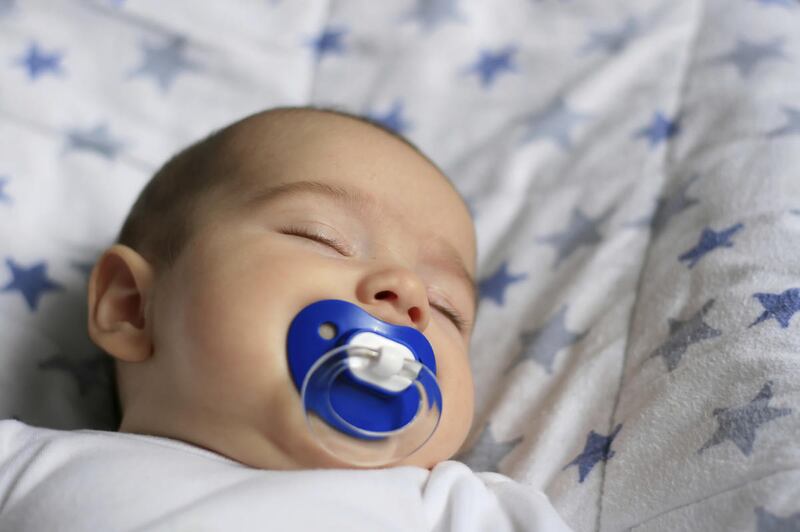
Still, this argument opens a discussion about how long children should use their pacifiers, which are often used as a substitute for feeding and nurturing, according to BabyCenter. Some parents also use pacifiers to satisfy children who need to be fed, burped, cuddled or rocked, BabyCenter wrote. And, as in the case of the Beckhams, children suck on pacifiers when they need to feel comforted.
But using pacifiers, and similar habits like thumb-sucking, can reshape a child’s jawline if done after age 3, according to BabyCenter. A child’s adult jawline starts to form at age 6, BabyCenter reported.
“While your child is unlikely to damage her teeth, jaw, or bite if she stops using a pacifier by the time she's 2 or 3 years old, using a pacifier beyond age 3 may cause problems,” BabyCenter wrote. “The risk of improper dental development increases the longer your child uses a pacifier, too.”
This is why the American Academy of Pediatrics suggests children don’t suck their thumb or a pacifier beyond ages 2 to 4.
“If your child stops sucking on a pacifier or his thumb or fingers before his permanent front teeth come in, there's a good chance his bite will correct itself,” according to the American Academy of Pediatrics. “However, if the bite does not correct itself and the upper adult teeth are sticking out, orthodontic treatment may be needed to realign the teeth and help prevent broken front teeth.”
Of course, it can be tough to wean your child off of pacifiers and thumb-sucking when it’s something they’ve done since birth. The AAP suggests parents praise and reward their children when they don’t use the pacifier. Simple gestures like “(s)tar charts, daily rewards, and gentle reminders” can also help, according to the AAP.
Parents may also want to keep their children active so they don’t suck their thumbs out of boredom, the AAP reported.
It’s also important for parents to talk with their children about the dangers of pacifiers so they understand the potential risks they’re putting in front of them.
“The good news is that most children stop their sucking habits before they get very far in school,” the APP said. “This is because of peer pressure. While your child might still use sucking as a way of going to sleep or calming down when upset, this is usually done in private and is not harmful. Putting too much pressure on your child to stop may cause more harm than good. Be assured your child will eventually stop the habit on her own.”
Related links:
Skin-to-skin contact helps save the lives of premature babies
Why you should embrace baby talk
How to make your baby fall asleep in less than 60 seconds
Herb Scribner is a writer for Deseret News National. Send him an email at hscribner@deseretdigital.com or follow him on Twitter @herbscribner.