

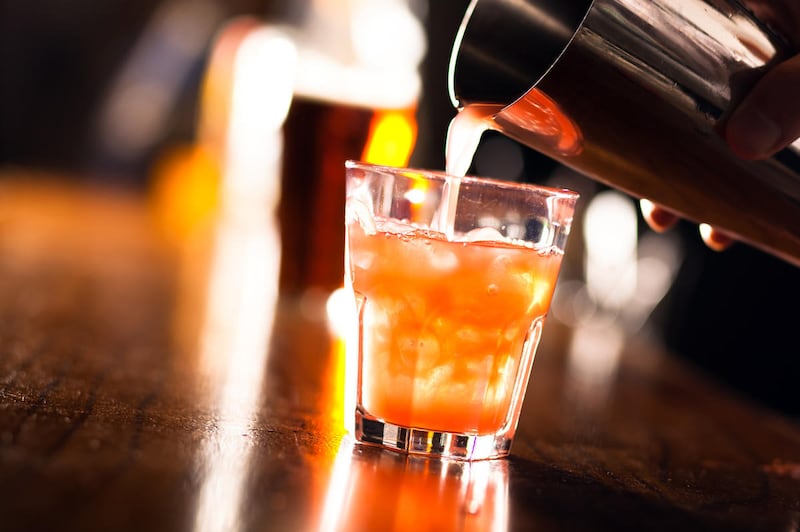
For years the Utah alcohol and restaurant lobby has called for the dismantling of a child-protective rule — the oft-referred-to “Zion curtain.” The state-specific regulation requires restaurants to prepare alcoholic beverages behind a partition or wall out of the sight of patrons and particularly youths.
Proponents of the regulation believe it contributes to a family friendly atmosphere in restaurants and rightly recall the reason it was put in place after significant compromise and changes were made in the way alcohol is purchased in the state in the wake of the Winter Olympics in Salt Lake City.
Opponents of the regulation, however, view the rule as an overly onerous burden on business, arguing that it's bad for the Utah economy, a drag on tourism and harmful to the state’s reputation within the commerce community.
Such arguments, however, quickly fall as one considers recent growth in the Beehive State. For the third-straight year, Forbes has crowned Utah the “Best State for Business,” and Utah’s unemployment rate remains among the lowest in the nation.
With regard to tourism, Fodor's — one of the world's most revered travel guides — recently christened Utah its No. 1 travel destination. Tourism, meanwhile, is at an all-time high, with visitors spending $7 billion annually in the state and adding about $1 billion to Utah’s tax revenue each year.
With regard to the state’s reputation, first-year marketing classes detail the importance of distinguishing brands amid a competitive marketplace. The Beehive State’s reputation as a wholesome, family friendly environment — bolstered by the state’s liquor laws — is worth far more in long-term economic benefits than any temporary gains from loosening alcohol regulations.
Today visitors agree it is not difficult to get an alcoholic drink in Utah. While it’s true that new restaurants must comply with state laws, considering that the job sector that has experienced some of the greatest growth this past year is food services, Utahns — at least for now — need not weep for this increasingly well-fed industry.
Much of the growth in Utah generally — and by extension the restaurant industry as well — is due at least in part to the state's family oriented, teetotaling, industrious and business-friendly culture.
When crafting state alcohol policies, lawmakers should seek to protect children, guard against abuses or excesses, and help foster a responsible alcohol culture. There may be other ways to achieve these aims; however, the current regulatory regime has shown some positive signs.
As the Deseret News reported last year, alcohol sales and consumption have increased 38 percent since 2005. Yet the rate of “children who have tried alcohol in their lifetime has decreased 30 percent and the number of children who drank alcohol within the previous 30 days has fallen 43 percent, according to the 2015 Utah Student Health and Risk Prevention Survey.”
The reduced rates of alcohol consumption by children are a positive trend. While it is unclear that any specific alcohol regulation is responsible for this dip in underage drinking, the correlation is worth noting, as is the overall impact of Utah's alcohol laws.
It would be misguided to begin chipping away at the strong foundation of a responsible alcohol culture. Now is not the time to loosen Utah’s liquor laws, especially those aiming to keep alcohol available to adults but out of the sight and reach of children.