










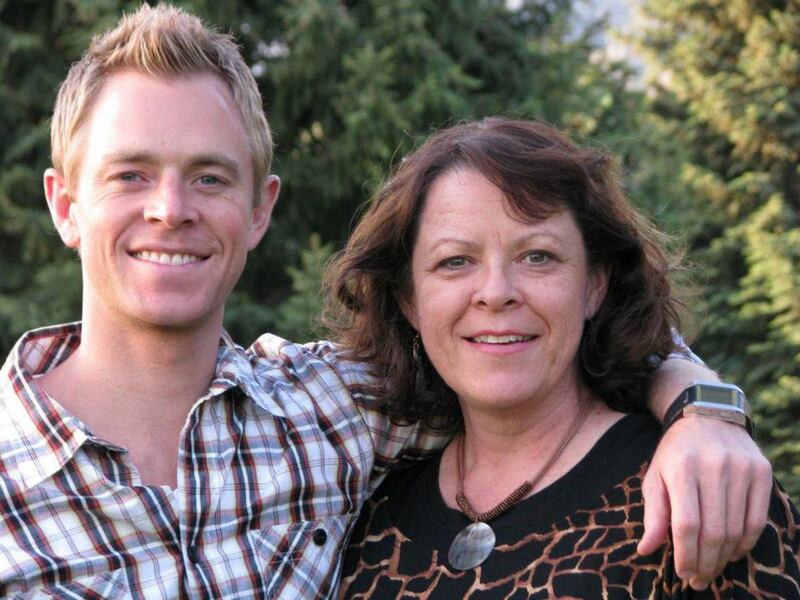


On July 15, 2014, Rich Millar shared his story about losing and regaining his faith with the world.
Millar, a Utah County resident who served a mission in Russia before falling away from The Church of Jesus Christ of Latter-day Saints, felt that if only three people read his Facebook post about the 18 lessons he learned through his trial of faith and just one benefitted from it, it would be worth it.
In January 2015, the Mormon Channel created a video about Millar's experience as part of its His Grace series. The Deseret News saw the video and Facebook post, and, with Millar’s permission, reposted his 18 lessons early last year.
Instead of three people reading about Millar’s experiences, tens of thousands read his words, and he is still surprised by the response.
“Overwhelmingly, the response has been positive, and it has been so awesome,” Millar said. “I’ve had so many people reach out to me and either just thank me or say they have gone through something similar or they have a friend or family member going through something similar … and that reading my message brought them hope or helped them along their path. And that, to me, has been really awesome, and it has been amazing to see.”
Initially, Millar was hesitant to post his experience on his personal Facebook page because he wasn’t sure how it would be received. At the time he published the post, only a few people knew that he had struggled with his faith. However, he continued to feel prompted to share his story.
Millar's post resonated with readers, and they flooded his Facebook inbox with stories of their own experiences or the experiences of loved ones.
“I’ve had a lot of people reach out for family members,” Millar said. “Moms who have a son or a daughter who is struggling with the same crisis of faith are asking for advice on how they can help them. I think those ones have kind of hit me the hardest, mostly because I don’t know exactly how to answer them because as I reflect on my own experience, I don’t know if anyone could’ve talked me out of my path.”
He recognizes that the decision ultimately belongs to the individual facing the trial of faith and says that there was a point during his own journey when he was “past feeling," and nothing anyone could say would help. It is for this reason that he says the best advice he can give to someone whose friend or family member is struggling with his or her faith is to offer love.
“I think the best thing they can do is love, support, continue to be an example but not to judge, not to ostracize — which I don’t think anyone does intentionally, but I think it happens on both sides as one person distances themselves from their faith,” Millar said. “They naturally ostracize themselves from the people within that faith, and the people who are still within that faith don’t know how to respond appropriately because they don’t want to come across as pushy or overbearing or judgmental, so their natural response is to back off.”
Millar says he has found that “everyone’s journey and path to regaining their faith is different.” In his case, Millar says he reached a point where he started to reconsider “doctrines of the gospel of Jesus Christ like life after death, modern-day prophets and others like it."
“In these moments, I started to feel what I had felt before. For the first time in a long time, something triggered inside of me,” Millar told the Mormon Channel. “I felt something that I hadn’t felt in a long time. I felt the Spirit, and I felt the Spirit tell me that what I was doing wasn’t right. And I got a glimpse of what I once was, and I realized what I had to become again.”
He recalls writing down all of the times when he had felt the happiest. Then he tried to find the common denominator. He realized that while he had felt happiness at times when he wasn’t living the gospel, it was not lasting happiness; lasting happiness was the result of feeling the Spirit and living the gospel to its fullest.
“As I looked back and I remembered who I was and moments in my life where I had been there and I was doing what I knew I was supposed to be doing and I was becoming the person I knew I was supposed to become, I knew I wanted to get back to that,” Millar said. “I wanted to be that person. I wanted to get back to that place, a place where the Spirit is with you continually … and you’re able to deal with and help others more fully deal with life’s challenges and trials and take them in stride because of the perspective the gospel of Jesus Christ brings.”
Millar said trying to live the gospel is “a continual journey" that requires a deliberate effort each day.
“I’m on that path, but I definitely have not arrived,” Millar said. “I still have a lot to learn and to become, but life is awesome and great. And I still stand by everything I wrote in that post 100 percent. ... I still stand by it today.”
After publishing his original Facebook post, Millar wrote nine additional lessons that he shares with those who contact him. Up to this point, he had only shared these with people who reached out for help, but today he posted them publicly on his personal blog. With his permission, we are reprinting Millar's advice in his own words here.
1. Everyone has or will experience a crisis of faith on some level in their life.
You’ll have to wrestle with questions in your own mind, and no one is immune to this experience. Whoever your spiritual giants and heroes are in your life who you look to, ... I would suspect that all of these people have become great spiritually or strong spiritually by overcoming a crisis of faith on some level. So if you are going through a crisis of faith, know that you are not alone and that there are many who have walked this path before you. Don’t be afraid or ashamed of it.
I think one of the big things I learned from this experience was, this is part of the plan, this is part of life, having doubts and overcoming them. There are so many people who have struggled or who are struggling with the same thing, and yet it’s part of our culture to not talk about it. I think people struggle silently because they don’t open up. And it's not that we need to air all our dirty laundry and talk about our problems all the time because that’s not healthy either, but I’ve found that it’s OK to express doubt and to talk things through with people and to know that you’re not alone.
You’re not the first and you probably won’t be the last who will go through a crisis of faith, and probably every spiritual giant and hero that you look to has walked this path on some level. They have wrestled with doubts and they have overcome those doubts. There’s hope in knowing that and knowing that this path or this journey doesn’t have to end with you abandoning your faith. It oftentimes and for many people ends with them stronger within their faith.
2. No one will be able to "talk" or "convince" you into a testimony.
Looking back at my spiritual journey, I came to realize that no one was going to be able to persuade me of the truth. I was too stubborn. I had to learn for myself through searching, pondering and following the Spirit. I had countless people close to me try to reason with me and help me understand the path I was headed down. But I was ALWAYS, always able to rationalize my way out of the conversation and intellectually (at least in my mind) win the argument. Ultimately, it wasn't someone else telling me and showing me the facts that lead to me coming back. I had to come to the understanding myself. It wasn't until I had personal experiences (through small whisperings of the Spirit) that I realized that what these people had been saying all along was right, but I wasn't letting it sink in. I wouldn't allow it to. I had read too much and thought through it all. In some ways I really think I had become “past feeling” and the Spirit was having a hard time reaching me.
You are going to have to come to your own conclusion and understanding in your own time. It will have to come from inside. And I'm not saying you'll experience this in any way, but I know I did, so as a word of warning just remember that fear, anger, resentment, cynicism or any other similar feeling never leads to truth or anything else good. Stay close to light and truth. Again, no one, I repeat NO ONE no one will be able to "talk" or "convince" you into a testimony...that's not the way it was ever meant to be, or will ever be. True conversion comes from exercising faith and listening to the Spirit.
3. Don’t ignore small promptings from the Spirit.
This is how God talks to you and answers your prayers. For many, the first step in the crisis of faith is to lose their belief in everything, including God. You feel betrayed or lost, or as if God hasn’t held up his end of the bargain. And so you begin to doubt his existence. At least that’s what happened to me. But I came to realize that I was holding God to expectations I had set on him, but these were terms he had never agreed to.
At the time, I professed to having an open heart and mind and told myself, "If God is there, He'll let me know and help me find answers. He'll find a way to show me the church is true. He knows my heart and knows I want to know." But in actuality, I wasn't humble enough to listen to answers He WAS giving me at that time because I wanted something big and miraculous. Looking back, it is very clear and plain to see. But at the time I had hardened my heart and was "past feeling," as it says in the scriptures. I was so blinded by my cynicism and desire to pick at every little thing I could find, I was unable to see what was right in front of me.
I’m not saying this is the case with everyone, but I know for me that I often wanted/expected something large or grand in answer to my prayers ... a sign or angelic visitation. I came to realize from reading the scriptures and talks from the brethren that these experiences are exceptions to the rule, not the rule. That I would be more likely to receive an answer through a small prompting from the Spirit or through a friend or family member that the Lord was using as an instrument. I've always been fascinated by this quote from Hugh Nibley, “If you pray for an angel to visit you, you know what he’ll do if he comes. He’ll just quote the scriptures to you — so you’re wasting your time waiting for what we already have.”
I came to understand that He WAS already talking to me and had been telling me what to do. I was just ignoring those impressions and promptings. I'm not saying this is everyone but this is what I experienced. There were so many times and different experiences where I felt I should do this or that, or not do this or that, but I dismissed them as dumb and didn't follow through. I've come to realize that the Spirit is indeed a still small voice (as clearly stated in the scriptures) and that many of the small good, positive impressions I get in my head (that I often equated to my own random thoughts) were from him.
And I’ve found that the more I act on these very small (at first) promptings from the Spirit (or the little voice inside your head) and act on them, over and over and over, they become stronger and clearer and more frequent in nature.
4. The brethren and the leadership within the church are not perfect, and that’s OK.
They’re fallible, and some people want to say that because they make mistakes they can’t be inspired and they can’t be directed by God. If people believe this then they also can’t believe in the scriptures because if you read about the prophets of old and you look at their interactions with God, it is clear that they constantly made mistakes. But they were still called to be a mouthpiece for God, and he still chose to use them. Why? Because that’s all God has to work with, imperfect people.
If they’re right 999 times out of 1,000, your odds are much better in life following the council of the brethren then any other option. This doesn't diminish their calling and God's call for us to follow them. If you are looking for a perfect people and perfect leaders, you will never find them, not in this life.
5. You’re never going to gain a testimony through historical evidence.
If there are people who are struggling with historical things within the church — things that happened in the church’s past — and that’s affecting their testimony, I would say that you’re never going to gain a testimony through historical evidence. And that kind of goes back to point number two. It has to come from following promptings from the Spirit.
And oftentimes people think that is a cop-out answer, but it’s not. It is the way it was intended to be. Heavenly Father doesn’t want to prove to you historically that the church is true. He could do it if he wanted to, but he won’t allow it because that’s not how faith is built. That’s not how it works. An essential part of the plan is to walk by faith. So if you’re searching through that mechanism, through that means, you’re never going to find it. I believe that’s because Heavenly Father intends it to be that way.
6. Don’t let what you don’t know keep you from following what you do know.
I’ve talked about this before, but it’s so important I want to stress it again. This is so common and something I fell for. Often times people want to know everything. They want an answer to every question that they have in life, and that’s just not reality. There’s no one, literally no one on this earth, who has an answer to everything. So there are going to be questions that will go unanswered. You must learn to follow what you do know without knowing everything and be OK with it. That’s part of the plan. Don’t stress the small stuff and get lost in the weeds.
7. Align yourself spiritually.
The closer you get to the Spirit, the easier everything becomes. Avoid all things that would drive away or offend the Spirit. The Spirit by its very nature is extremely sensitive towards anything that is not uplifting, positive and full of light. And the Spirit will remove itself quickly from any situation that is not such. Pay attention to the media you consume (music, videos, pictures, movies, books, blogs, websites, etc.) and the people and environments you surround yourself with. All of us can think of times we shouldn’t have gone to that place, hung out with that crowd, watched that movie, listening to that song ... the list goes on. Again, this is the Spirit prompting you to stay away.
Conversely, surround yourself with things that will bring the Spirit. The more that you do that, the easier it becomes to get your testimony back and to do the things you need to do because then the Spirit is able to talk to you more clearly and prompt you.
For me, as I aligned myself spiritually, over the following days, weeks and months, the same light that began leaving, began to return. It’s interesting what happens when this process begins. Your desire to gain more light and knowledge grows while you’re simultaneously drawn to things with more light, and they are drawn to you. It reminds me of one of my first days in a chemistry class in college. The professor explained to us that like molecules were naturally drawn to each other. “Like attracts like, even at a molecular level.” Isn’t that interesting? Like molecules, objects, people and spirits are naturally drawn to each other. The more lightness or darkness you have, the more you will draw that same likeness to you. It’s a universal principle.
Getting, keeping and following the Spirit is probably the most essential thing you can focus on. Then have the courage and the desire to follow the promptings of the Spirit. And if you do that, everything will work out because that’s the key, and the Spirit will tell you what you need to do.
8. Remove yourself from any sin.
If you’re currently involved in any sin, stop and remove yourself from it. Begin the repentance process. Oftentimes — not always, but oftentimes — sin accompanies a crisis of faith. As I’ve talked with people, I feel like there is this idea that oftentimes people sin and then that leads them to doubt their faith because they want to justify their sins. For me, the opposite was true. I intellectually went going down this path of losing my faith, and that led me to sinning. It doesn’t necessarily have to happen one after the other, but eventually they usually go hand in hand. And again, sinning in all forms just drives the Spirit away which makes it that much easier to justify your behavior and doubt.
9. Turn to your local church leaders.
A lot of people who reach out to me are dealing with something personal. I try to help them as much as I can and give them advice, but at the end of the day, we have been given leaders within the church who are inspired to help us. They have been given keys to help us, so I always tell people that they should talk to their local leaders to help them through their process. Be honest and open with them. They are there to help.
That’s not to say that every experience you have will be positive. Again, leadership within the church is not perfect, so your bishop or leader may not handle your situation the best — remember they are imperfect people just like you, trying their best to follow the Spirit, but they are still learning, we’re all learning.
Despite this, work with your leaders, and if talking with one leader doesn’t work, talk with another leader and try to find someone locally who can help you. That’s why the church is structured the way that it is so that we can lift where we stand. There are people around you who are there to help you, who want to help you.
Email: mjones@deseretdigital.com