

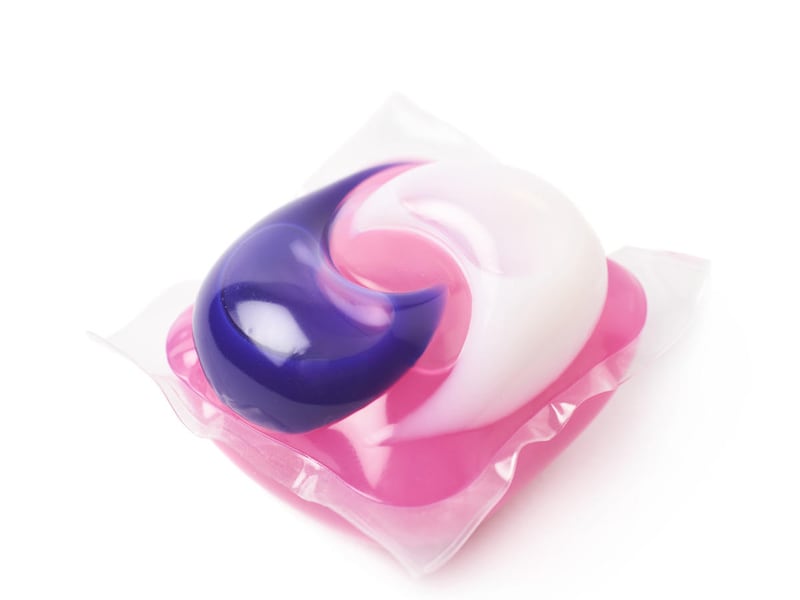

SALT LAKE CITY — Parents love them for their convenience. Manufacturers know they’re a hit. But experts say that the brightly colored laundry detergent pods flying off the shelves can pose a danger to children — sometimes with deadly consequences.
"We need to have more concern about keeping these things out of reach and out of sight of children," said Utah Poison Control Center health educator Sherrie Pace.
According to a study that will be published in the journal Pediatrics in May, laundry detergent packets have sickened more young children between 2013 and 2014 than any other type of laundry or dishwasher detergent.
And laundry packets are also more dangerous than traditional detergents, researchers found. Nearly 45 percent of children who accidentally ingested laundry packets were sent to a health care facility for treatment, compared to 17 percent for traditional laundry detergent, 5 percent for dishwasher packets and 4 percent for traditional dishwasher detergent.
In Utah and across the U.S., poisonings from laundry detergent pods are on the rise, experts say.
Last year, the Utah Poison Control Center recorded 242 exposures to single-use laundry detergent packets. That’s up from 164 exposures in 2013, the first year the center started tracking the product.
Nationally, poison centers fielded more than 12,500 calls about children under the age of 5 being exposed to laundry packets.
Richard Thomas, an emergency department pharmacist at Primary Children's Hospital with 18 years of experience as a poison center director, said the pods "really took us by surprise in terms of their toxicity."
“We had a lot of experience with dishwasher and laundry detergent, but we had never seen quite the effects as with these laundry pods,” Thomas said.
Although the Utah Poison Control Center takes more calls about dishwasher detergent exposures than laundry detergent exposures, the formula in laundry packets appear to be more toxic and more concentrated, he said.
When swallowed, the laundry detergent pods can cause nausea, vomiting, wheezing, drowsiness and even unconsciousness, according to Thomas.
The liquid formula — usually encapsulated in a clear film that is easily dissolved by water — can also get in children’s eyes, resulting in irritation and scratches.
Serious illness due to detergent exposure is rare, according to the researchers. Out of more than 62,200 calls placed between 2013 and 2014, only 0.2 percent resulted in serious medical outcomes, they said.
Still, in a handful of cases, ingesting the packets led to cardiac arrest, pulmonary edema and comas. In two cases, children died after being exposed to laundry detergent packets, according to the study.
“A lot of times, parents don’t view the laundry room as a place where they need to childproof their home,” Thomas said. “But it’s a place where we find detergents, bleach, other kinds of cleaners. They do need to pay special attention to this area of their home.”
Most of the children treated by Primary Children's for detergent exposure are under the age of 2, Thomas said.
But according to Pace, the brightly colored pods aren’t just attractive to children. Pace said she’s seen online tutorials about how to display the colorful packets in clear jars, much like candy, which she called “absolutely ludicrous.”
"I don't know if people are thinking they're not as dangerous, but they need to be kept up and out of reach just like you would any other household cleaning product,” Pace said.
Manufacturers have tried to design safer products in the wake of rising numbers of poisonings.
Last year, several laundry detergent manufacturers, including Procter & Gamble Co., said they would start coating the packets with a bitter substance to deter children from eating them. Many manufacturers have also agreed to a set of voluntary standards, including switching to opaque packaging and modifying lids to be more child-resistant.
"The manufacturers are making an effort to protect children from this product," Thomas said. "At the same time, there's significant marketing of this product and it's a very popular form."
If your child is accidentally exposed to laundry or dishwasher detergent packets, Pace recommends immediately calling the Utah Poison Control Center at its 24-hour emergency line at 1-800-222-1222.
Email: dchen@deseretnews.com
Twitter: DaphneChen_