







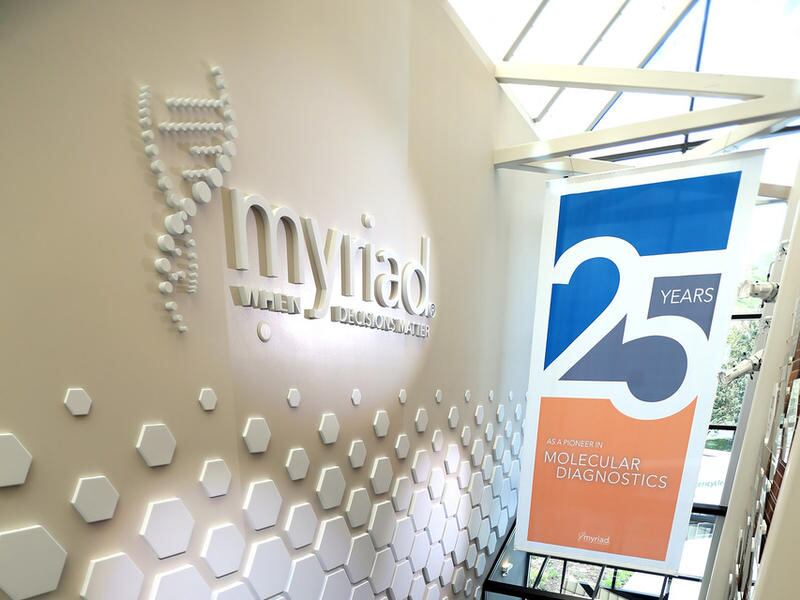

SALT LAKE CITY — One of the state's leading scientific research firms is celebrating a quarter century at the forefront of genetic research.
Founded on May 27, 1991 by University of Utah professor Mark Skolnick, businessman Peter Meldrum and Nobel Laureate Walter Gilbert, Myriad Genetics was one of the first-ever genomics companies in the molecular diagnostics industry.
Today, the company employs more than 2,000 people with more than half working from facilities in Research Park at the University of Utah. Last year, Myriad reported more than $700 million in revenues and currently has produced subsidiaries operating in San Francisco, Austin, Texas and Munich, Germany.
"We expect revenues to double in the next five years," said Mark Capone, Myriad Genetics president and chief executive officer. The growth will likely come as a result of product innovation and potentially through aquisition as well, he said.
In the company's early stages, Gilbert's research on molecular sequencing led to pioneering discoveries that have helped isolate two key genes linked to breast cancer and several other genes also linked to common human diseases, Capone said, which has put Myriad in a position as a preeminent leader in the field of genetic diagnostics.
The company hosted a tour of its facilities last week; the firm operates one of the largest DNA sequencing labs in the world.
Myriad has commercialized a test for hereditary breast and ovarian cancer, developed novel prognostic genetic tests for prostate cancer and lung cancer. In addition, the company was the first to obtain federal approval for a test to be used as a companion diagnostic for a drug therapy to treat cancer, as well as offering a multi-biomarker blood test for that measures rheumatoid arthritis disease activity.
Myriad's proprietary technologies help doctors and patients to understand the genetic basis of human disease and the role that genes play in the onset, progression and treatment of disease, Capone explained. The information is used to guide the development of new molecular diagnostic products that assess individual risk for developing disease later in life, identify a patient's likelihood of responding to a particular drug therapy and tailor a patient's drug dosage to ensure optimal treatment and assess a patient's risk of disease progression and disease recurrence, he said.
"We take our role as a trusted advisor seriously because nothing is more important to Myriad than saving and improving the lives of patients," Capone said.
E-mail: jlee@deseretnews.com
Twitter: JasenLee1