


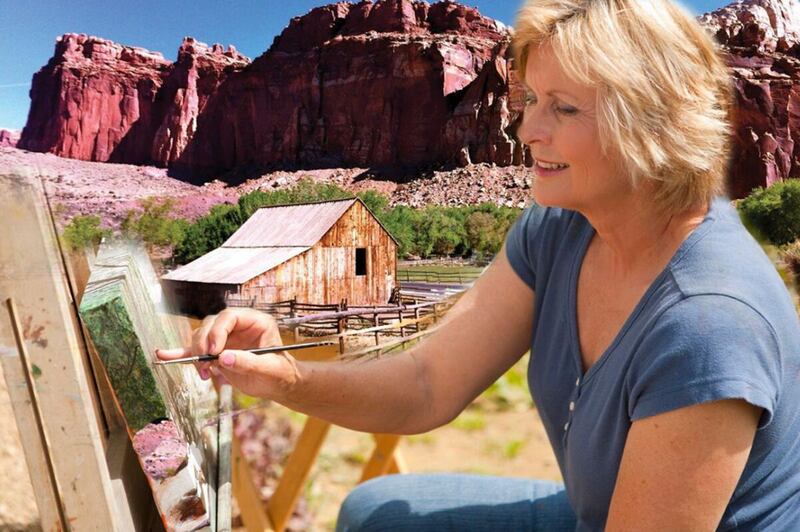

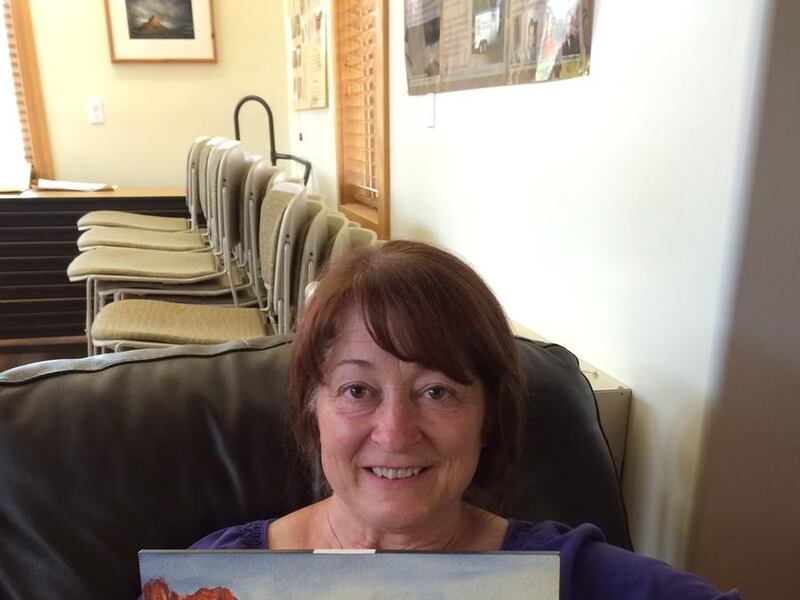


Marianne Nolte started taking art classes as a way to spend time with her mother. However, as she attended the courses, she discovered and tapped into a passion for the arts that she never knew she had.
“When I was younger, I felt hampered in art because I wanted it to look a certain way, or be thought of as good enough by my peers," Nolte said. "As an adult, art is so much more about being playful and exploring what I can do. I’m not concerned any more about what people think about it — I’m concerned with learning the techniques, expanding my skills and seeing what happy accidents arise as I practice. It’s much more about exploring, rather than the end product.”
Nolte is one of many who have embraced the opportunity of continuing art education in Utah. From Weber State University to the Bountiful Davis Art Center to Brigham Young University, there are several programs dedicated to teaching art platforms to adults throughout the state.
Most of these programs aren’t offered for educational credit — they are offered for enrichment, according to the program directors. Each class is designed to teach a new skill or to expand on skills the students might already have acquired from high school or college.
'Come for fun'
“In our classes, there’s no pressure,” said Mandy Self, director of Lifelong Learning at the University of Utah. “You come for fun. I think having any outlet is important for all of us to continue to learn. I think art can be a stress reducer.”
Theresa Otterson, the education coordinator at the Bountiful Davis Arts Center, said it is about having fun and learning something new. The center has a rotating art gallery, classes, musical venues and community outreach programs such as Family Art Night.
“I have students who come in who have never mixed paint and have never applied it to a canvas, and they are there because they have a need to feel creative, for whatever reason," Otterson said. "Sometimes I have mothers who just say, ‘I need something for myself where I feel like I can think and be creative and where I can have some fun.’ We have retired people who take classes3 because it is the first time in their lives that they have time to do something for themselves.”
A few of these facilities take the student artists to locations so they can re-create beautiful, live scenery on their own canvases. For example, select oil painting and watercolor classes from Utah Valley University have been taught at the Capitol Reef Field Station, and the University of Utah offered a Plein Air Landscape Workshop (outdoor painting) at Red Butte Garden.
“The teachers are very dedicated to their craft, and their enthusiasm spills over into their classes and energizes their students,” said Karen Cloward, director of UVU’s continuing education program.
The variety art classes offered at universities and art centers throughout Utah include mediums such as oil painting, watercolor painting, Photoshop, photography, woodworking and bookbinding.
“You name it and we try to offer it,” Self said. “We want to make sure all of the classes have opportunity for community building, and the hope is that a lot of students will leave these classes having made new friends. I think having any outlet is important for all of us to continue to learn. I think art can be a stress reducer. I also think it can be for people sometimes that are very linear to have the opportunity to take an art class is actually good. It gives them an opportunity to learn to develop their creative side.”
Trying something new
Brad Teare, a painting workshop instructor at Weber State University, said he finds the greatest joy in trying to imagine what peoples’ motivations are for taking the art courses.
“I had one student who said taking an art class was on her bucket list, and I think she was over 90 years old. She wanted to paint a picture of the mountains near Heber Valley before she died,” he said. “I love art, and I keep doing it because of internal motivations to communicate visual ideas.”
Oftentimes, artists are incredibly gifted but cannot articulate artistic experiences with confidence, Teare said. There are many people who don’t have an intuitive idea of how to paint but really want to learn, he added.
Tamy Bremer's husband, Dave, is an avid artist, but Tamy Bremer had never joined him in his art classes because they had been geared to people with more artistic talent than she felt she had.
“When we got the continuing education catalog in the mail, I looked for something we would enjoy doing together," Bremer said. "Dave was excited to see Brad Teare was teaching a class because he is familiar with his work and website. I figured that I wouldn't be the only non-artist taking the class since it was advertised for all skill levels, so we signed up.”
Although she found that painting was much harder than she thought, Tamy Bremer came away from Teare’s class with a positive view of art and a realization that she didn’t have to be a perfect artist to be successful.
“I didn't feel intimidated, and it was so fun talking to the other students and the instructor," she said. "My advice would be to not think you have to have talent to take an art class. Just go for the experience. You may not come away with a great masterpiece, but it will help you to enjoy the process of making art and discovering something new.”
For Matthew Choberka, chairman of the Department of Visual Art and Design at WSU, when adults take an opportunity to learn about art, they connect with aspects of themselves they might not have access to otherwise.
“Our lives can be pretty hectic, with responsibilities pulling us in many directions, and most of them don't involve creativity or contemplation," Choberka said. "Our experience is also very often mediated by electronic devices and media. So to have a chance to challenge oneself with new skills that involve eye, hand and imagination, that’s a valuable and increasingly rare opportunity for many. It seems like there is almost an assumption that such activity is not for adults, but I think they benefit from such experiences as much as children and students do.”
Connecting with the community
When Ernest L. Wilkinson became president of BYU in 1951, primary emphasis was placed on expanding the services of the university through adult or continuing education, according to Andrea Ramsey with BYU Continuing Education. Since then, teachers such as Tara Carpenter have had the opportunity to see the role art plays in the BYU community.
“There is a strict ‘no judgment’ rule in my classroom. People are not allowed to talk down about their own work. Rather than saying, ‘This painting is not very good,’ they can say, ‘I'm still learning,’ or ‘I'm still working on it,’ or better yet, appreciate what they learned in the process," Carpenter said. "When we are willing to step into the unknown and try something new or difficult, we can develop a stronger sense of confidence and self. Also, very simply put, we don't know what we could be good at until we are willing to try being bad at something.”
The goal of Park City’s Kimball Art Center, which also offers a variety of art classes and workshops for artists at various levels of experience and expertise, is to meet the needs of those in the Park City community — from the most fine-tuned artists to those who have never picked up a paintbrush, according to Jocelyn Scudder, education department manager for the center.
“In my opinion, creativity is an incredible outlet that promotes life balance. Newcomers to town use our art center to meet people and to become engaged in the local art community,” Scudder said.
No matter the schedule, skill-level or season of life, there are many opportunities to participate in continuing art education programs through art centers and universities.
“I would tell adults who are considering taking an art class to just do it! But do it without preconceived notions,” Nolte said. “Go into the class willing to experiment, to push your comfort zone, and know that what you create may not be what you intended to create. But that’s a good thing. I find doing art as an adult to be just fun. I no longer feel intimidated by the process, because it’s all a journey.”
Adult art courses offered throughout Utah
Bountiful Davis Art Center, bdac.org/education-classes
Brigham Young University Continuing Education, ce.byu.edu/adult
Kimball Art Center, www.kimballartcenter.org/art-classes/adult
University of Utah Lifelong Learning and Osher Institute (50 plus), continue.utah.edu/lifelong/classes and continue.utah.edu/osher/classes
Utah Valley University Community Education, uvu.edu/ce/community-education-courses.html
Weber State University Continuing Education, continue.weber.edu/communityed
Email: kadams@deseretnews.com