
Sarah Goode Marshall Chadwick was quite a woman. She learned about The Church of Jesus Christ of Latter-day Saints in the 1850s when early church leaders proselyted in England and when converted, she refused to give it up despite rigid opposition from her husband.
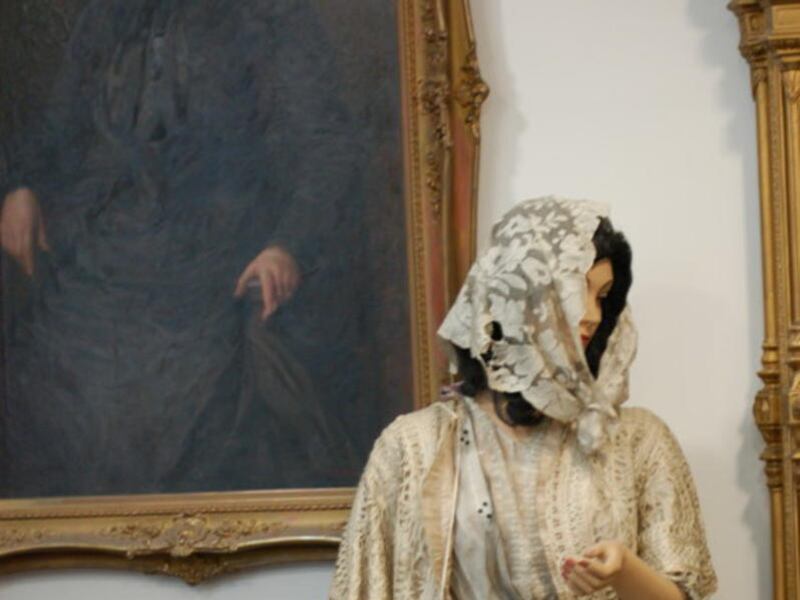
A tiny bit of Sarah remains today. It is a lacy black shawl on display in a case at the Daughters of Utah Pioneers' Pioneer Memorial Museum at the juncture where Main Street splits at the midway point on Capitol Hill. (That's 300 N. Main in post office talk.)
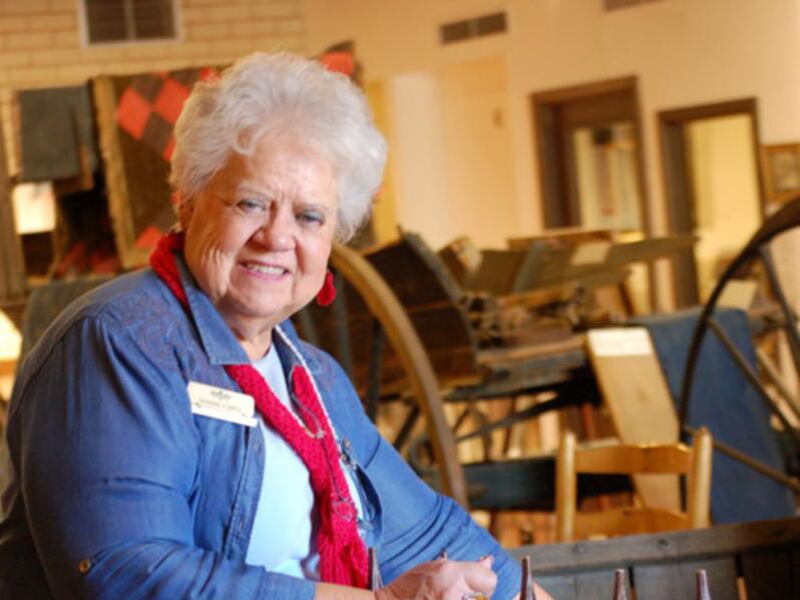
Maurine Smith, current DUP president, is happy to share Sarah's story. It is one of her favorites among the hundreds that rest in the museum's four floor of displays. According to Smith, Sarah Goode was a lady's maid in a town near London. Her family were devoted Baptists, but when Sarah heard the Mormon story it rang true.
She told her husband she had found a new religion. His response was to forbid her to listen to any further Mormon preaching. When she defied him, he beat her. On one occasion when they sat down for a "cuppa" tea, he left the table for a moment and she had an impression to switch their cups. He died of the poison he had intended for her.
In 1856, with help from the LDS Church's Perpetual Emigration Fund, Sarah and five children embarked for the United States. It took two years for Sarah to set aside the $35 down payment for her family. They became part of the first handcart company that left Iowa City for the West. The experiment in handcart travel was new and untried. One of the church leaders advised Sarah to wait for a better opportunity to go West. She refused and worked so hard to carry her own weight with the company that she beat her detractor to Zion. With her children, she stopped in Emigration Canyon to wash up so they'd look good going into this Promised Land, Smith said.
The black shawl doesn't tell all of the tale, but it is a reminder of a pioneer whose single-minded determination added strong threads to the Utah tapestry.
Multiply the story of her shawl by thousands of similar displays and you have an idea of the impact of DUP museums scattered across Utah and in Idaho, Wyoming and Nevada, Smith said.
She describes it this way: "We are daughters of the future and keepers of the past."
The effort to preserve every possible discoverable artifact from the pioneer era began in earnest when the pioneer-centric organization celebrated its Jubilee in 1951. The Salt Lake museum has been touted as the most impressive of its kind dedicated to a single genre, she proudly noted. Its collection continues to grow.
The satellite museums naturally don't have the same artifacts and space as the home facility, Smith said. But stop in almost any Utah community and you'll likely find one. A list of them is available online at isdup.org. And if the community is the one in which your ancestors settled, you could be delighted to find great-grandpa's hard-worked scythe or great-grandma's tediously patched quilt or perhaps the very early reader your grandparent labored over in school.
Many of the small museums are open only one day a week, depending on the demand. But they are a unique community enrichment probably not found in any other place in the United States, Smith believes. The central museum provides training in artifact preservation for those who man the small museums.
Regardless of size, each is a tribute to the thousands of women who have found DUP membership a way to honor pioneer ancestry. Current membership is about 22,000.
If you plan to visit the DUP Museum, plan to spend awhile. Besides Sarah's shawl (and many other items of women's clothing that are long on yardage and frilled to beat all) there are:
• Canes. And there are a lot of them. They were the mark of a gentleman in the day. One of Brother Brigham's was made of wood from the original casket that held the bodies of martyred brothers Joseph and Hyrum Smith. Such "casket canes" were a custom of the time. A small hollow at the head of the cane sometimes held hairs from the deceased, protected by a covering of some kind. There also is a cane that belonged to mountain man Jim Bridger, elaborately carved and topped with a cattle horn.
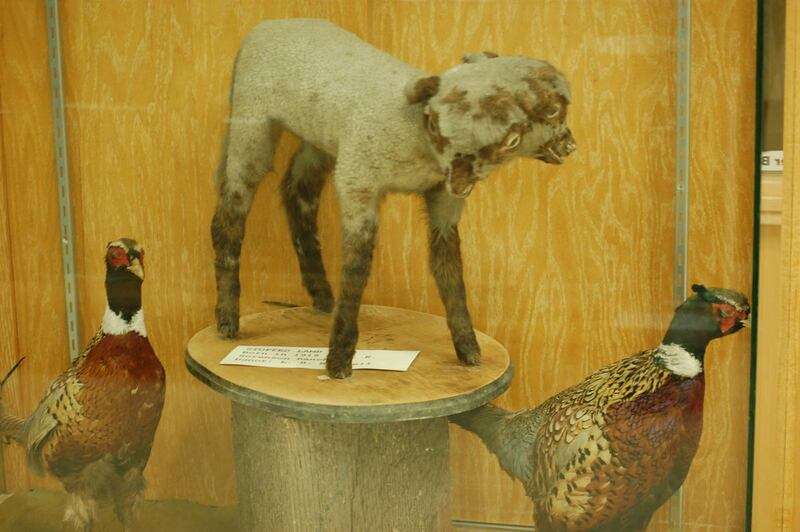
• Kids for decades have goggled at the two-headed calf that is preserved behind glass.
• A 1901 fire engine that is red and gold and polished to a shine is one of the museum's highlights. It was reclaimed and refurbished by Bountiful firemen.
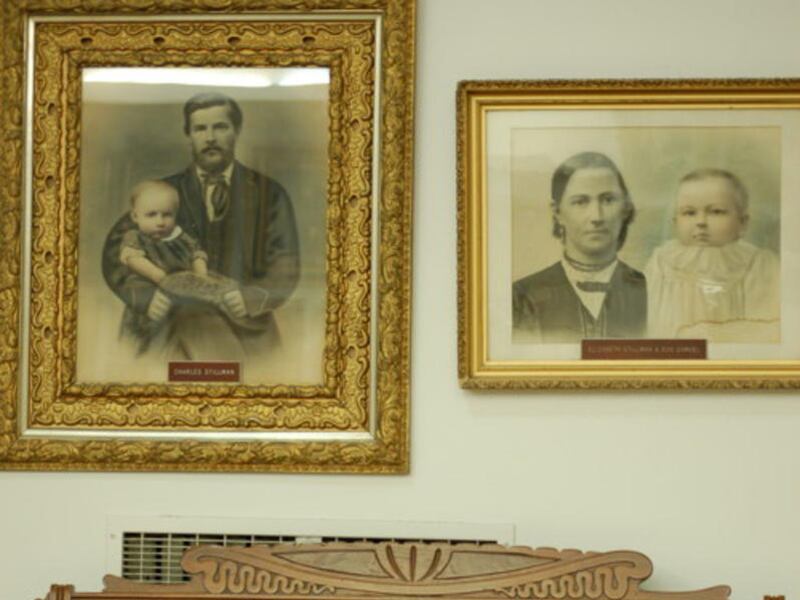
• Pictures by the score. Are your ancestors among them? (The museum has a research area with alphabetized guides where you can do family research surrounded by the remains of their times.)
The list is too long to do anything but begin, but if a little foretaste gives you the appetite to make a visit, it's worth it.
Twila Van Leer is a former Deseret News editor and staff writer who serves as a family history missionary.