


There’s considerable literature providing support for the claims of The Church of Jesus Christ of Latter-day Saints. I’ve provided a very basic starting list of four books on my blog at patheos.com, for example. Many more might be added. In its heyday, the Foundation for Ancient Research and Mormon Studies and its successor organization, the Neal A. Maxwell Institute for Religious Scholarship, published hundreds of books and articles commending and defending the faith. Those materials can still be found on the institute’s website at publications.mi.byu.edu.
Now, the superb website of Book of Mormon Central at bookofmormoncentral.org is making the results of decades of believing Book of Mormon scholarship easily accessible. The church’s official Gospel Topics Essays on lds.org and FairMormon, online at en.fairmormon.org, offer solid responses to questions about the Restoration and criticisms of it. Every week, the Interpreter Foundation publishes faithful new scholarly writing about Latter-day Saint scripture and related topics online at mormoninterpreter.com.
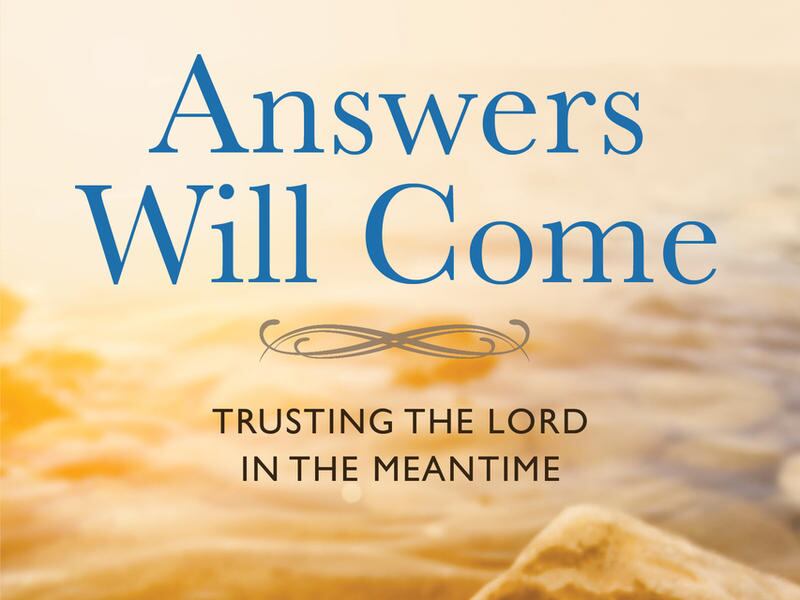
Shalissa Lindsay’s “Answers Will Come: Trusting the Lord in the Meantime” (Covenant Communications, $11.99)does none of those things. Yet I believe that many readers will find it both helpful and inspiring.
As a bright and inquiring young adult anticipating a Mormon mission, Lindsay passed through a period of deeply troubling questions and doubts.
“I begged the Lord,” she recalls, “for doctrinal answers only he could give. Instead, he wisely offered me tutorials in trust. In this book, I share those in-the-meantime answers that for me have created intellectual breathing space. These ideas help me joyfully choose faith until all the answers come.”
Note that she doesn’t write, “These ideas helped me joyfully choose faith until all the answers came.” She still has questions, though often different questions than she once had. While continuing revelation illuminates many issues, she observes, “we don’t have every piece to every puzzle.” (As Paul, great and visionary apostle though he was, put it at 1 Corinthians 13:9, 12, in this life “we know in part,” and “we see through a glass, darkly.”)
The first part of Lindsay’s book offers something of her own personal narrative from that trying time, but already introduces a number of helpful ideas. The second and much longer part of the book shares insights that came to her over the following two decades, ideas that helped her and that, I think, will help many of those who read “Answers Will Come.”
I intended to provide selections from the book in order to suggest some of the nuggets it contains, but I’ve marked too many passages, space is limited, and a small handful of quotations wouldn’t even begin to do her justice to her calmly reflective writing.
Partly, my very positive response probably reflects Ambrose Bierce’s cynical definition of “admiration” as “our polite recognition of another's resemblance to ourselves.” Like Lindsay, I’ve quoted C.S. Lewis’ description of Aslan (“He’s not a tame lion”) to warn against creating a domesticated god in our own image.
Like her, when people worry about possible inequities in the next life, I reply that believers should trust the scriptural promise that “Eye hath not seen nor ear heard neither have entered into the heart of man, the things which God hath prepared for them that love him” (1 Corinthians 2:9).
Mostly, though, I like the freshness, candor and originality of this book, and the helpful wisdom that it offers. On page after page, I saw things differently than I had before.
The second part is longer than the first, but the book itself is relatively brief. And the individual chapters, while replete with sharp insights, are deliberately concise, one page each. The book might be read at a sitting or piecemeal, almost in the manner of daily meditations or devotions.
The epigraph to the first chapter of “Answers Will Come” is attributed to one Howard Johnson, otherwise unidentified. But I like it. Christians, Johnson says, “at their best, know that often they don’t know. They do not have all the answers. They do not have God in their pocket. We cannot answer every question that any bright boy in the back row might ask. We have only light enough to walk by.”
I’m convinced that Latter-day Saints have received much more light than that bare minimum. Nevertheless, I agree with Shalissa Lindsay that, while “reason and strong evidence support the Restoration of the gospel … many specific questions still wait to be resolved through revelation.”
In the interim, while we wait patiently and faithfully, I hope that her book will help many.
Daniel Peterson teaches Arabic studies, founded BYU’s Middle Eastern Texts Initiative, directs MormonScholarsTestify.org, chairs mormoninterpreter.com, blogs daily at patheos.com/blogs/danpeterson, and speaks only for himself.