



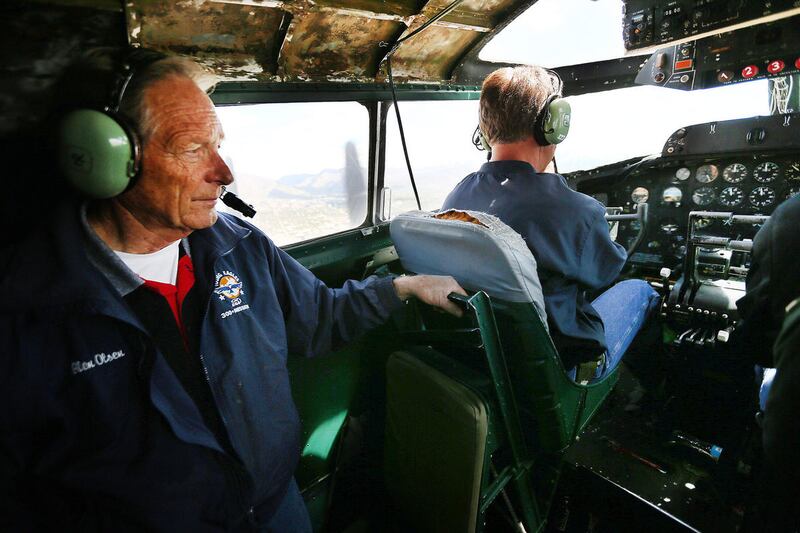


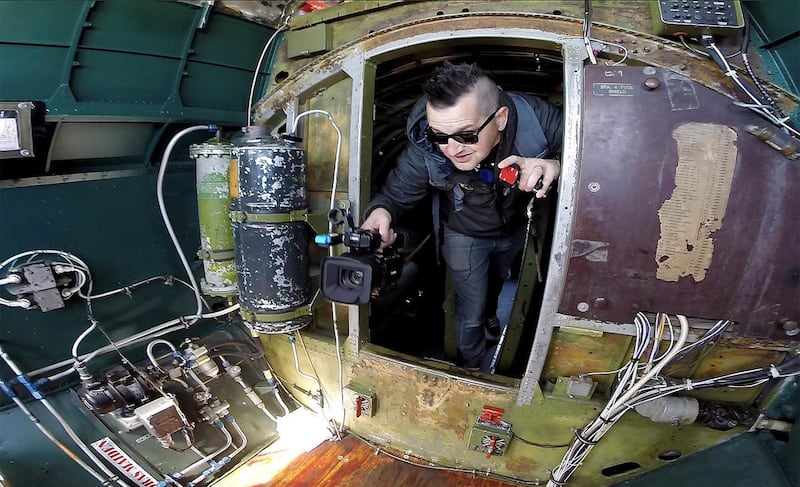

SALT LAKE CITY — For those who only know World War II from what they have read about in history books, seeing and riding in a vintage military aircraft brings about feelings of nostalgia, pride and wonder.
But for those who served in the last "great war" aboard one of those propeller-driven flying war machines, there would likely be the added recollection of what combat was truly like and the lives lost in the crucible of battle.
In commemoration of 72 years since the end of WWII and in honor of veterans, the Liberty Foundation is raising awareness about one of the most iconic aircraft of the era — the B-17 bomber.
The Oklahoma-based nonprofit organization is sponsoring a nationwide tour of the famous wartime fighting aircraft, including a stop this weekend in Salt Lake City.
Free public tours will be available 10 a.m. to 5 p.m. Saturday and Sunday at TAC Air, 303 N. 2370 West, as well as flights at a cost of $450 per person. Public flights begin in the morning, with ground tours in the afternoon.
"We're a living museum and living history," said David Lyon, pilot for the Liberty Foundation, a Claremore, Oklahoma, organization dedicated to recognizing the legacy of service in WWII. "Our main mission is to honor our veterans for the tremendous sacrifices that so many gave to us."
Dubbed the "Flying Fortress" because of its offensive firepower, the Boeing B-17 was among the most famous war-era aircraft of its time. Throughout the war, the B-17 was produced in larger quantities than any other previous model. The aircraft was equipped with 13 .50-caliber machine guns and three revolving gun turrets, along with waist and cheek guns.
The B-17 was an airplane that earned the respect of enemy combatants, Lyon said. The flight crews lauded the B-17 for its ability to take and withstand heavy combat damage and return safely home, he said.
The group is touring the Madras Maiden, formerly known as Chuckie. The aircraft is painted in the markings of the 381st Bomb Group that participated in nearly 300 missions during WWII, dropped 22,000 tons of bombs and shot down 223 enemy aircraft.
The B-17's mission today is to educate the American people about the courageous WWII veterans, and remember those brave aircrew who never made it home, Lyon reiterated.
During WWII, the B-17 saw service in every theater of operation, but was operated primarily by the 8th Air Force in Bassingbourn, England. A typical mission lasted more than eight hours and struck targets deep within enemy territory, said Scott Maher, the Liberty Foundation's director of flight operations.
During the war, B-17's dropped 640,036 tons of bombs on European targets in daylight raids, Maher said. The B-17 also downed 23 enemy aircraft per 1,000 raids as compared with 11 by B-24's, he added.
From 1935-45, a total of 12,732 B-17's were produced, with 4,735 lost in combat, Maher said. The B-17 also saw service in three other wars following WWII, including in Korea, by Israel in the war of 1948, and the U.S. again during the Vietnam conflict, he noted.
Today, only about 12 B-17's are still operable, Lyon said. By touring the country with the Madras Maiden, younger generations are given the chance to experience history in a meaningful way, he said.
"There are so many museums where you see things displayed, but you can't touch them because (the exhibits) are behind ropes or glass," Lyon said. "With this, you can really get in touch with it and connect with history."
More than 54,000 American B-17 crew members parished during battles while on this particular aircraft type — more than all other subsequent wars combined, he said.
"We want the younger generations to get a glimpse of what their moms, dads, aunts and uncles went through," Lyon said. "To put them in an airplane like this puts them in touch with some of the experiences (their ancestors) went through.
"Without the sacrifices made by some of these veterans, we would not have the freedoms that we enjoy. We need to remember that and keep the younger generations informed about what happened and how they got to where they are now, and why they are enjoying the things they are enjoying today," he said.