

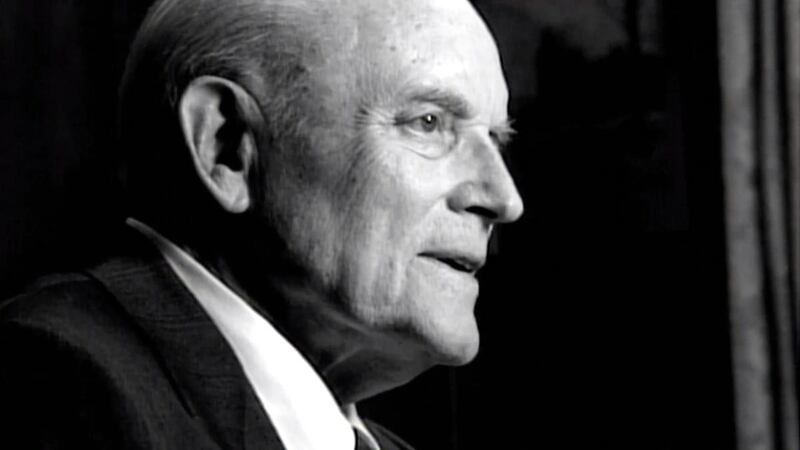

It’s a rare occasion to see a Latter-day Saint prophet cited in The Atlantic. But in the article “How the Six-Day War Transformed Religion,” President Howard W. Hunter, then of the Quorum of the Twelve Apostles for The Church of Jesus Christ of Latter-day Saints, was just the man to turn to.
The 1967 Israeli victory dramatically altered the political landscape of the Middle East, said The Atlantic. For Israel, the result brought “an expanded country that suddenly included East Jerusalem, the West Bank, the Gaza Strip, the Golan Heights, and the Sinai Peninsula; for Palestinians, it meant more occupation and displacement,” the article said.
In an effort to look at how “conflict impacts religion,” a handful of writers offered their expertise in The Atlantic on how the Six-Day War influenced a variety of religions—including Mormonism.
“Mormons have long been fond of Jews,” said Amber Taylor, a doctoral candidate in Near Eastern and Judaic Studies at Brandeis University. In the article, Taylor mentioned Elder Orson Hyde, a member of the Quorum of the Twelve Apostles in the 1800s. Elder Hyde was commissioned in 1840 to go to Jerusalem and “dedicate that land for the return of the Jewish people,” Taylor said.
The Mormon support of Jewish Israelis also extends to the twentieth century, said Taylor in The Atlantic article. “In 1948, many Mormon leaders hailed the creation of the Jewish state as nothing less than miraculous fulfillment of prophecy, both ancient and modern,” she stated. And yet despite that support, Taylor said The Church of Jesus Christ of Latter-day Saints has made efforts throughout the decades to “promote a more neutral view of the conflict.”
Taylor referenced President Howard W. Hunter’s June 1979 address given at Brigham Young University to prove her point. “Both the Jews and the Arabs are children of our Father. They are both children of promise, and as a church we do not take sides,” said President Hunter in the talk.
Taylor experienced the LDS Church’s neutrality concerning Jews and Palestinians in the summer of 2000, when she studied at the BYU Jerusalem Center in Israel. “I was taught, in equal measure, by both Jewish and Palestinian instructors. I interacted with the local population as much as I could, both Jewish and Palestinian, and I came away sympathetic to both,” she said.
Still, when it comes to political turmoil today, Mormons often choose the Israeli side, said Taylor. “Mormons still embrace the notion of Jews as God’s Chosen people,” she said.
But when it comes to her own opinions, Taylor hearkens back to the purpose she believes Elder Orson Hyde traveled to Jerusalem for in the first place: “the conviction that Mormons’ presence there will positively influence history and bless the lives of all God’s children.”