

SALT LAKE CITY
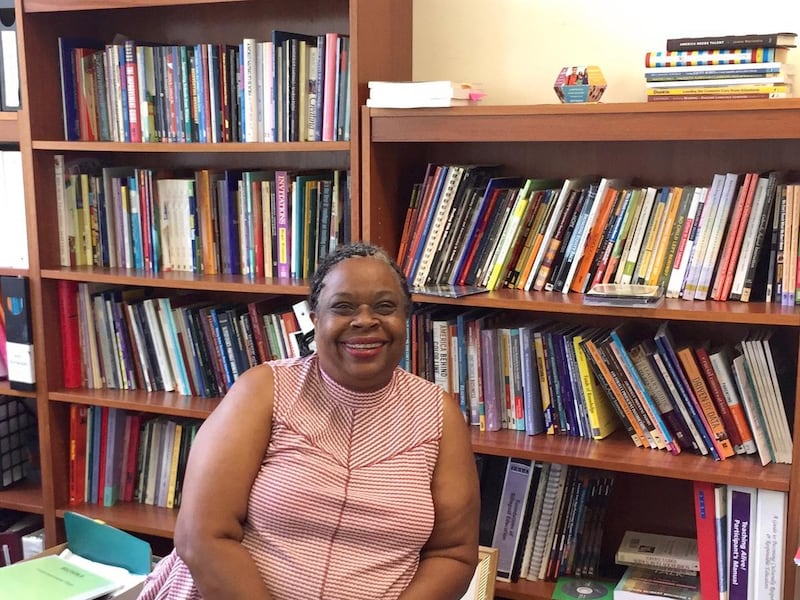
Holding her infant son in her lap and sitting beside her then-husband who had won a football scholarship to play for the University of Utah, Kathy Christy surveyed the landscape of her new home from the front seat of a Volkswagen Beetle.
So this was the place, huh?
“Oh, culture shock,” she remembers. “Never been in such a sea of white.”
It was 1971, some 124 years after the initial band of Mormon pioneers first set foot in the Salt Lake Valley, but in terms of relocating to an alien landscape, an experience not altogether different.
Kathy and Ike Spencer — who as a running back would go on to lead the Utes in rushing — had come straight out of Compton, California. They’d left a predominantly black neighborhood for a place predominantly devoid of people of color.
In the nearly half-century since, as Utah’s demographics have changed considerably, Kathy has devoted her time, energy and talents as an educator to help make her adopted home as inclusive and colorblind as is, for her, humanly possible.
When the Days of ’47 Committee — the group that oversees Utah’s annual Pioneer Day events — learned that Kathy was retiring this summer, they inducted her into the organization’s Pioneers of Progress Hall of Fame. At a reception two weeks ago at the Marriott City Center, Kathleen Christy was feted as a modern pioneer for her lifetime of work in “education, health and humanitarian assistance,” joining fellow 2017 honorees Michelle Baker (science and technology), Dell Loy Hansen (business and enterprise), Susan Memmott Allred (historic and creative arts), Elder Robert D. Hales (president’s award) and the late Donald Evan Moss (legacy award).
• • •
She always fancied herself as a teacher. When she was a little girl growing up in Compton in the 1960s (“it was different back then”), she played school all the time, teaching littler kids the alphabet and how to read. When she became a teen mom halfway through high school she did not abandon her studies, graduating on time with the rest of her class.
When she came to Utah, she both raised her son and enrolled in classes at the University of Utah, graduating in four years in 1975 with a bachelor’s degree in education. Two years later, while teaching full time at Salt Lake’s Edison Elementary School, she obtained her master’s in education.
She returned briefly to California, teaching largely Mexican-American kids in inner city Los Angeles, before coming back to Utah in 1985 to accept a post at the State Office of Education as an equity specialist.
She’d found her life’s work. With the exception of a brief foray as principal at Salt Lake’s Bonneville Elementary School, she has spent the last 30 years concentrating on equity development and equality, first with the state and from 1998 until 2017 with the Salt Lake City School District.
Her mantra: make education ready and available to all kids. No one gets left out. Among her accomplishments is bringing the national AVID (Advancement Via Individual Determination) program to Salt Lake City.
“Education is the great equalizer,” she says. “Education levels the playing field. Education gives you the tools, skills and knowledge to effectively maneuver through society and gain access to a richer, more successful life.”
She’s seen plenty of progress over the years, and plenty of setbacks, but she’s proud that the conversation is ongoing.
“Courageous conversations about race is a huge part of what we do,” she says. “If you don’t talk about it, you’ll never fix it. I think it’s gotten better in the sense that we know more, we understand learning better and we try to address some of our learning concerns better. But it’s also gotten harder because of the changing demographics, and we haven’t always kept up with the proper educating of our institutions and our teachers. I think we’re providing more access to more kids and pushing them further, but you’ve got to make sure your teaching force is ready for that, and that’s the challenge.”
Salt Lake, she opines, “has so much potential in terms of meeting the needs of diverse groups that are here — and the people who continue to come here.
“My hope and my dream is that we can continue to accept people with the spirit of you’re welcome here, we’re going to support you, we’re going to serve you, we’re going to give you what’s needed for you to be successful here,” she says. “I know for a lot of people it’s always been that way, but in my mind it has grown to become a really good place.”