

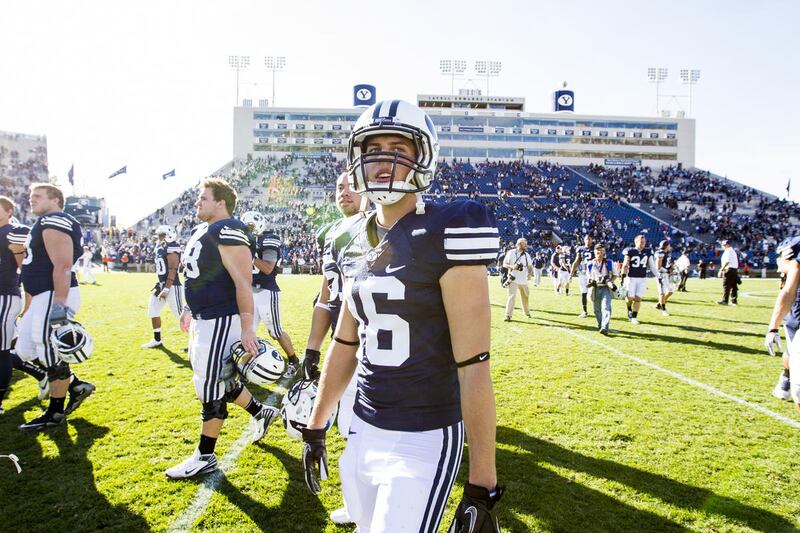
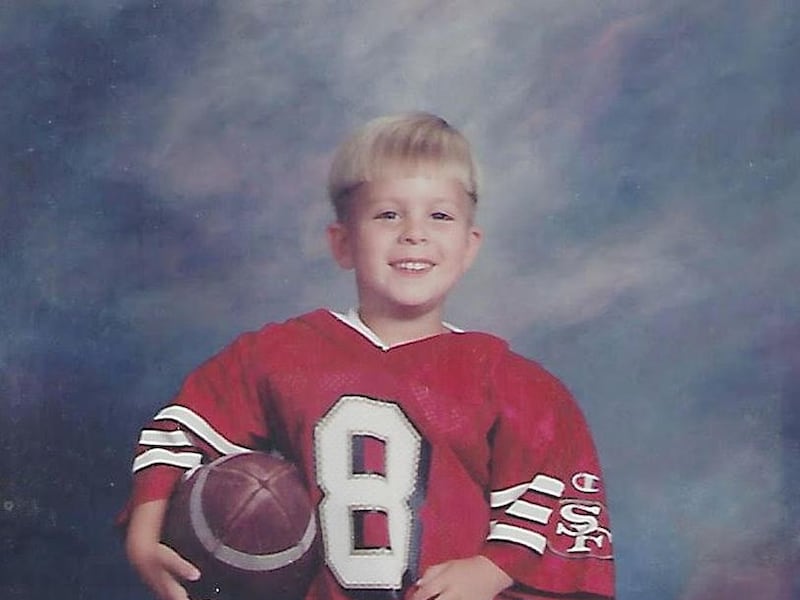

PROVO — Athletes fear injuries like the plague. These freaky unlucky breaks rob them of hard work, high-placed dreams and stoked-up competitive juices. Gavin Fowler has looked that monster in the eyes not only once, but twice.
He’s a survivor.
Fowler can’t quit, although plenty of folks have told him the past two years he should walk away from football, leave it in his rearview mirror. His story is a salute to all collegiate and NFL players who’ve had season-ending injuries, many before careers had even begun.
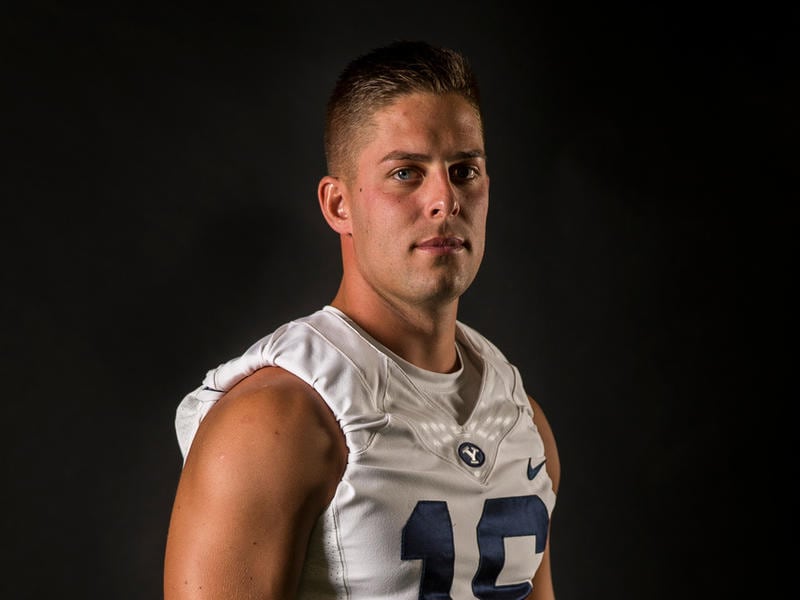
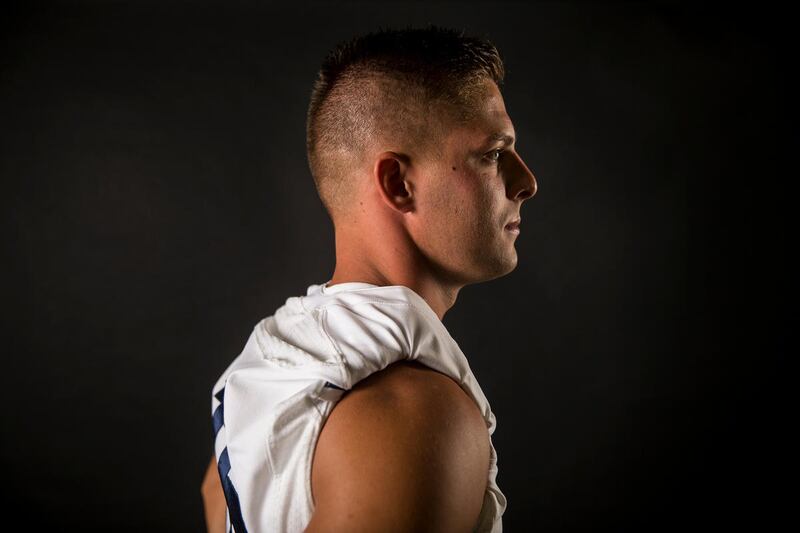
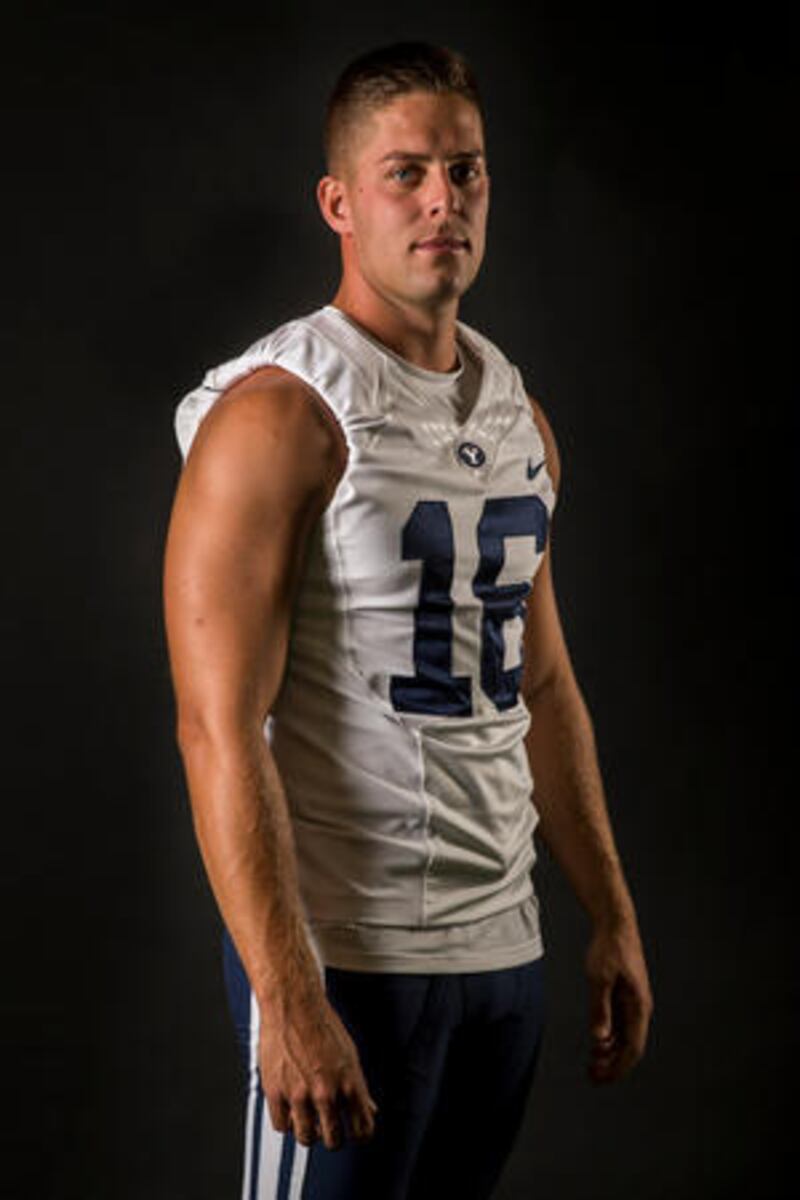
The junior BYU safety has been given the valuable job of the holder on field goals and point-after tries. He hopes this is the season he can throw the injury specter in a trunk and lose the key.
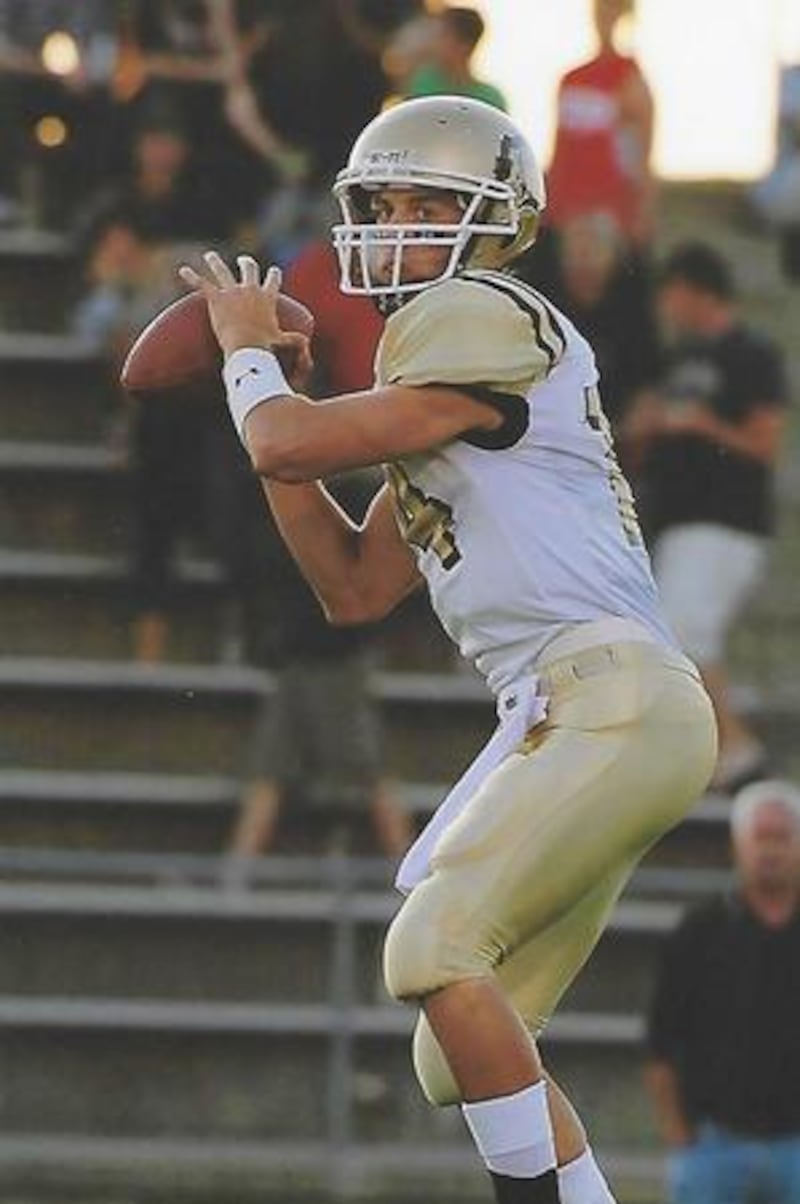
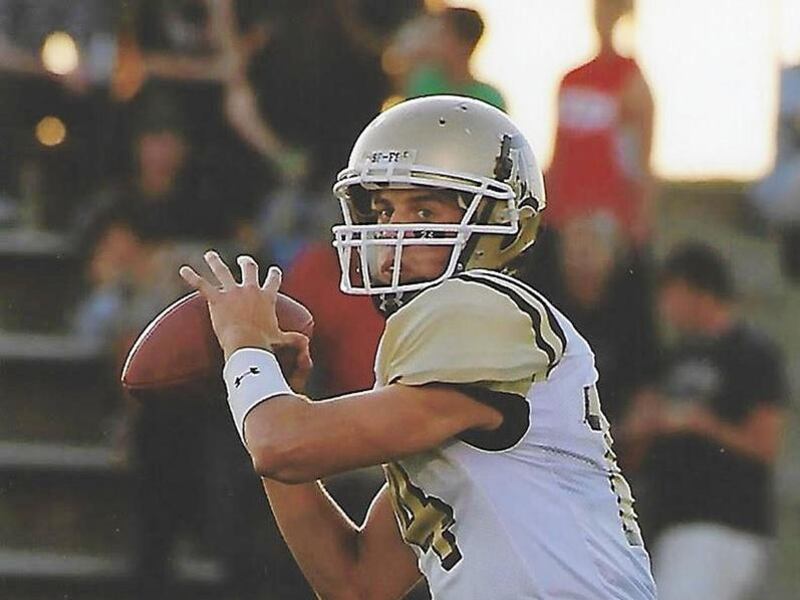
Gavin Fowler drops back to pass during high school days with the Davis Darts. | Courtesy Fowler family
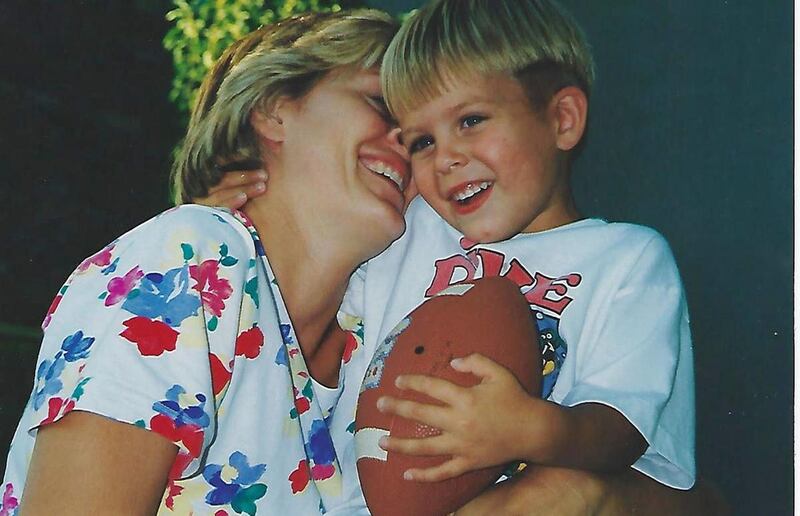
Fowler, a former quarterback at Davis High, is his family’s third generation in a line of BYU football players. His father, Blaine, was backup to Robbie Bosco when the Cougars were awarded the collegiate national championship trophy.
Gavin’s older brother Kellen played in the Cougar secondary, his mother Brenda and his sister Libby were members of the drill team, the Cougarettes. Libby is married to former Stanford captain and safety Dallas Lloyd. His grandfather Kirk Fowler played football at Bowling Green.
Blaine Fowler has toiled as a sportscaster most of his adult life and won the Ernie Davis Award as the most outstanding athlete in Elmira, New York. All his life, he’s loved the sport, played in a state championship game, started all three years in high school. He made his football DNA a bucket list priority.
He couldn’t walk away.
Just because his name isn’t in the limelight doesn’t make his suffering any less than one of the superstars.
In the spring of 2015, a year removed from a two-year LDS mission, Gavin Fowler came from nowhere to be in the rotation at corner with the first and second unit. On the final day of spring practice, he planted his foot to make a cut and tore the anterior cruciate ligament (ACL) in his left knee.
“That was tough,” said Fowler. “Going from where I was expecting to play a lot and then be out, miss the entire 2015 season, was very hard. Then a new coaching staff came in and I had to prove myself all over again after a long rehab. They hadn’t seen me play, there was no game film.
"I rehabbed through the coaching change and came out for spring ball in 2016. I was a little stiff but tried. I worked hard all summer, came into camp and earned a spot on all the special teams, and looked forward to playing a lot in 2016.”
It was a short-lived aspiration.
After the Arizona game, while doing a special teams drill during a midweek practice, Fowler got tied up with linebacker Butch Pau’u. He took a wrong step and tore the ACL in his right knee. He missed the 2016 season.
“It was a heartbreaker to work so hard and come back from the first one, be in a position to play a lot and contribute and then have it happen again. It was tough and hard.
“When I did it, I immediately knew what had happened. I was devastated. I was in the locker room afterward and Butch came in and gave me a hug. I was really emotional at the time. “
After emotions subsided and his faith in things returned, Fowler found it easier to endure the rehab work the second time around.
“Honestly, the rehab and getting strength back was easier the second time because I knew what I had to do. I knew how hard I could push it before injuring myself further, so it actually went faster. Coming up this fall, it’s been less time since the injury, but I feel like I’m in better shape than I was with the other one. I’ve worked to where I have more strength and I’m in a better place this time around. I’m ready to go.”
Captions text here | photographer, Deseret News
Fowler has yet to make a splash on the field for the Cougars, but his attitude, his loyalty and his dedication are an example to teammates. His injuries opened the door to extensive research on ACLs.
“They say if you have torn one, chances are that you will tear the other one. Whether it is compensation for the injury to the other, or a predisposition because of genetic imbalance due to an alignment in the knee or whatever, it tends to be that if you’ve had one, you will likely have the other. Once fixed, you are the same as any other athlete. I won’t have a higher chance than anyone else. I should be good to go.”
This seems the case with teammate Austin McChesney, who sufferred an ACL tear last season at Cincinnati and had another tear last week in practice. Fowler can relate and help the corner, who was competing with the first and second string in camp.
Fowler looks at the positives his bad luck has brought him. At age 24, he’s missed two complete seasons. He should be a senior but a medical redshirt has made him a junior in eligibility.
“For a couple of reasons, it worked out to be a blessing in disguise. After I got hurt, coach Ed Lamb and Ilaisa Tuiaki kept me on the travel squad to all the games. They put me in the booth with them to look at game tendencies in the secondary so I got to learn a lot about our defense and our coaches and what they expect. I now know more than I ever would have.
“Second, I just finished my undergraduate degree in communications and I’m now working on my master's degree in public administration. It hasn’t been ideal, but there have been good things that have happened because of it.”
Fowler found many cases where NFL players have torn two or even three ACLs. “The amazing thing is people have torn it and never had surgery and continued to play. Tom Holmoe (BYU athletic director) tore his after his senior year at BYU and went on to earn Super Bowl rings with the 49ers.
“To this day, he doesn’t have an ACL in his knee. Hines Ward, a former Pittsburgh Steeler receiver who may be in the Hall of Fame someday, played with one ACL his entire career,” said Fowler.
“Some guys are crazy and put on a brace, get it stronger and play. Others go on with careers and never have surgery. Rob Morris, who played here, had multiple knee surgeries during his NFL career and played for years.”
Facing the injury monster, Fowler found strength in his brothers in uniform, his family and friends.
“A big thing was the support of my teammates and the coaching staff. I think everyone saw how hard I worked to come back from the first one.
“When I got hurt, a lot of people were telling me to just be done. They asked why I would put myself through that again, why not hang it up and get on with my life. But none of my teammates ever told me that and none of my coaches ever asked me to step out.
"They always encouraged me to work it out, to make a comeback. To be able to travel with the team last year when injured, just knowing I was a part of it and that I had their support, was awesome, just huge. That, and my family always gave me total support and had my back.”
Coach Lamb has watched Fowler overcome his injuries twice. “He’s back now. Because he’s such a smart, intelligent player on the field, we want to make sure he is back for the first game. He plays a huge role for us as a holder. The kicker gets a lot of credit out there but the job as a holder is so important.”
Tuiaki praised Fowler for his hard work. “He’s been a great example to everyone. He’s worked hard.”
Fowler, a spotlighted high school quarterback who knows the fame and pressure of that position, smiles at the mention of his new role.
“I guess it’s more important than people think. Maybe nobody will know who I am unless I make a mistake, and then everyone will know my name.”