

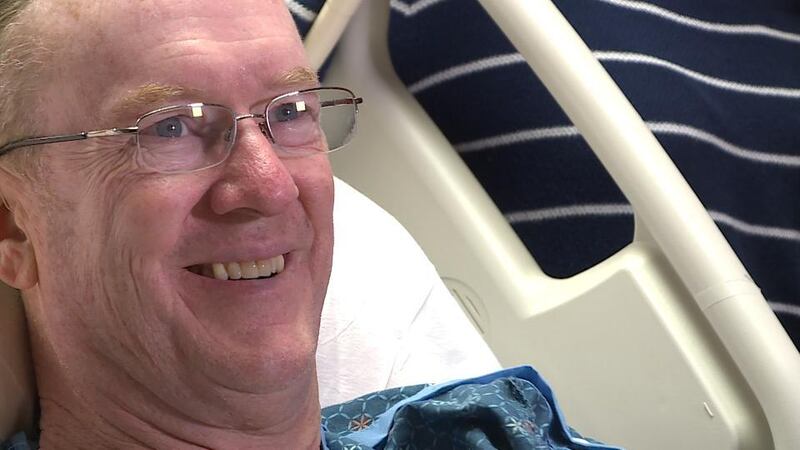
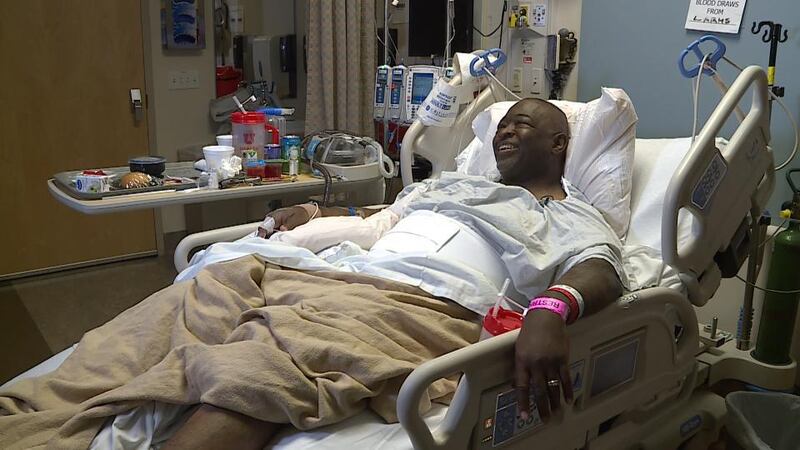
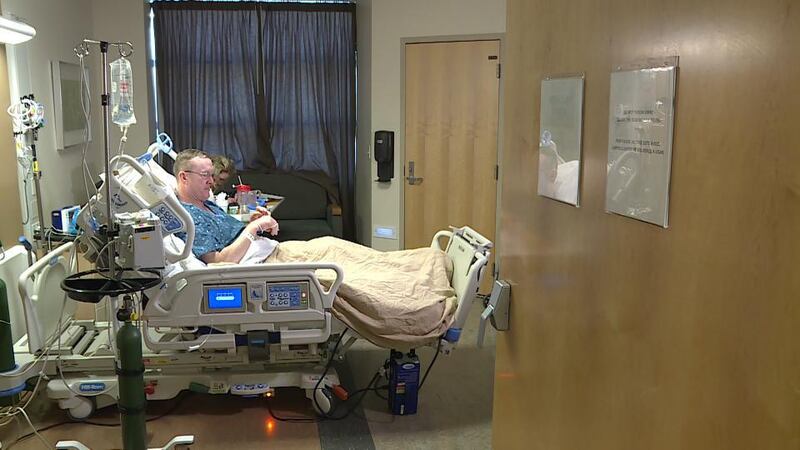
PROVO — In his job, Utah County Sheriff's Sgt. Spencer Cannon gives a lot of his time helping others.
But his commitment to service doesn't end when his shift does. When he learned his friend needed a kidney, he immediately offered up one of his own.
"I said, 'Well, I'll give you a kidney, Ed,'" Cannon said. "I hadn’t even thought about it. I just said it, but I meant it."
That was during a conversation earlier this year when Cannon, 58, learned his former neighbor Ed Cameron, who suffered a heart attack 11 years ago because of failing kidneys, needed help.
On Tuesday, both men underwent surgery. The Deseret News spoke to them as they recovered at University of Utah Hospital in Salt Lake City.
"I've known Ed for 18 years," Cannon said. "He's always been a really strong guy."
Cameron, 54, a father of nine, has been on dialysis for the last six months. He said his health was deteriorating to the point where he could barely stand up.
"When your kidneys decline that bad it's horrific," Cameron said.
With his kidneys only functioning at 2 percent, Cameron feared he could die before finding an organ donor.
"There was always a worry that I wouldn't find a match," he said.
Cannon was the first to offer Cameron a kidney.
"I really didn't think about what I was doing," Cannon said, adding that he later cleared the decision with his wife.
After loads of paperwork and a series of tests by a team of doctors, Cannon was given the green light to donate. Immediately after the surgery on Tuesday, it was clear the donated kidney was already benefiting Cameron.
"It feels really good," Cameron said from his hospital bed. "One-hundred percent better."
Cameron said he's been given a new beginning on life and is forever indebted to his friend.
"I'm speechless and I'm alive because he's my hero," Cameron said. "He's the type of person who is teaching us all how to serve, how to be selfless, and kind and Christlike."
Cannon said he's received more than he gave.
"Ed is going to have a much better quality of life than what he has had," Cannon said. "And if I can give that to him or anybody else by giving up a kidney, that's the way it's going to be."
Doctors hope Cannon's generosity inspires others to consider living organ donation.
"We have patients die on the organ wait list," said Jeffrey Campsen, surgical director of kidney transplantation at the University of Utah. "We have patients die while waiting for an organ on dialysis."
Campsen said this type of surgery allows for the kidney to be transplanted as quickly as possible. In fact, the kidney Cannon donated was only outside of a body for about 45 minutes.
"Live donation is the best way to do a transplant," Campsen said. "If you're able to get a live donor you can drop your wait for an organ anywhere between three to eight years."