

What Christmas gift would you give yourself if you could use someone else’s credit card? I would buy a 5-inch drone, a table saw and a new 3D printer (with multi-material upgrade, of course). However, what I am really getting is none of the above. I am sure my wife and kids will get me other toys, trinkets and “dad” gifts, but they will have to use more high-level thought and take less from the pocketbook.
We exercise this type of fiscal restraint because we — my wife and I — pay our own bills. On the other end of the spectrum is Congress. Members of Congress use our money — or more accurately our children’s money — to pay for their pet projects. And, while I like a lot of what he does, outgoing Sen. Orrin Hatch is currently proposing to join in these reindeer games by handing over our money to companies that don’t need it and have said they don’t want it.
I guess Hatch might just be in the Christmas spirit?
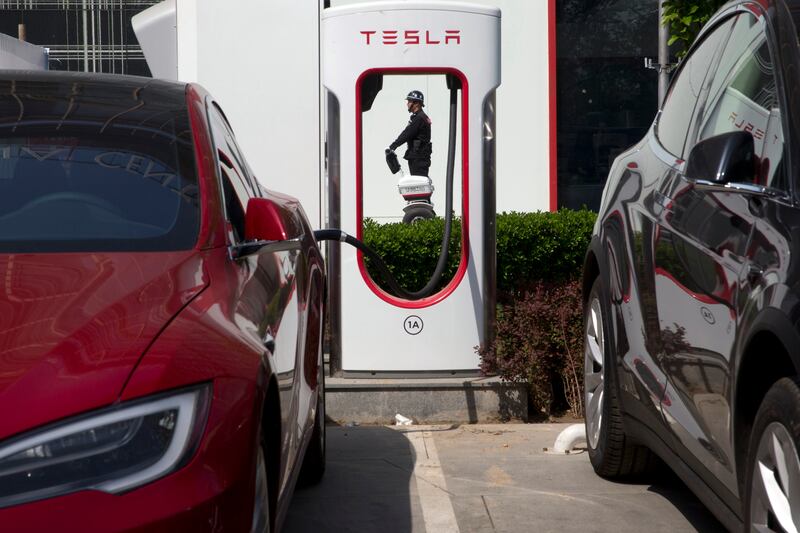
As reported by Bloomberg a few days ago, Hatch, the Utah Republican in charge of the Senate’s tax-writing committee, said in an interview that an extension of a tax credit for consumers who purchase an electric vehicle “could be” in a tax-break package expected during the lame-duck session of Congress.
The current tax credit phases out after manufacturers sell 200,000 vehicles. Up until a manufacturer has sold 200,000, cars buyers can claim up to $7,500. Tesla has sold more than its 200,000-car allotment, General Motors is close or just over and Nissan is closing in on it as well. For a company like Tesla, that number goes down significantly the year after it hits the 200,000 target.
Now that manufacturers are starting to hit this arbitrary number, senators are beginning to scramble to keep the funding faucet on. Several proposals are floating around, but basically all the current proposals — except one from Sen. John Barrasso that deserves some credit — attempt to keep this gush of funding going.
But they are facing opposition. The supporters of the tax credit are facing opposition from the people to whom they are trying to give this gift. The car companies don’t want an extension — they don’t want more free money.
Electric vehicle manufacturers understand that free money isn’t free. The manufacturers know that tax credits skew the market, and the companies that have already hit the 200,000 number know that their market advantage is even better if the money isn’t there.
That is a sign that — while arbitrary — the 200,000 cutoff was high enough to allow these innovative manufacturers to get their feet under them, work out the bugs in their manufacturing process and really start a market moving. The fact that the leaders will now have advantage is one of the reasons the tax credit shouldn’t have existed in the first place, but it did help get the market moving in a way that it would not have done naturally through competitive forces.
I like electric vehicles, but I have never been a fan of the tax subsidies. A tax subsidy merely gives an advantage to the larger companies — Musk as one of the newest in the race should be commended. But even as the newcomer, he is throwing boatloads — a reasonable economic measurement — of money at the industry in a way that garage innovators just can’t match. That means a tax credit advantages the current innovators instead of the next generation. A tax credit is about the government choosing winners and losers instead of the market. These credits are just never truly effective in the long run.
But if the idea of the tax credit was to help provide a jump-start to a newer market sector, then supporters can at least wave their hands in some kind of short-run victory. But if they want anything good to come out of their support for this funding in the long run, then their goal should now be to back the government out of the market and let it live or die on its own.
I get to work with inventors across the country, and the most innovative people I work with don’t have the time or resources to check on government funding. Hatch should work on putting something in their stocking instead of stealing their kids' lunch money.
The gift that the U.S. economy needs is for government to back out of the business of picking winners and losers. And, just like my family will be doing this Christmas, they need to think of the long run instead of the momentary thrill of opening a present paid for by someone else.