

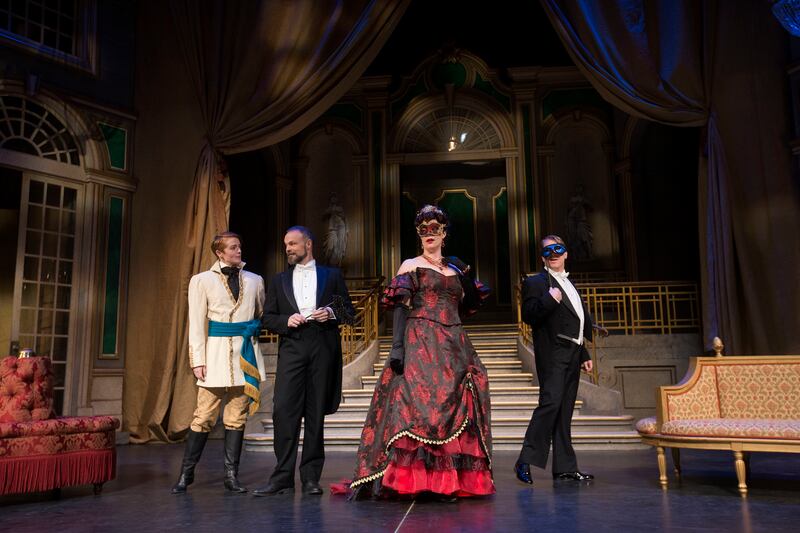

"DIE FLEDERMAUS," through May 20, Capitol Theatre, 50 W. 200 South (801-533-6683 or utahopera.org); running time: 3 hours (one intermission)
SALT LAKE CITY — Minutes before the curtain rose on Utah Opera’s opening night of “Die Fledermaus,” audience members were given a lighthearted preview of what makes the operetta so great: the timeless music.
In the pit below the Capitol Theatre stage, members of the Utah Symphony, led by conductor Gary Wedow, took the audience on a sweeping musical journey with the “Die Fledermaus” overture — offering listeners snippets of the music to come, ranging from polkas to a classic Viennese waltz. Even if you haven’t seen “Die Fledermaus,” there’s a toe-tapping familiarity to this music, and even more so if you’ve seen “Tom and Jerry.”
Like a good movie trailer — one that gives just enough plot to keep you interested without spilling the entire story, twists and all — the overture’s bouncy rhythms and catchy melodies teased of the frivolity and humor to come.
That humor began with the opening scene of “Die Fledermaus,” where a chambermaid named Adele (Utah Opera resident artist Abigail Rethwisch) reads a letter from her sister inviting her to the wealthy Prince Orlofsky’s ball. Lamenting her status as a maid with a series of comical onstage antics, Adele opts to tell her mistress, Rosalinde, that her aunt has contracted an illness — with an unpronounceable name she makes up on the spot — and she must tend to her for the evening.
Rosalinde (Sara Gartland), meanwhile, is already occupied with stifling the outside serenading of her former lover Alfred (Robert Breault) while also worrying about her husband Eisenstein (Daniel Belcher), who is preparing to serve a brief jail sentence. As Rosalinde searches for rags for her husband to wear to prison, Dr. Falke (Troy Cook), one of Eisenstein’s friends, pays the soon-to-be jailbird a visit and encourages him to spend his last night before jail at Prince Orlofsky’s ball, where he will meet a mysterious and beautiful Hungarian countess.
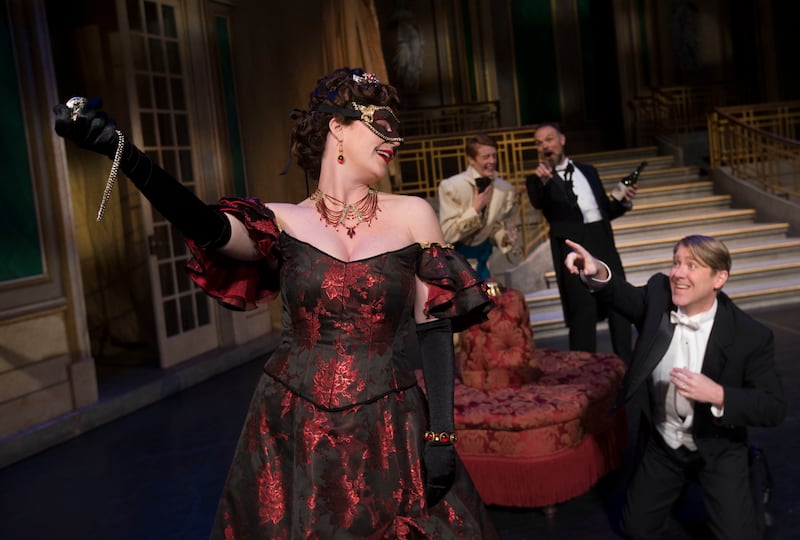
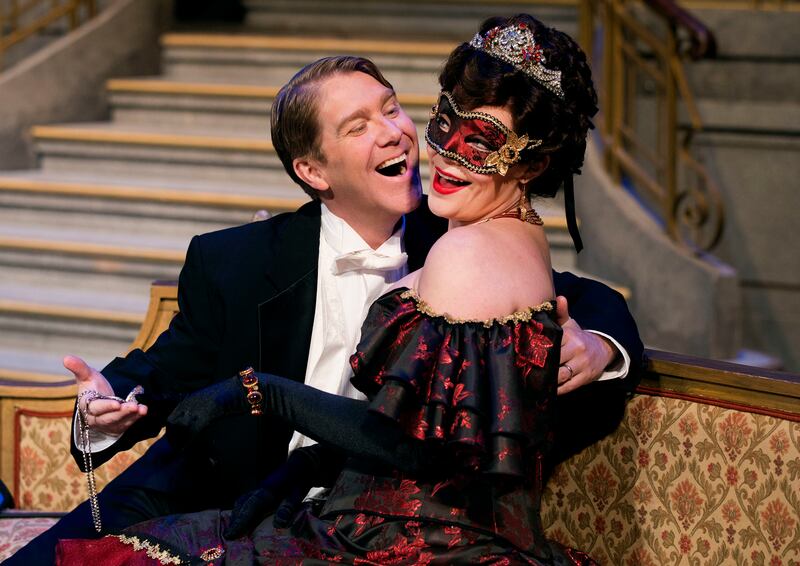
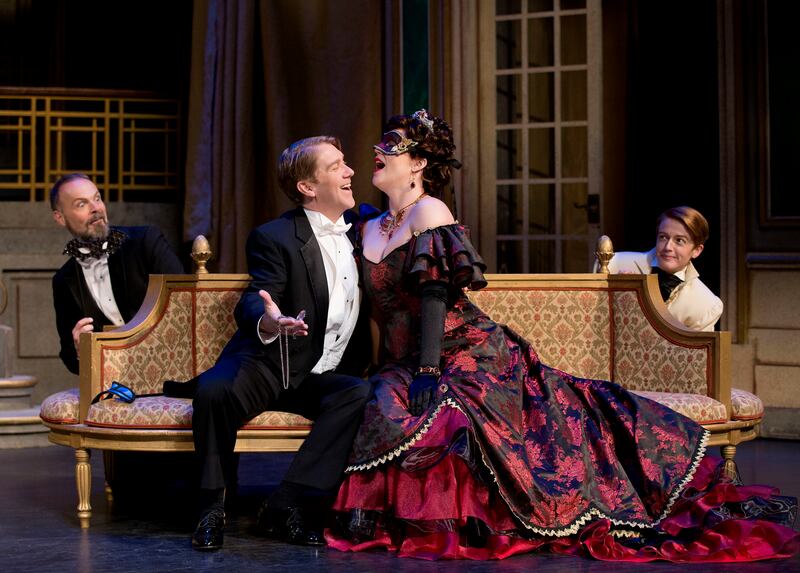
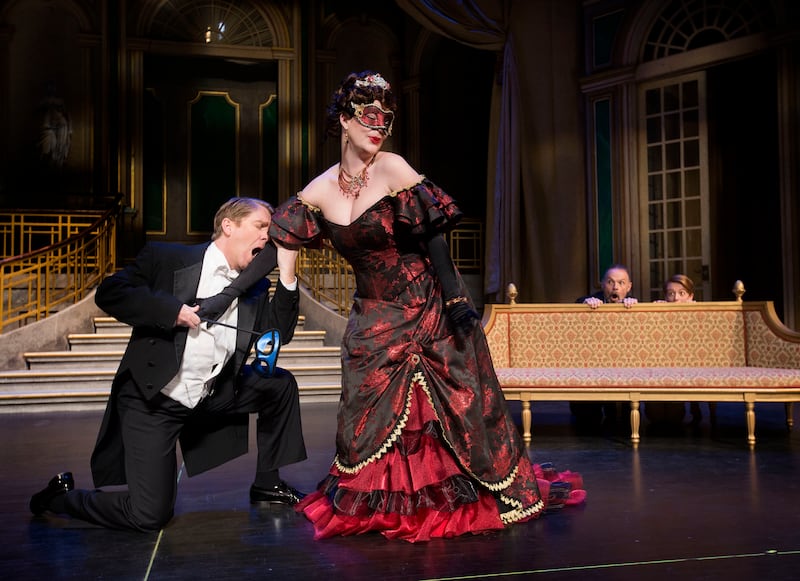
And this only marks the beginning of the comic secrets and disguises in “Die Fledermaus,” as a masquerade ball unfolds during Act 2 and we learn that the ball is Falke’s vehicle of choice for revenge on Eisenstein, who once left him after a debaucherous evening passed out on a park bench while dressed in a bat costume.
The revenge’s punchline? The mysterious Hungarian countess is actually Eisenstein’s wife.
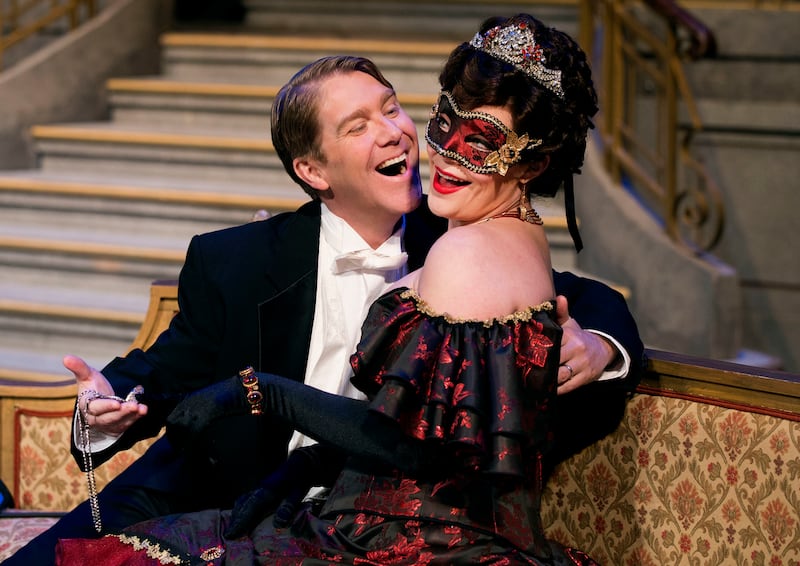
While all performers had their shining moments, the standout performances of the evening go to Rethwisch for her role as the maid Adele, and, in a bit of gender-bending casting, Abigail Levis for her hilarious portrayal of the infinitely wealthy and eternally bored Prince Orlofsky. Small in stature, Levis’ commanding presence drew laughs as she would dramatically demand to be carried from room to room, indicate her desire for people to bow before her and theatrically sigh and lie down on the couch in a state of irreparable boredom.
And for all of its visual humor, one of the greatest strengths of Utah Opera’s “Die Fledermaus” is that it doesn’t take itself too seriously, most evident in some of its self-deprecating dialogue. As Prince Orlofsky welcomes the guests to his mansion, he mentions not enjoying classical music — especially that of "Die Fledermaus" composer Johann Strauss II. He then states his aversion to opera — especially “Die Fledermaus.” The prince proceeds to cheerfully sing, “You may not think it’s funny, but we already have your money.”
There’s another self-deprecating moment in the final act where Rosalinde’s former lover Alfred lends money to someone, and when Alfred mentions being an opera singer, the recipient tells him he’d better hold on to the money.
For those who might be skeptical to embrace the world of opera, “Die Fledermaus” offers a good entry point as it is unusually dialogue and dance heavy, causing the performance to take on more of a musical theater air than that of an opera. And although the operetta was originally written in German, it is often performed in English with English supertitles displayed during the sung parts to help the audience along, as is the case with Utah Opera's production. The result is an operetta that is even more accessible.
And then there’s the music, which alone is reason enough to give "Die Fledermaus" a chance. Because while the plot of “Die Fledermaus” is certainly filled with its fair share of laughs, it’s the music that stays with you well beyond the curtain’s fall.
Content advisory: "Die Fledermaus" contains partying, alcohol and some sexually suggestive scenes.