

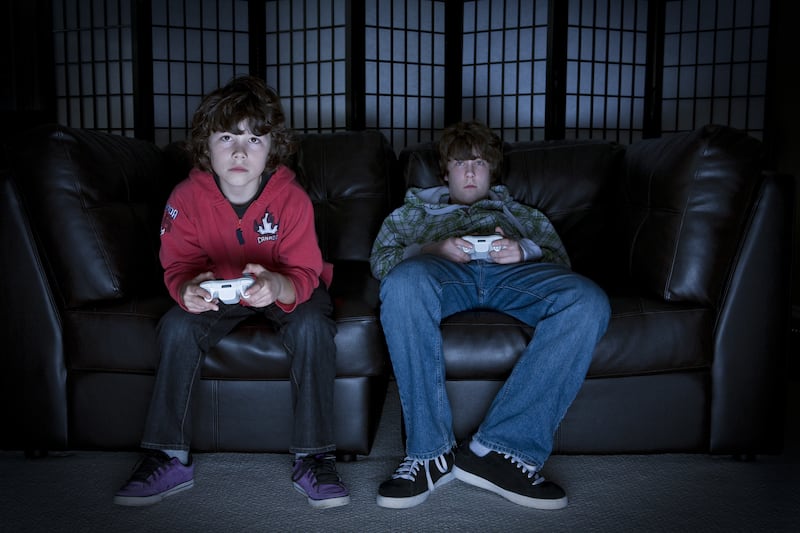
Gamers don't like hearing game over. Trust me — I’ve been there.
A woman called up my colleague a few years ago for advice. Her 9-year-old son was playing video games for 12-14 hours a day. He would become so involved in the game that he would forget to eat.
She wondered, “is this something that I should be concerned about?”
This past week, the World Health Organization answered that question with a resounding “yes,” listing “gaming disorder” as a mental health problem for the first time.
Not surprisingly, the video game industry immediately slammed the move, saying that they were disappointed by the WHO’s decision and that the evidence was inconclusive. Other “experts” have also spoken out against the decision, citing video games as largely beneficial and describing the designation as a “moral panic.”
First of all, only a small minority of gamers are addicted, around 3-10 percent, depending on the study. But for this group, there are some significant issues, including withdrawal symptoms when unable to play, deception around playing video games, conflict with friends and family, missed vocational or educational opportunities and an inability to stop or reduce the time spent gaming, even when they try to quit.
And the research is crystal clear on this: Video game addiction is almost always related to negative outcomes, including depression, anxiety, aggression and loneliness, etc. I have never seen a study in which video game addiction had any positive benefits.
One frequent question is whether these kids are already suffering from mental health problems. In other words, is a video game addiction just a symptom — and not a cause?
When we look at adolescents over time, we find some evidence of this: teens who are depressed, anxious and socially withdrawn tend to have more problems with video games in the future. But here is the kicker — these teens become more depressed, anxious and socially withdrawn over time, and those teens who can break free, who no longer are classified as “addicted,” improve on all mental health measures.
How are we doing in Utah? Well, not all that great. In a recent sample of approximately 600 adolescents in the state, around 6.5 percent of 12-14 year olds experience serious gaming problems. There is definitely a significant gender effect, with only 1.5 percent of girls, but 12.25 percent of boys showing concerning problems with video games. One might argue that 12 percent of boys is not all that much, but in Utah this represents a sizable number — if we use Census data, and extend this throughout adolescence, this could represent as many as 30,000 boys in Utah who are having trouble functioning in their daily lives, in part, because of video games.
Parents can help their children overcome video game addiction by cultivating more self-regulation and healthy coping mechanisms. It also helps to figure out what is motivating the interest in playing video games — perhaps it’s a social network or a competitive drive. Once parents identify the need video games are filling for a child, they might try to channel those motivations toward healthier activities.
It is time to stop pretending that video games do not have a negative impact on some children. Yes, there can be benefits to playing video games, and the vast majority of individuals who play video games don’t have problems. However, for a small group of individuals, video games can be extremely problematic, interfering with the ability to function in the real world. The evidence suggests it's time to listen a bit more to the World Health Organization on this issue and a little less to the billion-dollar industry with an incentive to keep kids hooked.