


In different postgame interviews more than 1,200 miles apart, two local coaches did something so taboo, the leagues in which they work will likely fine them thousands of dollars for daring to doing so.
In Minneapolis, Real Salt Lake head coach Mike Petke was finishing his postgame interview when he was asked if there was anything he’d like to add.
“I was hoping you guys would ask,” he said. “Why did I get kicked out tonight?”
He went on to highlight what he sees as inconsistencies and deficiencies not just on specific calls but on a system that doesn’t allow him to take issue with it.
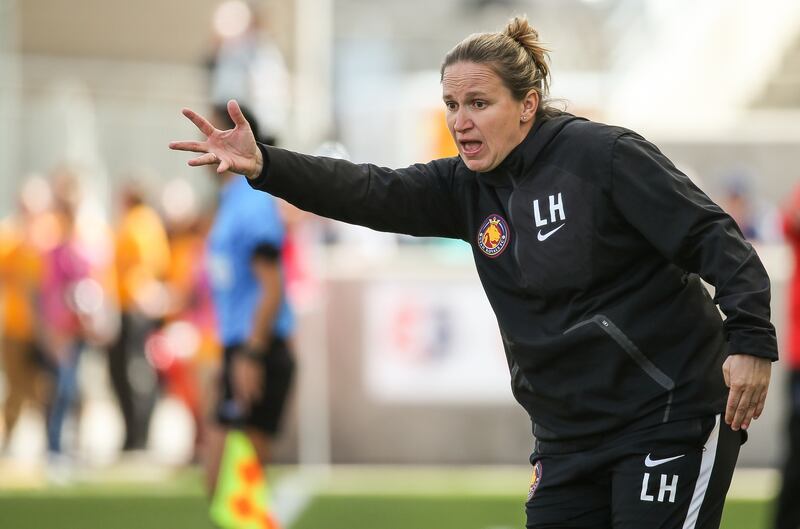
In Salt Lake City, Utah Royals FC coach Laura Harvey was, in a much more restrained way, asking the same questions.
The specifics of their complaints don’t matter. What matters is why would two coaches who pride themselves on taking responsibility for what they and their players can control spend a single second addressing the one thing no player or coach can even question, let alone influence?
Frustration boiled over for both coaches because they don’t have any recourse in dealing with officiating issues. Petke said they’ve taken their issues to specific officials and to the league with no satisfaction.
"The only thing I get from the MLS is ‘Stop criticizing the referees,’” Petke said. “I want to know where the referees are right now? Why can’t we ask the referees a question?”
Harvey, who appeared to try to restrain herself before questioning a call that led to the match’s tying goal Saturday night, raised the issue of accountability, which is swift and public for players and coaches.
“It’s hard to sit here every week and watch a performance like that of a referee and not acknowledge it,” Harvey said of lead official Reyna Fonseca. “Like, this is my job. I could get fired over that result, but nothing’s going to happen to her, and it’s every week, stuff like this.”
So the obvious question is why can’t coaches criticize officials? Why isn’t there any attempt to explain officiating decisions or issues to coaches and/or fans?
Despite the fact that decisions by officials can cost a player time on the field or a team a contest, there is no scenario that seeks to provide understanding of controversial situations or decisions.
If officials are entrusted with the power to influence competition, why not trust them to explain or defend their decisions?
Most leagues — from high school to the professional ranks — don’t allow officials to discuss most aspects of their jobs with anyone outside the officiating ranks, especially reporters. But some even refuse to engage in conversations with coaches — even after a game has ended.
In writing about officiating issues, my conversations with officials, about both abstract and specific incidents, has provided me with a better understanding of what’s being asked of referees and how different people can watch the same situation and arrive at very different conclusions. Those insights I’ve gained have deepened my respect for officials, as well as my understanding of their job and their critical role.
It has always been a mystery to me why officiating organizations would rather be misunderstood than find a way to better communicate what and how they arrive at controversial decisions.
Officials don’t need to be protected. They need to be better understood. They need both public and private accountability, something to which all other participants are submitted.
They don’t need leagues to pretend they are infallible. We know they are not. Video review has given us options with how to deal with one aspect of that fallibility, and a better understanding of specific decisions would only add to confidence in officiating practices.
We also shouldn't be expected to pretend that officiating issues don't matter. It’s an odd thing to ask coaches not to address something that can be so vital to a team’s success. In Harvey’s case, she was asked about her team’s morale, and it was impossible to answer that honestly without addressing the officiating issues.
“What are we doing?” Harvey asked rhetorically. “It’s just hard to sit here and not say anything about it, honestly.”
And the reality is she shouldn’t have to bite her tongue. The leagues should at least make a distinction between questions, criticism and insults.
Coaches need to be able to address issues of consistency or competence without fear, while professional officials should be expected to be able to explain or defend any decision — but especially those that lead to goals or the loss of a player.
It’s perfectly legitimate to protect officials from abuse, especially if that’s coming from coaches. But just a blanket, ‘don’t you dare mention the officiating’ is an insult to everyone invested in the games.