



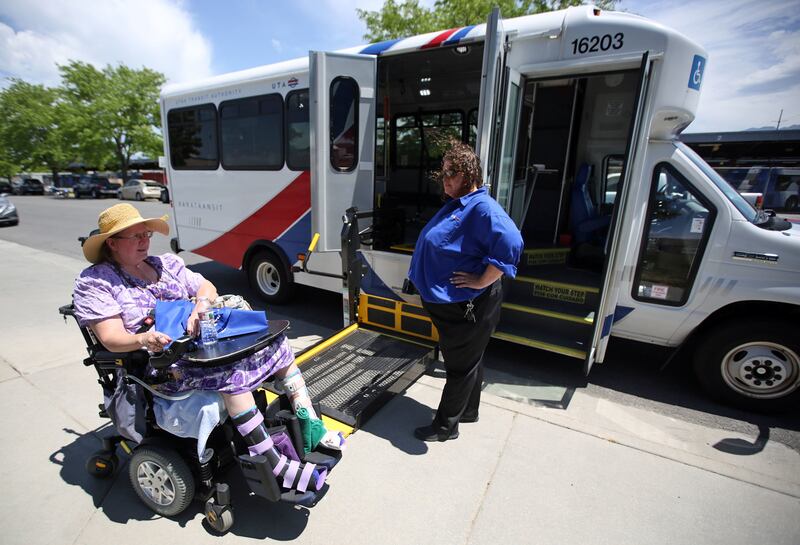


SALT LAKE CITY — Blind since birth, Utah resident Linda Holladay has depended on mass transit to be her primary mode of transportation around the Salt Lake Valley for the past three decades.
And while it was a bit of a challenge 30 years ago, her ability to get out and about over the years has increased significantly with the expansion of mass transportation in general, and more specifically the growth of services geared toward improving mobility for disabled Utahns.
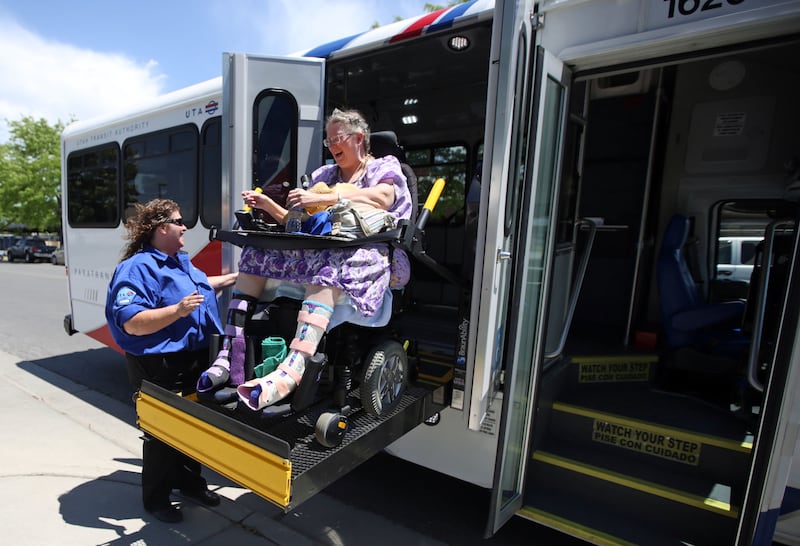
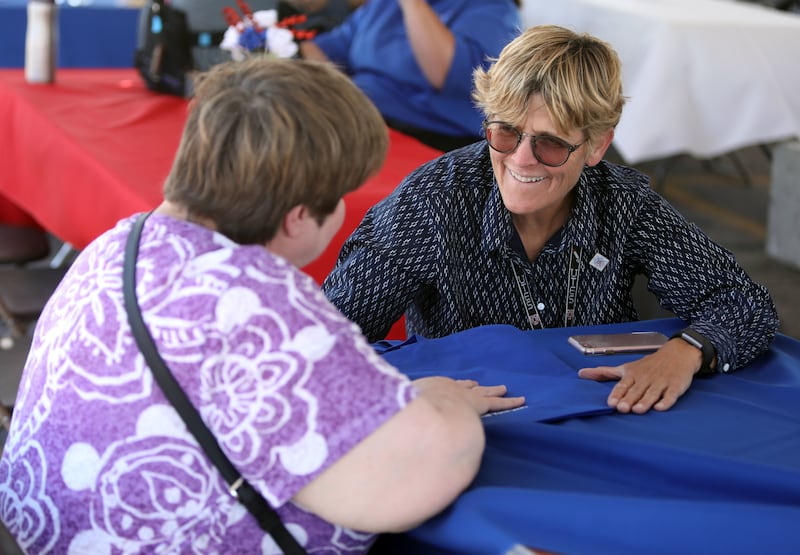
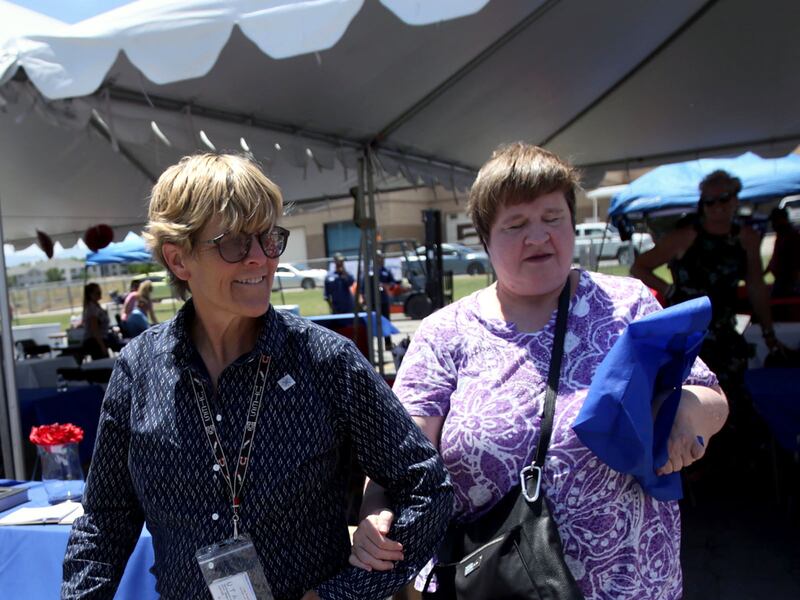
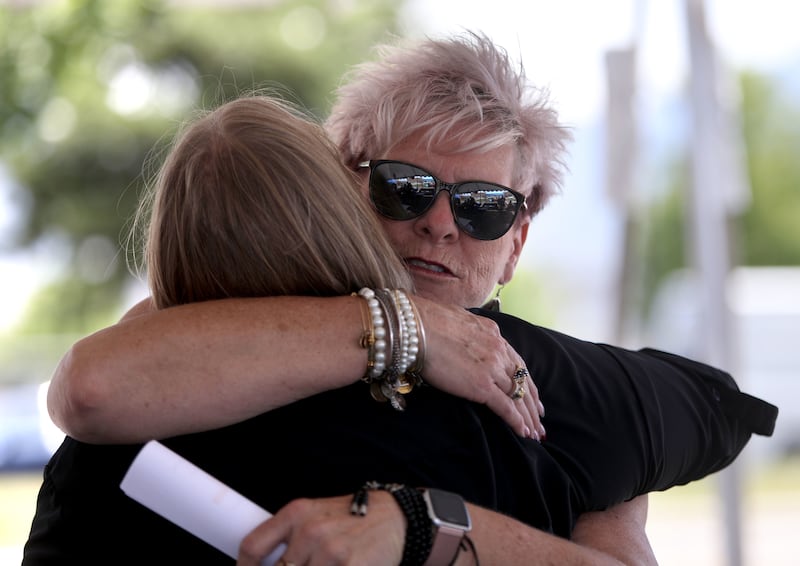
Holladay was among the many people who celebrated the 30th anniversary of paratransit's inception within the Utah Transit Authority. The agency Thursday commemorated the occasion at the Riverside/Paratransit headquarters.
Holladay, who was among the first regular users of the service, said the development of specialized transit for people with disabilities made a dramatic difference in her life by helping her and others live more independently.
"It's really a good service, and it's really useful for me because they come and get me outside my building and take me where I need to go," she said. "It's really nice and the drivers are more personable."
UTA launched paratransit service to address the transportation needs of people with disabilities within the agency's ridership boundaries, explained Cherryl Beveridge, UTA special services general manager. Prior to paratransit or flextransit, many people with disabilities were essentially "homebound," she said.
"Flextrans was a great option for people who previously couldn't afford to pay for private transportation," she said. "It created independence."
Noting that one of the greatest barriers to employment for people with disabilities was adequate, reliable transportation, she said paratransit service provided a critical option to address that demand and other everyday needs as well.
"We were able to create a transportation network that allowed people freedom and opportunities to get employment or (provide) medical transportation or even just to the movies or the grocery store," Beveridge said.
When the service started in 1988, it was somewhat limited in scope and reach, she noted, but not anymore.
The paratransit system operates a fleet of 113 vehicles with 120 drivers and 4,200 registered customers, she said. When the program was initiated, there were just 25 drivers and a small number of vehicles, she said.
"The very first day, we transported 50 customers," Beveridge said. "Today, we transport over 1,500 customers a day."
"Flextrans is for people who can't functionally use (traditional) fixed route service," she explained. Users may have physical, cognitive or visual disabilities, she added. "It's a safety net for people who cannot use fixed route service."
According to the UTA website, the agency offers complementary paratransit service as origin-to-destination service or curb-to-curb service in which customers are responsible for getting to and from the curb at the pickup and drop-off locations themselves. However, special accommodations can be made for special circumstances, Beveridge said.
Noting that paratransit service has dramatically changed the lives of many of the riders who use it, providing the service has been life-altering for drivers and support staff as well, she said.
"Just being able to provide that transportation and have that relationship with our riders makes such a significant difference in what we do," she said. "I'm just grateful that we get to serve a population that wasn't being served before."
Joyce Wall, UTA manager of service delivery, was one of the first drivers selected to participate in providing paratransit service 30 years ago. She said being part of the then-new service was one of the defining moments of her three-decade career at UTA.
"To have people that were essentially homebound unless they had family or friends who could take them someplace — to take them to the grocery store, an event or even to go visit somebody was just an amazing journey," she said.
Meanwhile, paratransit patron Mickey Adelhardt has used the service for nearly 15 years since she lost her sight due to a degenerative condition. She said the service has made a major difference in her life.
"It has given me the freedom to decide if I want to go someplace or not," she said. "The bus drivers are so kind. It makes a huge difference!"
While she is satisfied with the service, for the most part, one thing that is of concern is the expense to riders — many of whom are of limited financial means, Adelhardt said. Currently, the service costs $4 to ride one way, she noted — significantly more than the $2.50 fare for traditional bus and light rail service.
Additionally, some riders are asked to travel three-quarters of a mile to access the service, which can be burdensome to some, she said.
"There are things that we need to continue to work on," she said. Overall, however, the service has been an important asset to her and the lives of so many people in the community, she added.