

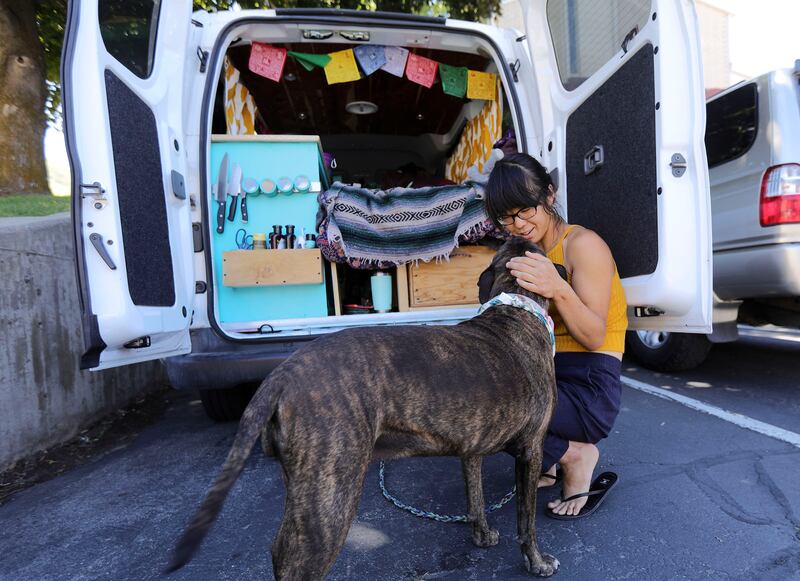

SALT LAKE CITY — If a route fails her once, Kathy Karlo returns.
When a prosecutor told her in May there would be no criminal charges in the rape she reported to police, she urged him to reconsider. A seasoned rock climber and a well-known voice in the outdoor community, Karlo recruited her network to write the Salt Lake County District Attorney’s Office, which received more than 350 letters in support of her.
In June, she packed up her van a second time and drove 600 miles from Boulder, Colorado, to Salt Lake City, with a stop to scale Moab’s towering red rock. She mapped out a plan to change the attorneys’ minds at a follow-up meeting.
But prosecutors stood by their initial conclusion: A lack of evidence made a conviction unlikely, meaning they could not meet their ethical standard to bring criminal charges.
”They went in with the intention to give me closure,” Karlo recalled. She was told she could curse and scream. “I was like, ‘That’s not what I’ve come here to do.’”
Karlo now plans to pursue a new, secondary route allowing those who report the most serious crimes to seek justice in the courts after a local prosecutor has passed up their cases. Under a first-in-the-nation Utah law, they may trigger a fresh review in the office of the state’s top law enforcer, which can investigate on its own and possibly bring charges.
In the past, such a second look has only been possible in rare cases when ethical questions about a prosecutor’s decisions are raised.
“It’s hard to expect a different outcome,” Karlo said. “But that also doesn’t mean that I’m giving up.” She will join four other women whose unrelated allegations of rape are now under scrutiny in the Utah Attorney General’s Office and still other hopefuls who are waiting in a growing line.
Since the law took effect in July, more have sought out the reviews than the office had anticipated for the entire year. Its employees have struggled to keep pace with the inquiries and field questions about the process.
”Our resources are being stretched,” said Craig Barlow, the criminal deputy attorney general who oversees the program. “We’re not really whining. It just looks like this could have more impact than originally planned.”
Uncharted territory
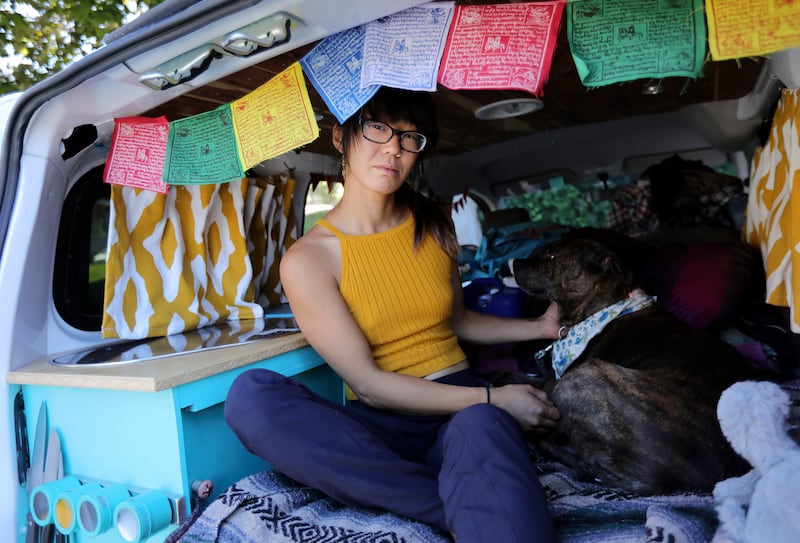
A podcaster and executive director of the Colorado-based No Man’s Land Film Festival, Karlo had planned to spend most of 2019 climbing across the West and living in her van. Instead, meetings with attorneys and advocates largely tethered her to Salt Lake City.
“I worry about being out of service and missing an important phone call,” she said.
Normally upbeat and gregarious, she says she has been diagnosed with post-traumatic stress disorder and said she often feels anxious and struggles to focus. She has managed to venture out at times, including to Tennessee, New York and Spain, but her thoughts have remained grounded in Utah, where she is working with the Utah Crime Victims Legal Clinic to advance her case.
In the attorney general’s office, prosecutors are at work reviewing reports of rape from the four women whose cases were declined by the same office as Karlo’s. Identified in court documents as Jane Does, the women had asked the Utah Supreme Court to assign them a special prosecutor, but Utah lawmakers approved the new path before the court ruled.
“In each one of the (four) cases, there are factors which certainly would lead a reasonable, seasoned prosecutor to say, ‘Wow, I believe what your experience was, but the optics of this case are going to be very difficult to get a jury to convict,’” Barlow said.
“Then the decision is, do we still think it’s a viable case? And is the victim prepared emotionally to go forward, even if we do a fantastic job — with the likelihood that the victim will tell her story and her truth and the jury will still say, ‘Well, sorry, we just weren’t convinced beyond a reasonable doubt.’”
Whether his colleagues will confront the very issues that had earlier prevented the allegations from going to trial, Barlow said, “We don’t know.”
He has no case study to turn to.
The Utah law is unlike any other in the nation, said Meg Garvin, executive director of the Oregon-based National Crime Victim Law Institute. Several states allow victims to initiate prosecution in some way, and most attorneys general have the authority to revisit certain declined cases, she said, but the Utah law is different because it’s more specific and it’s mandatory.
”It is exciting that the law is evolving,” Garvin said. “Many crimes — particularly crimes of sexual violence — face tremendous cultural hurdles when it comes to investigation and prosecution. Ensuring that these crimes are not readily ignored is critical to changing the culture and ensuring access to justice.”
A system that’s responsive to victims will better serve the community, she added, because people will feel more comfortable turning to it for redress.
But Karlo is not banking solely on a remedy in the criminal system.
She has also filed a lawsuit against her alleged aggressor in civil court, where the standard of proof is lower. It is a preponderance of the evidence — meaning more likely than not — as opposed to the threshold for a guilty verdict, which is beyond a reasonable doubt.
‘This isn’t love’
Late last year, Karlo and her boyfriend broke up after he proposed an open relationship but she rejected the idea, she told the Deseret News.
On Dec. 11, 2018, three days before she planned to move out, Karlo’s ex came home and told her to come to bed, according to a report she would later file with the Unified Police Department.
She began to cry and told him “they would no longer have to look at or talk to each other, or lie next to each other at night” after the following week, her lawsuit says. She would also relay the conversation to a forensic nurse who later conducted a rape exam.
Her ex held her in his arms and told her that he wanted to be “selfish” and sleep with other women “but that he would take everything he learned and come back to Kathy,” her lawsuit says.
He began to kiss her and get on top of her as she told him no several times, pushed him away and said she didn’t want to have sex with him, but he pinned her arms on the bed, she alleges in the lawsuit. Karlo estimates he is double her weight and more than a foot taller.
“Kathy was crying the entire time,” the suit says. It alleges how her ex tried to perform additional sex acts as she attempted to push him away.
“This isn’t love,” Karlo recalls telling him after she said he stopped.
She got ready to leave the house but he “put his arms around Kathy and held her arms,” the suit claims. She told him he was hurting her and asked him to let her go, which he ultimately did. She told him “what he did to her was rape and she did not want to have sexual relations with him and was clear about it,” the lawsuit says.
He responded that Karlo “was the one that had ‘rape fantasies’ and how was he supposed to know she did not want it as they didn’t have a ‘safe word,’” the suit continues. He urged her to stay, but she refused.
He later sent her several texts, including one that said, “I don’t know why I got all crazy there. I’m really sorry,” according to the lawsuit.
She began staying with a friend the next day and went to St. Mark’s Hospital for a sexual assault exam two days after that. Karlo spoke to a Unified police officer there but hesitated to pursue charges, fearful at the time of how a criminal case might hurt him.
In the following weeks, she confronted him and recorded the conversation in case he made an admission. If he had acknowledged the assault, she thought, that would probably suffice and she’d tell police to drop the case. But she said that didn’t happen. She decided to file a formal report and sat down with a police detective, who recommended prosecutors file criminal charges.
“The charge of rape, one count, will be requested” to prosecutors, in addition to a count of object rape, the police report states. The detective who wrote the report declined an interview for this story.
”None of this has ever been about revenge,” Karlo said. “I just feel like I’ve lost everything, and I think that a big part of getting something back is holding him accountable.”
In Karlo’s civil suit — filed Nov. 7 in Salt Lake City’s 3rd District Court — she is seeking more than $300,000 in damages, including for her distress, loss of enjoyment in life and medical expenses, plus punitive damages to be determined at trial.
The man she identified as her aggressor initially agreed to a police interview, the police report shows, but called back a short time later and declined.
He has not been arrested in the case, nor charged with any crime. The Deseret News has chosen not to name him at this time. After numerous attempts to contact him, when reached by phone on Monday, he hung up before any questions could be asked.
A difficult standard
The day after Karlo’s forensic exam, she traveled to Nevada’s Red Rock Canyon National Conservation Area with Sky Yardeni, her climbing partner and friend.
“She was completely traumatized,” recalled Yardeni, a social worker and therapist based in Colorado. Some days, Karlo didn’t feel up to climbing. When the pair did buckle into helmets and harnesses, he said he observed her disassociating — meaning she lost touch with where she was and what she was doing in that moment.
At night, during their stay at a friend’s house, Karlo would grind her teeth “in a way that is so extreme,” Yardeni said. “It was like someone dragging a huge sofa on a concrete floor, every night, most of the night. That’s a huge indicator of an extreme amount of stress.”
Yardeni said it was difficult to see his friend appear helpless, in part because she has worked hard to make those who are vulnerable feel accepted and encouraged. In her blog and podcast, “For the Love of Climbing.” Karlo sheds light on empathy, gender dynamics and social justice.
“The majority of us are pretty detached from that world,” Yardeni said. “She’s just exposing everyone to just a difficult conversation.”
Salt Lake County District Attorney Sim Gill said several lawyers in his office, including a supervisor, reviewed Karlo’s case multiple times. He declined to make them available or shed light on their decision, saying it could jeopardize Karlo’s planned appeal.
The filing of any criminal charge is something Gill says he doesn’t take lightly.
“By issuing an arrest warrant, I’m going to rock your world and change your world in a way that is unimaginable. If I have genuine concerns about the evidence about our ability to carry, to meet our burden … then I have an ethical obligation to not file that charge and go forward because we know we will go through this process and not achieve anything,” he said.
However, he continued, “if the evidence is there, you prosecute it, regardless of how tough or how easy the case is.”
Gill said he welcomes the review from the office of the state’s top prosecutor. “I am more than happy to own a mistake. If in the end, the victim gets justice, I’m totally OK with that,” he said.
Requests to the attorney general’s office, meantime, have piled up.
The agency has received more than the six or seven it thought it would see in a year. Aside from the initial four, it now is reviewing paperwork in seven others and vetting others to make sure they meet the criteria. Lawyers and others in the office have logged 700 hours poring over the cases, Barlow estimates. They have not yet filed any criminal charges.
While the office has a workforce of 260 attorneys, most focus on civil or administrative matters. The terms of federal grants prevent many of its prosecutors from helping out on the new reviews, Barlow added, and several are devoted to financial, drug and internet crimes. That leaves a half-dozen who can chip in.
“The notion that the A.G.’s office has vast resources for prosecutors is inaccurate,” Barlow said. His office received an initial $171,000 and plans to seek more from the Utah Legislature next year but has not yet nailed down a number, he said.
Rep. Karianne Lisonbee, the Syracuse Republican who brought the successful bill last year, declined to say whether she will attempt to secure more money to support Barlow and his colleagues, telling the Deseret News she is waiting to receive more data from the office.
A second opinion
Karlo said prosecutors did not tell her exactly why they would not take on her case, but pointed out they have an ethical obligation to only file charges when they believe there is reasonable likelihood of obtaining a conviction at trial. It became clear in her mind that criminal charges would require either a full confession, a witness who saw what happened, or possibly, other victims.
“But why would they (prosecutors) want to wait for that to happen?” she said. “Where are the ethics?”
The question is top of mind for Bethany Warr, with the Utah Crime Victims Legal Clinic. She is helping Karlo and several others, detailing the merits of their cases and then referring them for review in the attorney general’s office.
“We know that juries have a tendency to hold certain prejudices and biases in sexual assault cases. And so you’re assuming that the jury has these biases. So then you’re not filing (charges), because you think, ‘Oh, well, it’s going to be hard to overcome these fixed beliefs or these biases in sexual assault cases,’” Warr said. “And we just kind of stay where we’re at.”
Warr noted that the specific prosecutors who turned down Karlo will generally take on tough cases others won’t. And though Karlo’s sexual assault exam did not reveal physical trauma, not all assaults result in injuries, Warr said.
Warr likens the reviews to a second opinion from a doctor that could help ensure the cases are fully investigated before they are closed. Still, she counsels clients not to hang their hopes on the criminal justice system.
“Truly, your ability to go on with your life and and to survive and to thrive, it just can’t be in this system. Because this system is very mechanical, and it is very arbitrary,” she said. “I think you’ve got to find your peace and your healing elsewhere.”
Karlo remains hopeful.
“I feel like I can’t let go until I know I’ve exhausted every option, until I know that I did everything I possibly could,” she said. “That’s what I spend my life doing: This thing is impossible, but I’m going to try it. And if it doesn’t work today, I’m going to come back and keep trying.”
Correction: An earlier version said there are 260 prosecutors in the attorney general’s office. There are in fact 260 attorneys.