

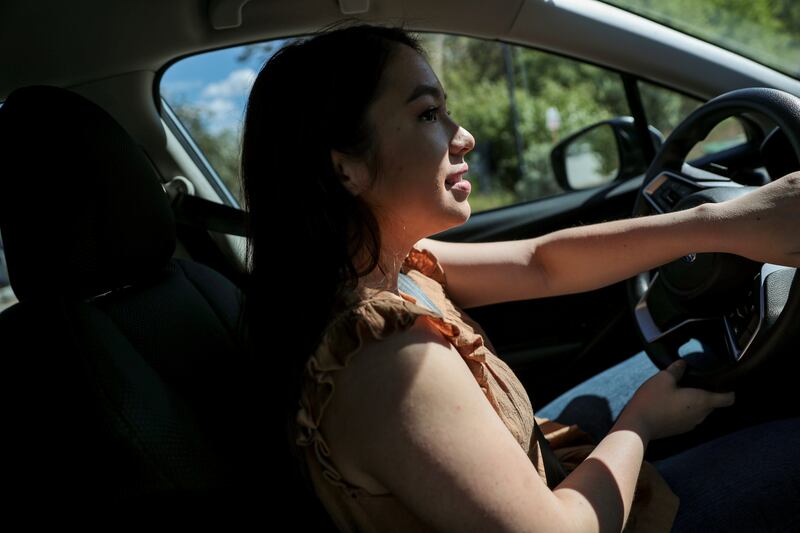
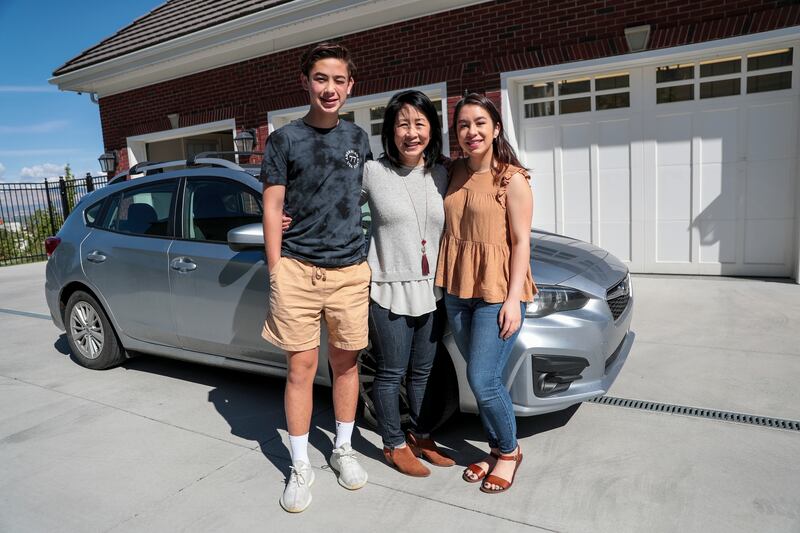

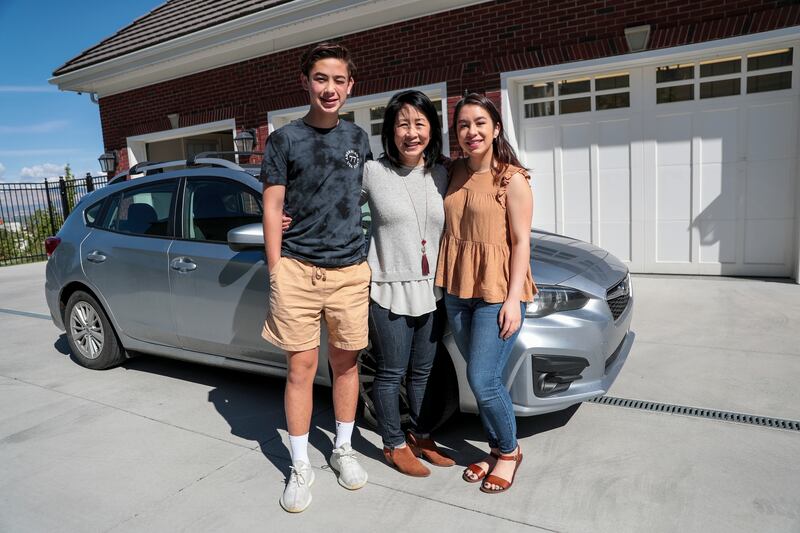
SALT LAKE CITY — Julie Langie will have two teenagers on the road this summer, and she's acutely aware that driving is dangerous for teens — though she knows that it's also an important milestone on the road to independence.
Her daughter Emily, 18, has been driving for a couple of years and hopes to take a senior trip with friends to celebrate her graduation from Hillcrest High, which makes her mom a little nervous. Emily's younger brother Christopher, 15, is just starting driver's education through Corner Canyons High School, which he attends. By summer's end, he'll have a license, too.
Summer — for all the joy of sunshine and free time and days out with friends — is a dangerous time for teen drivers. The period between Memorial Day and Labor Day is known as the "100 Deadly Days of Summer": More drownings. More injuries. And more car crashes, especially for teen drivers.
In Utah, according to the Zero Fatalities campaign, over the past decade, the number of fatal crashes has been 45 percent higher in summer months compared to the rest of the year.
"Teens have the highest crash rate of any group. They are inexperienced and maybe a little immature. In summer, we see a huge spike in teen crashes and deaths — an increase of 26 percent compared to other months," said Laura Adams, senior safety and education analyst for DriversEd.com, an online driver safety education program.
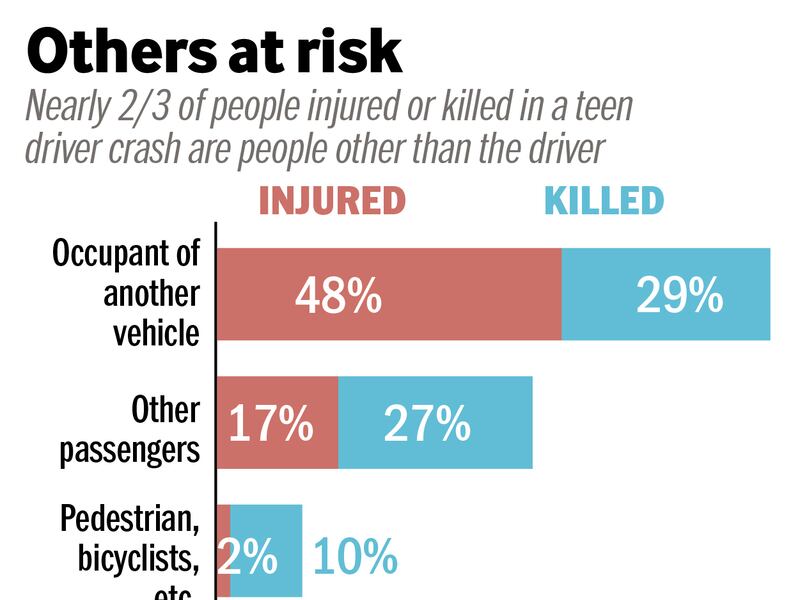
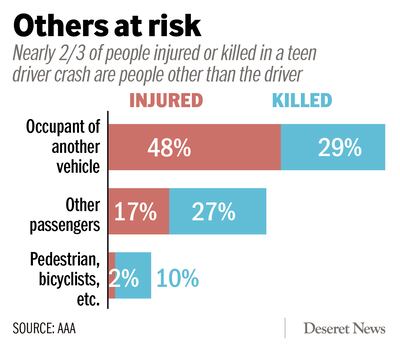
In 2017, research by the AAA Foundation for Traffic Safety found new teen drivers are up to three times as likely as other drivers to be in a crash that kills someone. Most often, crashes involving teens hurt or kill someone else. The American Automobile Association, AAA, says other drivers, passengers and pedestrians are injured or killed in two-thirds of crashes with teen drivers.
Corinne Edwards of Logan, Utah, is acutely aware that her young driver has little experience and is at greater risk. So she offers this advice to son Xavier, 16 and a week away from getting his actual license: "Assume everyone around you is an idiot, not paying attention, so it's your job. Be aware of people around you and what other drivers are doing."
How to recognize danger
In summer, more people take to the road, including kids who are out of school and families traveling for summer vacation, said Adams of DriversEd.com.
"Teen drivers often travel in large groups of their peers, stay out late at night, and exceed posted speed limits while on summer vacation," according to the foundation.
The AAA foundation notes that 36 percent of deadly crashes involving teen drivers occur at night, between 9 p.m. and 5 a.m. Speeding is often a factor.
"Discuss with teens early and often the dangers of risky driving situations, such as speeding and nighttime driving," said Mike Blasky of AAA Northern California, Nevada and Utah.
Zero Fatalities says 94 percent of all crashes result from "human error — and the top contributing factors are: distraction, speeding (traveling above the posted speed limit) and aggressive maneuvers, drowsiness, impairment and not buckling up."
That means that a driver policing his or her own behavior greatly reduces the risk of a crash and possible injury or even death. Blasky recommends having kids sign a driving contract. It can be modified to fit a family's rules and needs.
Langie is grateful for graduated license rules that slowly allow young drivers to build skills. Most states have such rules, limiting the hours young teen drivers can be on the road and/or banning teen passengers for a time, Adams said. The Langies have their own rules to guide Emily and Christopher on the road, as well.
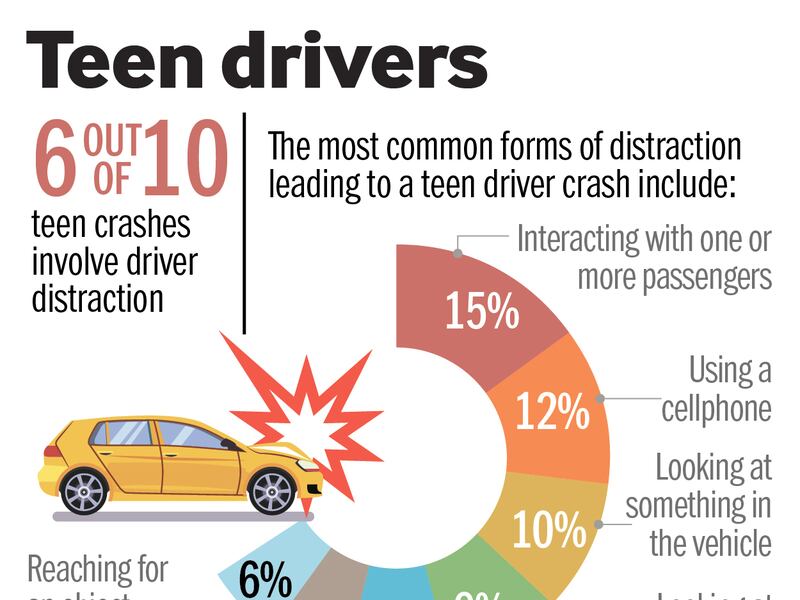
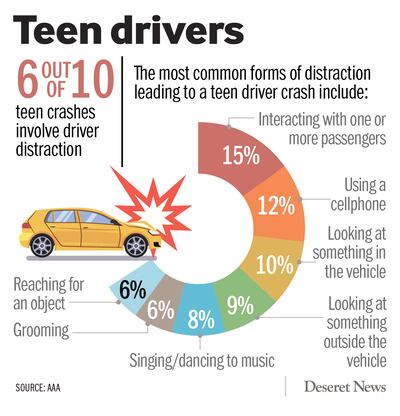
"The No. 1 thing is distraction," said Langie. "So we have absolutely no texting while driving. When it comes to safety, we absolutely hold firm to the rules. We find it a little discouraging that some parents don't hold to the rule that once you get your license, you have to wait six months before you can have any friends in your car with you. ... We enforce that."
Friends are a distraction, Langie said, and young drivers especially need to focus on the road.
Adams echoes that, noting that with each friend riding as a passenger with a teen driver, risk of a crash goes up. So two friends are worse than one. And until a teen has lots of practice driving, no friends on board is safest.
Edwards takes distraction so seriously that she discourages use of GPS and other tech devices, telling her kids to plan out their routes so they know where they are going and can focus on what's happening on the road.
The danger is not theoretical to Edwards. Early in her own senior year, she was a passenger in a car where the young driver was changing lanes and rolled the car three times on the freeway. It was a horrendous crash, she said.
Though her kids are "good kids and responsible," Langie said they also know she won't hesitate to take driving privileges away or even ground the kids if they break the rules.
How to prioritize safety
Adams says safety starts with learning to drive — and moms and dads aren't always the best ones to teach a teen. She recommends teens be enrolled in a quality driver education program. Parents and teens can be "contentious" during driving lessons, so she suggests having someone else teach kids to drive. "Mom and dad can back up" the lessons.
Parents are crucial, however, as role models and rule setters. They must remember kids absorb messages from what they see, Adams said. So parents must never text or put on makeup or do other distracting tasks when they're driving, lest their kids think they can do it, too. These things are dangerous at any age.
"I think that's one of the main things, even if kids are nowhere near driving age," said Adams. "They're watching you, taking in everything."
Other advice from AAA, DriversEd.com and other experts to keep teen drivers safe on the road includes:
- Review state laws with teens, including how late they can legally be driving. Consider setting rules that are stricter than state rules.
- Ban distractions like cellphones and friends. Then enforce the rules, without exception. Make sure kids know they don't have to answer a parent's call or text until they can pull over and do so safely.
- Make sure a teen knows basics of vehicle maintenance, like how to check tire pressure, change tires and check fluid levels.
- Make those checks happen consistently — including right before a teen will be driving any significant distance.
- Have an expert make sure a teen's vehicle is road-worthy and make any repairs.
- Consider safe-driving behavior devices, like a dashboard camera. Some insurance companies recommend devices that monitor hard braking and speeding.
- Enroll a teen in an online or in-person defensive driving course to learn strong collision-avoidance techniques.
- Even before they drive, talk about traffic rules, such as how to use traffic circles and four-way stops, blinkers, etc.
- Consider vehicles with built-in help, like lane change indicators and hands-free technology.