
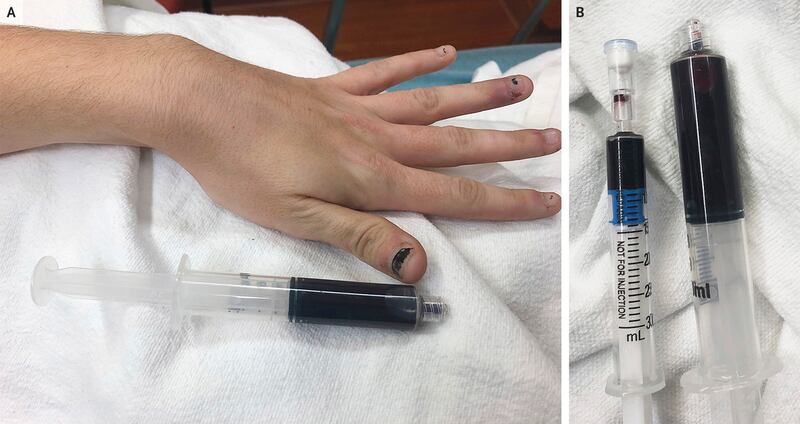

A 25-year-old woman in Providence, Rhode Island, went to the hospital after she felt weak and fatigue. Oh, and a little side note here — her blood was turning blue.
The woman reportedly felt fatigue, shortness of breath and weakness when she first went to the hospital. And, as physicians Otis Warren and Benjamin Blackwood explained in a recent study published in the New England Journal of Medicine Thursday, her blood was turning a dark blue color.
Her blood shifted from red to blue because of a numbing medicine that she consumed, according to the researchers.
The medicine “deadens nerve endings in the skin,” according to CNN.
“She reported having used large amounts of topical benzocaine the night before for a toothache,” the two co-authors wrote in the study.
Ottis Warren, one of the researchers for the study, told me that some people have bad reactions to benzocaine. Some people never have issues. Some can be affected by small doses.
Children under 2 years old can be sensitive to the benzocaine, too, Warren said.
“It is a rare reaction, but I’m not sure how rare,” he said.
He said the woman had “methemoglobinemia,” which is a rare blood disorder that causes people to produce an abnormal amount of methemoglobin.
The issue can be genetic. Warren pointed to a family called The Blue Fugates, who were a family with blue skin.
But Warren said the Rhode Island woman’s case is good for clincians because it’s rare and an interesting case.
Specifically, the woman suffered from “cyanotic,” which is the technical term for blue blood. It happens when there are low oxygen levels in your red blood cells or when there’s problems with oxygen getting into your blood.
When your blood is full of oxygen, it turns that bright red color, according to Healthline.
How do you fix it? You use methylene blue — a blue dye.
“So you treat blue skin with a blue medicine! And the best part is this young woman with a life threatening medical condition was quickly cured and has no lasting effects,” he said.