


The extreme heat advisories this summer were just the beginning of what scientists are calling an “Extreme Heat Belt,” which is predicted to hit the United States in the next 30 years, according to a new report.
First Street Foundation, a nonprofit focused on alerting the population to changing climate conditions, released the research Monday.
“We need to be prepared for the inevitable, that a quarter of the country will soon fall inside the Extreme Heat Belt with temperatures exceeding 125°F and the results will be dire,” said Matthew Eby, founder and CEO of First Street Foundation, in a press release about the research.
What is an extreme heat belt?
The term “extreme” in the Extreme Heat Belt refers to the temperature on the National Heat Index categorized as “extreme danger,” which includes temperatures that are above 125°F.
First Street Foundation predicts that by 2023, 8.1 million U.S. residents in 50 counties will experience these extreme temperatures.
Multiply the number of people to be affected in 2023 by 13, and you would be close to how many people are predicted to be affected in 2053. In 30 years, 107.6 million people — living in an area that takes in a quarter of the land mass in the United States — will experience this type of heat.
Of most concern, Eby says, is the number of days that the states along the heat belt will experience this extreme heat.
“Increasing temperatures are broadly discussed as averages, but the focus should be on the extension of the extreme tail events expected in a given year,” said Eby.
Which states will be affected?
The Washington Post reported that the heat belt is formed like a basin, where the humidity settles, between the Appalachian and Rocky Mountains. The basin and extreme temperatures take in several states, including parts of Texas, Louisiana, Arkansas, Missouri, Indiana, Illinois and Iowa.
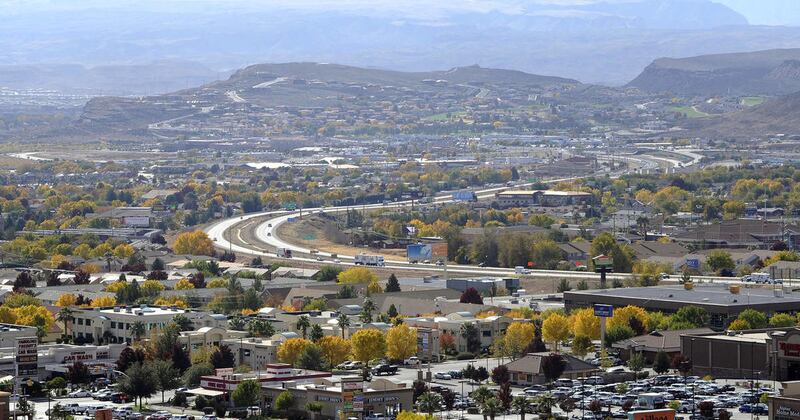
While Utah’s temperatures will be less affected by the extreme heat belt, Moab and the area near Glen Canyon will get at least three consecutive days of dangerous heat, as reported by The Washington Post. The area near St. George will also see an increase, and will be likely to “experience 17 more days with dangerous heat in the next 30 years.”
These extreme temperatures are due to climate change, according to the First Street Foundation. Last month, President Joe Biden categorized climate change as “an emergency.”
“Climate change is literally an existential threat to our nation and to the world,” Biden said.