

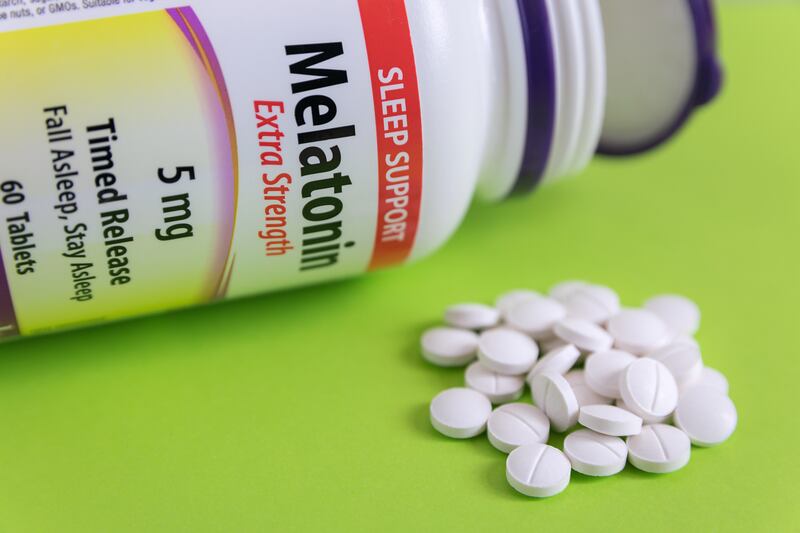

Melatonin use among children age 1 to 14 has increased significantly over the past several years, and now nearly 1 in 5 children use these sleep inducers, according to a study published to JAMA Network in November.
Dr. Erik St. Louis, a neurologist at Mayo Clinic, explained, “Melatonin is sometimes known as the hormone of darkness. So, when it’s secreted naturally by the body, it tends to peak in the hours before sleep and exert sleep-promoting effects.”
However, long-term studies are needed to determine melatonin’s safety and effects, especially among younger populations.
Generally melatonin is taken to provide insomnia relief, but others take it for chronic pain, dementia and depression, according to WebMD. However, “there is no good scientific evidence to support most of these uses,” the health site added.
Melatonin supplement side effects can include dizziness, nausea, persisting tiredness and headaches.
How many children take melatonin?
The University of Colorado Boulder contributed to the study, and explained that from 2017 to 2018, roughly 1.3% of U.S. parents said their children took melatonin. Around 1,000 parents were surveyed during the first half of 2023, and the number increased nearly 18% for children age 5 to 13.
The survey included that 18.5% of 5- to 9-year-olds, 19.4% of 10- to 13-year-olds and 6% of 1- to 4-year-olds took melatonin in the past month.
Lead author of the study Lauren Hartstein said, “We hope this paper raises awareness for parents and clinicians, and sounds the alarm for the scientific community.”
“We are not saying that melatonin is necessarily harmful to children,” she added, “But much more research needs to be done before we can state with confidence that it is safe for kids to be taking long term,” per CU Boulder.
Why should parents use caution when buying melatonin?
Actual melatonin amounts in products varies widely between brands and most of the time differ from the label.
The FDA does not tightly regulate melatonin. A recent examination of 25 brands showed melatonin content varying from what the containers advertised. Some brands’ actual melatonin content ranged from 74% to 347% of what the packaging said.
Of the 25 brands that were analyzed, one product contained zero melatonin but contained 31.3 milligrams of CBD (Cannabidiol). Only three of the 25 products were correctly labeled, and only three were within 10% of the amount of melatonin they advertised they had. Five of the 22 contained CBD, and of those that disclosed CBD content, the actual amount was from 104% to 118% higher than the product disclosed.
Additionally, due to a lack of long-term studies, not much is known if melatonin use among children has long-term influence. Sleep Foundation adds, “Some experts question if melatonin, because it is a hormone, can affect other hormonal development in adolescents.”
From 2012 to 2021, poison control centers experienced a 530% increase of melatonin-related calls, and most of the calls were about the 5-and-under population.
“If this many kids are taking melatonin, that suggests there are a lot of underlying sleep issues out there that need to be addressed,” Hartstein said.
“Addressing the symptom doesn’t necessarily address the cause,” she added.