

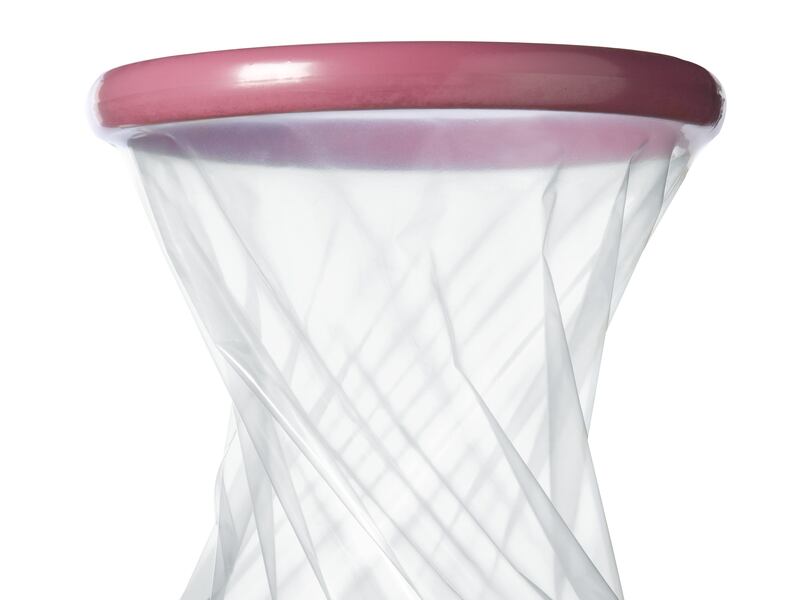

For 18 months following a birth by cesarean section, a New Zealand woman suffered from acute abdominal pains. She went repeatedly to see her doctor. When a CT scan was ordered, a retractor the size of a dinner plate was found inside her abdomen.
The unnamed woman in her 20s filed a complaint in 2021, after the discovery of the wound retractor accidentally left inside her body. Following a detailed investigation, Morag McDowell, the Health and Disability commissioner, issued the final decision Monday, plus the remedial actions recommended to Te Whatu Ora Te Toka Tumai Auckland, formerly the Auckland District Health Board.
How did this happen?
According to the commissioner’s report, the woman was scheduled for a C-section because of a placenta previa, in which the placenta covers the cervix, and concerns about placenta accreta, in which the placenta grows into the uterine muscle. There were 11 personnel present in the operating room: a surgeon, a senior registrar, an instrument nurse, three circulating nurses, two anesthetists, two anesthetic technicians and an operating room midwife.
After an initial incision, a large wound retractor was used, but the surgeon said she needed the next size up. It was the second retractor that was left inside. The retractor used was an Alexis Wound Retractor, or AWR. It is a round instrument made up of transparent plastic fixed on two rings, with one ring that remains on the outside of the body. It would normally be removed after suturing the uterus and before closing the skin.
When the surgery in question was performed in 2020, counting AWRs was not part of the normal practice of counting items used during surgery. One nurse told the Health and Disability commissioner, “(A)s far as I am aware, in our department no one ever recorded the Alexis Retractor on the count board and/or included in the count. This may have been due to the fact that the Alexis Retractor doesn’t go into the wound completely as half of the retractor needs to remain outside the patient, and so it would not be at risk of being retained.”
The hospital completed its own review and “expressed its sincere apologies” for the distress caused to the patient. However, the hospital reported to the commissioner that it had exercised reasonable diligence and that the practice of not including AWRs in the surgical count met international best practice guidelines.
Below the standard of care
McDowell disagreed with the hospital’s findings. She reported that “It is self-evident that the care provided fell below the appropriate standard, because the (retractor) was not identified during any routine surgical checks, resulting in it being left inside the woman’s abdomen.”
McDowell also did not accept the hospital’s assertion “that the risk ‘was not known.’ It is common sense,” she writes, “that an AWR that not only enters the surgical field but is introduced into the wound and surgical cavity carries an inherent risk of retention — albeit rare. A degree of critical thought needed to be brought to that risk.”
The commissioner also noted the hospital’s “insufficient guidance” on the count policy in its operating rooms, instead “relying on them to apply their own interpretation of what instruments were ‘at risk of being retained,’ which led to a culture and practice where AWRs were excluded from the count.”
She also found discrepancies surrounding the hospital’s requirement for all surgical staff to read and stay updated on the count policy. Nurses in the operating room read the count policy, but the surgeons had not.
“These omissions,” reports McDowell, “represent systemic issues.”
Follow-up and recommendations
McDowell is referring Te Whatu Ora Te Toka Tumai Auckland to the director of proceedings, an official who will determine whether any further action should be taken. Copies of the report were also sent to New Zealand’s Health Quality and Safety Commission.
McDowell recommended that the hospital issue a written apology to the mother, as well as provide an opportunity for her and her family to have a face-to-face meeting, and to report back to the commissioner.
She also instructed the hospital to confirm that AWRs are now included in the surgical count, that the count policy has been reviewed and that the hospital provide an update on the learning modules for surgeons and other stakeholders on the count policy.
Finally, she recommends that hospitals across New Zealand be made aware of the risk of Alexis Wound Retractor retention and that AWRs be included in all surgical counts.
Holly Richardson is the editor of Utah Policy