

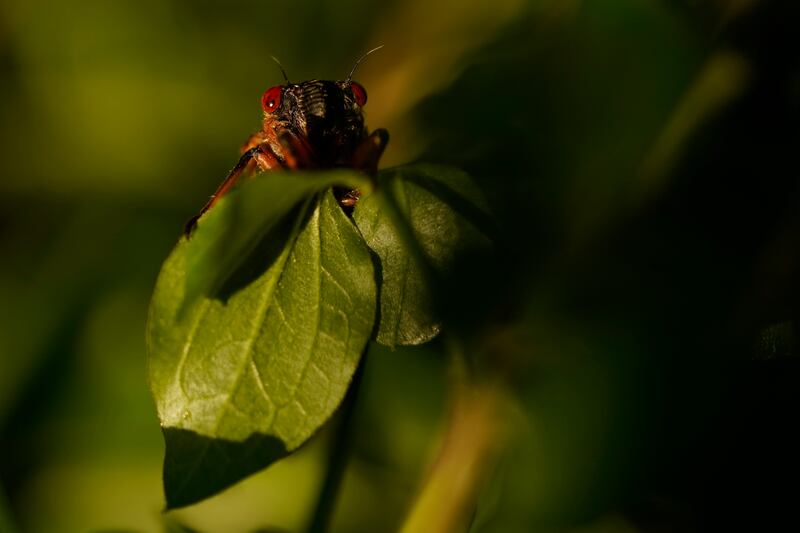
This year will be a unique one for cicada watchers because Americans will see two separate cicada broods emerge at almost the same time, creating a spectacle that hasn’t been seen for hundreds of years.
Ahead of the historic event, here’s a look at what makes cicadas unique among insects.
The two cicada swarms coming soon
A cicada is an insect that spends a large amount of its life underground. Some emerge once a year, while others, including many in the United States, emerge even less frequently.
Cicadas in this latter group, which are part of what’s called periodical broods, live underground for years at a time and only come out at designated times. According to National Geographic, scientists have theorized this may be to avoid predators and are only found in North America.
The U.S. will see two of these periodical broods emerging in 2024, known as Broods XIII and XIX, per CNN. Brood XIX emerges every 13 years, while Brood XIII emerges every 17 years.
Where and when will they be?
According to Time magazine, Brood XIII will likely be seen in Midwestern states like Iowa and Wisconsin, while Brood XIX will be concentrated in the South in states such as Alabama, Georgia and Kentucky.
CNN says that the cicadas could start emerging in mid-May, with both broods taking several weeks to come out. It is highly unlikely that the broods will cross each other’s paths, but the fact that these two broods are emerging the same year is still considered historic.
The last time Brood XIII and Brood XIX emerged in the same year was 221 years ago in 1803, as the Deseret News previously reported.
Get ready for lots of noise
When cicadas emerge, they are only alive for a few weeks to mate before dying. According to National Geographic, the clicking and buzzing noises they emit are used to attract mates or be a warning.
Cicadas are known to emit these noises at 100 decibels (the same level of noises as a motorcycle or jackhammer), per NBC, but that is the extent of the damage they do.
NPR reports that cicadas are not harmful to animals who may accidentally ingest them or to plants. Cicadas do not bite or sting.
Scientists are encouraging those who live in areas common to cicadas to go out and watch this historic event.