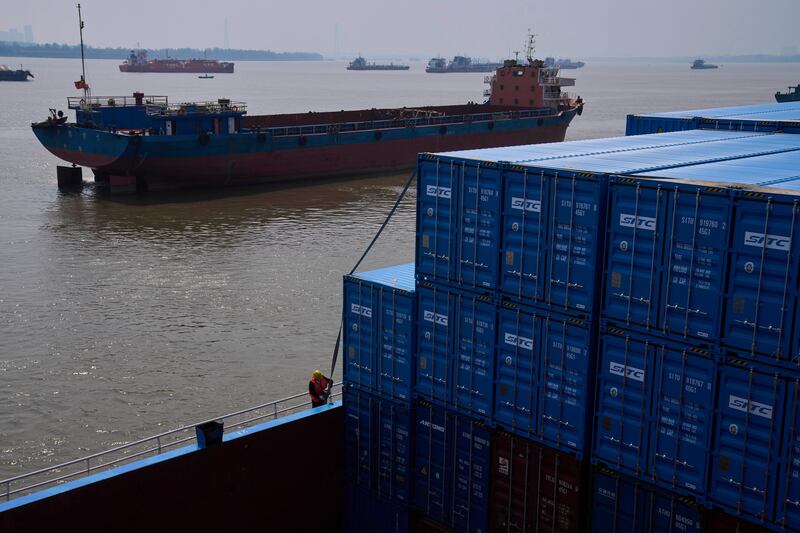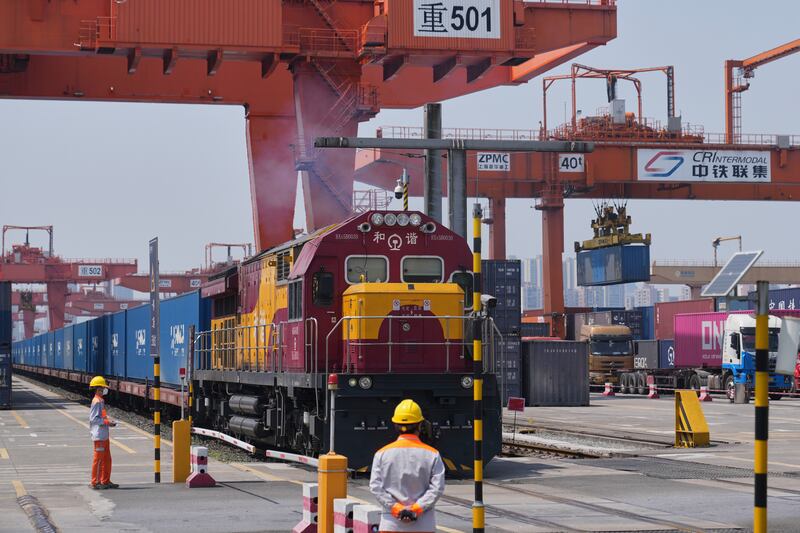

- China made claims of its own after Trump's comments last week about trade deal violations.
- U.S. markets respond negatively to the rekindled trade disputes.
- Trump and Chinese President Xi Jinping could speak this week.
China hit back Monday on President Donald Trump’s claims the Asian country was in breach of a new trade agreement, countering that the U.S. itself was undermining the deal with new sanctions.
The new rift was dragging down U.S. stock indexes Monday morning and threatens to reignite a Sino-U.S. trade war that had cooled somewhat following high-level trade talks that led to a temporary agreement last month.
A statement from China’s Ministry of Commerce released Monday said Trump administration actions “seriously undermine the existing consensus reached at the Geneva economic and trade talks, and seriously damage China’s legitimate rights and interests.” Chinese officials also pointed to recent signaling from the U.S. about potential new regulations for advanced microchips and the revocation of U.S. visas for Chinese students, per CBS News, as evidence that the U.S. was acting in bad faith following the trade deal.
Later on Monday, a White House official told CNBC that Trump and Chinese President Xi Jinping are likely to speak this week.
In Truth Social post last Friday, Trump said that the deal had led to greater economic stability for China and “everybody was happy” but alluded to China violating terms of the agreement.
“The bad news is that China, perhaps not surprisingly to some, HAS TOTALLY VIOLATED ITS AGREEMENT WITH US. So much for being Mr. NICE GUY!” Trump wrote.
While Trump’s social media post last Friday morning offered no details about the nature of China’s alleged breach, later reporting indicated the president’s issue was focused on China’s export rules on rare earth minerals. China controls 90% of the world’s rare earth elements production capacity and, according to the U.S. Department of Energy, the minerals play a critical role in U.S. national security, energy independence and economic growth. Many advanced technologies have components made from rare earth materials such as magnets, batteries, phosphors and catalysts.
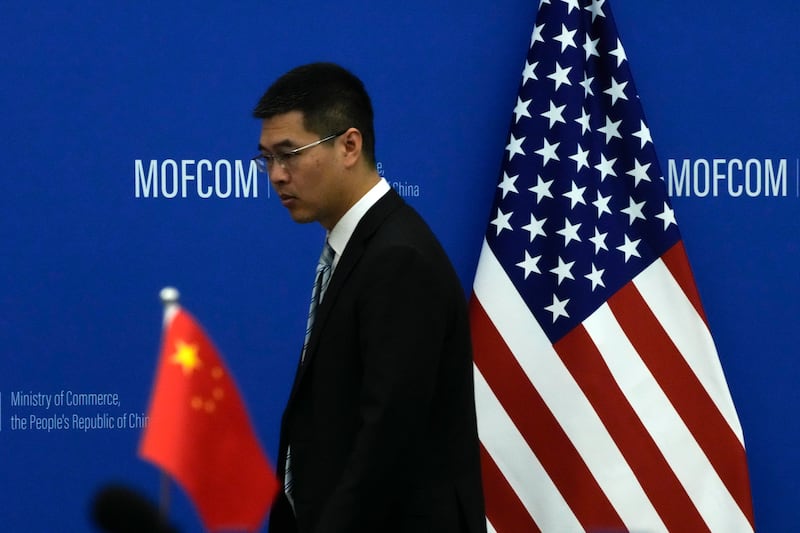
Chinese commerce officials said the U.S. accusations were “seriously contrary to the facts,” claiming that Beijing had “strictly implemented and actively upheld” the agreements, per a report from CNBC.
What’s in the U.S.-China trade agreement?
In a deal announced May 12, both countries agreed to roll back reciprocal tariffs to a 10% rate for a 90-day period beginning May 14. Other, sector-specific U.S. trade levies on steel, aluminum and automobiles remained in place, as did a 20% tariff Trump announced earlier this year to address fentanyl trafficking.
The announcement followed two days of meetings in Geneva between Treasury Secretary Scott Bessent and U.S. Trade Representative Jamieson Greer with a delegation of Chinese officials.
“We had very productive talks and I believe that the venue, here in Lake Geneva, added great equanimity to what was a very positive process,” Bessent said when the deal was announced. “We have reached an agreement on a 90-day pause and substantially move down the tariff levels. Both sides on the reciprocal tariffs will move their tariffs down 115%.”
Trump, at the time, lauded the deal as “historic.”
Trade traffic between the countries was upended in April when a series of retaliatory tariffs drove levies to 145% on Chinese imports and 125% on U.S. exports to China.

Court rulings on tariffs
At a rally in Pennsylvania last Friday, Trump announced plans to raise a sector-specific tariff on steel imports from 25% to 50%, news that contributed to investor worries and drew rebukes from trade partners including European Union officials that said the move “undermines ongoing efforts to reach a negotiated solution.”
In a ruling issued last Wednesday, the U.S. Court of International Trade struck down a wide swath of trade tariff decrees made by Trump since he took office, finding the president overstepped his authority with the international levies.
But a day later, the U.S. Court of Appeals for the Federal Circuit granted a temporary hold on the lower court ruling, deciding that the “permanent injunctions entered by the Court of International Trade in these cases are temporarily stayed until further notice while this court considers the motions papers.”
Per the appeals court, the plaintiffs in the lower court case have until June 5 to respond to the stay decision and Trump’s legal team will have until June 9 to develop its argument for the pause to remain in place as the appeals process plays out.
The trade court ruling, should it stand, impacts new tariffs Trump has issued, without congressional approval, under the International Emergency Economic Powers Act. The decision would not impact sector-specific tariffs issued by the president including those on imported autos, auto parts, steel and aluminum.