


- The Federal Reserve approved a third straight rate cut Wednesday.
- The benchmark rate now in the 3.5% to 3.75% range, lowest in three years.
- The decision aims to address the lagging U.S. jobs market.
As was widely expected, the Federal Reserve assessed a third straight interest rate cut Wednesday, though the decision was far from unanimous.
The Fed’s rate-setting Open Market Committee voted 9-3 to make a .25% cut to its federal funds rate, bringing the interest range down to 3.5% to 3.75%, the lowest in three years. While approved by a wide majority, a rate vote by the FOMC hasn’t seen three dissenting votes since 2019.
With both sides of the monetary body’s dual mandate of maximum employment and price stability under threat amid current economic conditions, the 12-member committee split along differing views of the most critical issue to address. Among the three no votes, Austan Goolsbee and Jeffrey Schmid favored no cut at all, while Stephen Miran, wanted a 0.5% reduction to the benchmark rate.
Generally speaking, rate reductions help spur economic activity by reducing the cost of debt which can promote business activities like investment and hiring. Rate hikes, which increase the cost of consumer and commercial debt, quell spending and help slow down inflationary price increases.
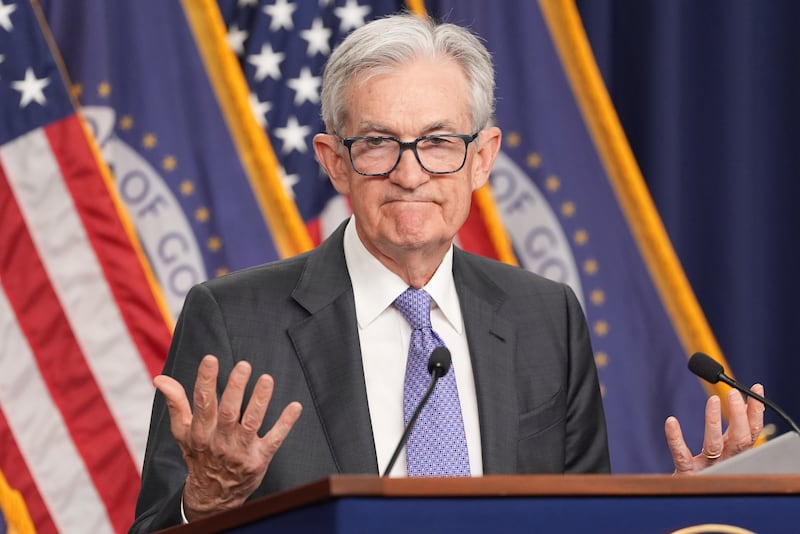
Wednesday’s rate change reflects the central bank’s decision to prioritize the labor side of its two-part mandate and Fed chairman Jerome Powell pointed to the policy dilemma facing committee members in comments to reporters following the meeting.
“You have one tool,” Powell said. “You can’t do two things at once.”
Federal reports on the employment sector are still lagging following a nearly seven-week-long blackout during the government shutdown, which ended late last month.
The most recent reporting, amid a year that has seen significant weakening of the U.S. labor market, found employers added 119,000 new, non-farm payroll positions in September. The Bureau of Labor Statistics also made downward revisions to July and August job figures, shaving 33,000 off of previous reporting and dragging August’s metric into negative territory at minus 4,000 jobs.
s rate cut follows .25% reductions assessed at each of the Fed’s prior two meetings in September and October but the body indicated in its post-meeting statement, albeit softly, that a subsequent rate cut may not happen any time soon.
“In considering the extent and timing of additional adjustments to the target range for the federal funds rate, the Committee will carefully assess incoming data, the evolving outlook, and the balance of risks,” the statement read.
The affordability dilemma

While U.S. inflation is down dramatically after hitting a 40-year high of 9.1% in June 2022, the rate has remained stubbornly above the Fed’s target of 2%. The most recent federal reporting, the Personal Consumption Expenditure price index for September, shows headline PCE inflation hit 2.8% on an annual basis that month, up 0.1% from August.
During his comments Wednesday, Powell underscored that while the decision to cut rates now is aiming to address a lagging labor market, the Fed is not ignoring inflation concerns.
“We are going to need to have some years where real compensation is higher … for people to start feeling good about the affordability issue,” Powell said. “So, we are working hard on that. We are trying to keep inflation under control, but also support the labor market and strong wages, so that people are earning enough money, and feeling economically healthy again.”
So, what does the rate change mean for me?
Where the Federal Reserve sets its federal funds interest rates — the interest charged on lending between banks to maintain required reserves based on a percentage of each institution’s total deposits — trickles down to consumers in numerous ways. Here are a few financial areas to keep an eye on in the changing economic landscape:

Mortgages
Mortgage rates don’t necessarily move in tandem with the Fed’s rate changes. Sometimes, they even move in the opposite direction. Long-term mortgages tend to track the yield on the 10-year Treasury note, which, in turn, is influenced by a variety of factors. These include investors’ expectations for future inflation and global demand for U.S. Treasury bonds. The average interest rate on a 30-year fixed-rate mortgage is currently 6.19%, according to Freddie Mac, down 0.5% from the same time a year ago.
Credit cards
Credit card rates are set by issuing institutions based on a number of factors, including the applicant’s personal credit history, but base rates are computed in part using the prime lending rate which is tied to the Fed’s benchmark rates.
Big-ticket spending
Lower interest rates can also make accessing credit, like qualifying for a home mortgage or new car loan, a bit easier as banks tend to loosen lending policy to reflect economic conditions.
While those looking to finance a big purchase are likely to see the Fed cut reflected in slightly lower borrowing rates, those changes are, like credit card rate adjustments, several months away.
Interest earnings
Mirroring changes in loan rates, the interest banks offer on savings accounts, certificates of deposit, money market accounts and a variety of other financial products are also likely to decline following the Fed’s rate reduction.
According to a report from Bankrate, last year’s series of interest rate cuts by the Fed led to lower annual percentage yields on customer accounts. The steepest declines were among the nation’s nontraditional online banks, according to the report. At their peak, the top high-yield savings account was paying a 5.55 percent APY. As of Wednesday, the best advertised savings account rates were around 4.2%.