



- A new federal report found moderate job gains in November but large October losses.
- U.S. unemployment rose to 4.6% last month, the highest in over four years.
- Previous reports were adjusted down as job losses mark three of the last six months.
Long-delayed federal data released Tuesday found the U.S. employment sector is continuing to falter with job losses now showing up in three of the last six months and November unemployment hitting the highest level in over four years.
Tuesday’s Employment Situation Summary from the Labor Department captures two months of data, a catch-up effort following the 43-day federal government shutdown that ended Nov. 12.
While U.S. employers added 64,000 new positions overall in November, October saw a loss of 105,000 jobs mostly driven by reductions in the federal government workforce. U.S unemployment rose to 4.6% from September’s 4.4% rate, the most recently reported figure, reaching the highest level since September 2021.
The new report also included downward revisions to previously reported jobs numbers with August’s job losses adjusted from 4,000 to 26,000 and September’s job gains lowered from 119,000 to 108,000.
The last six months have seen net U.S. job losses in June, August and October and some economists, including Federal Reserve chairman Jerome Powell, believe the overall losses this year may be even greater.
Bright spots among U.S. employment sectors in November included health care, construction and social assistance which saw job gains of 46,000, 28,000 and 18,000, respectively. Employment categories with the most job losses last month were transportation/warehousing, down 18,000 positions and the federal government, which lost 6,000 positions in November. The report notes federal government employment is down by 271,000 since reaching a peak in January.
“The U.S. economy is in a jobs recession,” Heather Long, chief economist at Navy Federal Credit Union, told CNBC. “The nation has added a mere 100,000 in the past six months. The bulk of those jobs were in health care, an industry that is almost always hiring due to America’s aging population.”
Tuesday’s data underscores the current employment-focused concerns of many U.S. economists as well as the Federal Reserve, which last week assessed a third straight reduction to its benchmark federal funds rate.

Is the Fed addressing the slowing jobs market?
The Fed’s rate-setting Open Market Committee voted 9-3 to make a .25% cut to its overnight intra-bank lending rate, bringing the interest range down to 3.5% to 3.75%, the lowest in three years. While approved by a wide majority, the committee hasn’t seen three dissenting votes since 2019.
With both sides of the monetary body’s dual mandate of maximum employment and price stability under threat amid current economic conditions, the 12-member committee split along differing views of the most critical issue to address.
Generally speaking, rate reductions help spur economic activity by reducing the cost of debt which can promote business activities like investment and hiring. Rate hikes, which increase the cost of consumer and commercial debt, quell spending and help slow down inflationary price increases.
Last Wednesday’s rate change reflects the central bank’s decision to prioritize the labor side of its two-part mandate and Powell pointed to the policy dilemma facing committee members in comments to reporters following the meeting.
“You have one tool,” Powell said. “You can’t do two things at once.”
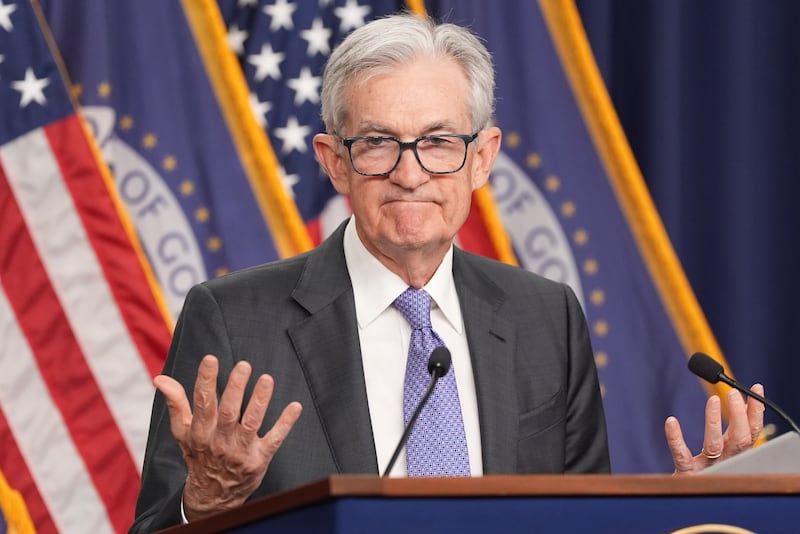
The most recent rate cut, made at the Fed’s final meeting of 2025, follows .25% reductions assessed at each of its prior two meetings in September and October. The body indicated in its post-meeting statement, albeit softly, that a subsequent rate cut may not happen any time soon.
“In considering the extent and timing of additional adjustments to the target range for the federal funds rate, the committee will carefully assess incoming data, the evolving outlook, and the balance of risks,” the statement read.
While U.S. inflation is down dramatically after hitting a 40-year high of 9.1% in June 2022, the rate has remained stubbornly above the Fed’s target of 2%. The most recent federal reporting, the Personal Consumption Expenditure price index for September, shows headline PCE inflation hit 2.8% on an annual basis that month, up 0.1% from August.
During his comments last week, Powell underscored that while the decision to cut rates now aims to address a lagging labor market, the Fed is not ignoring inflation concerns.
“We are going to need to have some years where real compensation is higher … for people to start feeling good about the affordability issue,” Powell said. “So, we are working hard on that. We are trying to keep inflation under control, but also support the labor market and strong wages, so that people are earning enough money, and feeling economically healthy again.”