
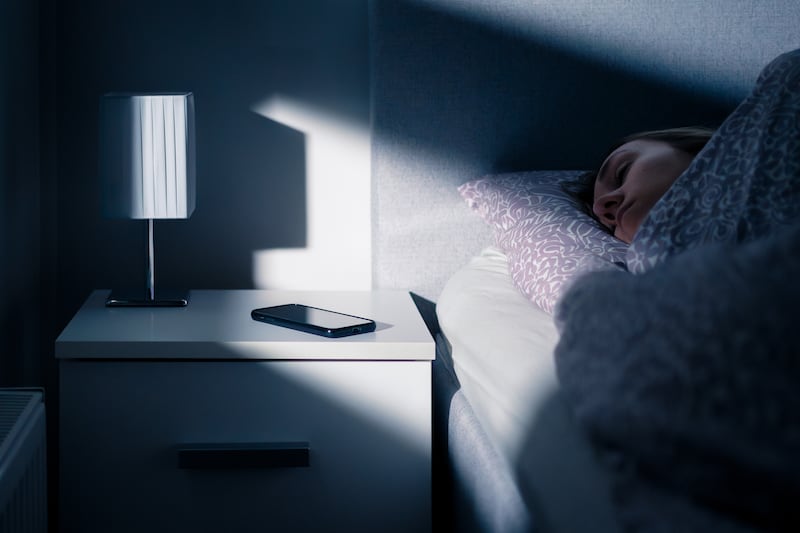

The story of a day now lives, quietly, inside a phone log.
From the moment alarms go off on nightstands across the country, screens blink awake. More than 80% of Americans check a phone within the first 10 minutes of waking up, according to a 2024 survey by Reviews.org.
Nearly 9 in 10 adults sleep with a phone in the bedroom, often within arm’s reach, an American Academy of Sleep Medicine survey found.
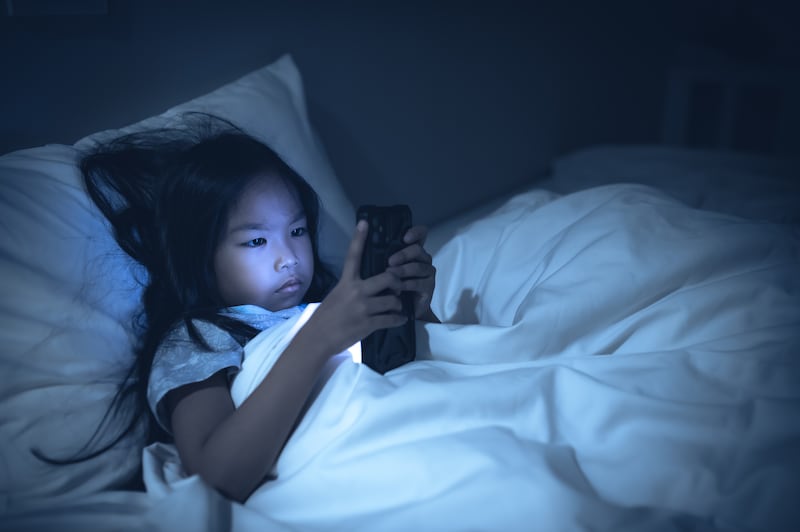
Before bed, about 86% of adults use a phone while already under the covers, scrolling for an average of 38 minutes each night, per Amerisleep.
Those habits stack up into an invisible rhythm of checking, rechecking and forgetting that we just checked — like chain-smoking a day away with notification after notification.
A day measured in pickups
On modern smartphones, that rhythm has a name: pickups. Both iOS and Android now track how many times a lock screen gives way to home screen icons, each unlock a tiny tally mark in a day’s record.
According to recent data from Reviews.org, Americans spend over 12 hours a day on technology — phone or otherwise — adding up to over 192 days a year. Background logging suggested an average of 205 phone pickups in a single day — about once every five minutes while awake.
When Nottingham Trent University psychologist Francesca Ryding and colleague Daria Kuss reviewed 18 studies that passively tracked smartphone behavior, they found that an objective high-risk addictive pattern tended to emerge when screen-on or unlock counts cleared about 100 per day.
A separate study from Keimyung University in South Korea reported that the number of times a phone screen turned on — not just total minutes of use — was one of the most powerful predictors of belonging to a high-risk addicted group.
Yet people rarely notice that number. In a Washington Post analysis of a nationally representative YouGov survey, most respondents guessed that they picked up their phones about 10 times a day, far below the dozens or hundreds recorded by their devices.
The phone, it turns out, remembers what the mind edits out.

Where checking actually happens
The checking does not confine itself to idle moments.
Large shares of Americans admit to checking their phones during meals, social gatherings and even dates. In a poll summarized by The Washington Post, more than half of respondents said they checked their phones multiple times during activities such as eating with others or spending time with a friend. About 1 in 4 admitted checking at least once during a 30-minute work meeting.
The late-evening stretch has its own pattern. The American Academy of Sleep Medicine reported that 87% of people regularly sleep with their phones in the bedroom, and about 45% of adults in its survey said that when they had trouble falling asleep, they turned to their phones. Another national survey, from Amerisleep, found that 28% of Americans had stayed up past 2 a.m. on a work night because of phone use.
Push notifications help keep that loop spinning. In the Reviews.org poll, over 75% of respondents said they checked their phones within five minutes of receiving a notification.
The result is a day cut into dozens of tiny segments, each one bookended by a glance at a glowing rectangle.
The brain on constant checking
Behind those glances, the brain’s reward circuits are quietly at work.
Stanford addiction psychiatrist Anna Lembke has argued that smartphones and digital media tap the same dopamine-driven reward pathways as substances such as alcohol, creating habit loops that encourage compulsive checking and leave some people feeling irritable or uneasy when separated from their devices, per The Washington Post.
Larry Rosen, a psychologist who has spent more than a decade studying young people’s relationship with technology, has documented patterns in which teens and young adults felt a rising sense of anxiety if more than 15 or 20 minutes passed without checking a phone. He has suggested that the constant anticipation of new messages or updates nudges stress hormones such as cortisol upward, pushing people to “check in” again.
Recent brain imaging work has gone further. In a 2025 study published in the Computers in Human Behavior journal, 25 young adults were asked to restrict smartphone use to essential calls and tasks for 72 hours.
Functional MRI scans before and after this three-day phone diet showed time-dependent changes in areas involved in reward, craving and salience — especially when participants viewed images of smartphones compared with neutral objects.

The pattern resembled cue-reactivity seen in other addictive behaviors and was closely tied to dopamine and serotonin receptor maps.
Even a short period of restriction reshaped neural activity in reward circuits, suggesting that phones can produce addiction-like patterns in the brain and that brief breaks may help retune those systems.
Focus, memory and the cost of tiny interruptions
Researchers are increasingly less interested in raw screen time and more interested in how often attention splinters.
A team led by psychologist Andree Hartanto at Singapore Management University tracked 181 iPhone users for seven days, using Apple’s Screen Time to objectively record both total screen time and the number of times each person checked their phone. Participants also completed daily surveys about cognitive slips — losing a train of thought, forgetting words, leaving tasks unfinished because of distraction.
The key finding: On days when people checked their phones more often, they reported more of those cognitive failures, even after controlling for stress, mood and demographic factors. Total time spent on the phone did not show the same relationship.
In fact, the study found that time spent in certain categories, such as navigation tools or some social apps, was modestly associated with fewer cognitive failures, suggesting that purposeful, tool-like smartphone use may sometimes ease mental load rather than worsen it.
Other work looks at attention in the broader digital environment. Irvine researcher Gloria Mark has found that people now spend an average of about 47 seconds on a given screen before switching to something else.
Her analyses showed that once a person shifts away from a focused project, it can take around 25 minutes to return to that original task after detours into other work and distractions — a span that includes both the interruption and the time spent reorienting.
Even when a phone stays face down, its mere presence can sap mental resources. In a set of experiments published under the title “Brain Drain,” researchers at the University of Texas at Austin asked participants to complete cognitive tasks with their phones either on the desk, in a bag or in another room.
When the phone was visible, performance on measures of working memory and fluid intelligence dropped, even though the devices stayed silent. The authors concluded that part of the brain’s limited cognitive capacity was being spent simply on resisting the urge to check.
Decades before smartphones, computer scientist Gerald Weinberg warned that frequent task-switching could quietly erode productivity: juggling two tasks could cut effective output by 20%, three tasks by nearly half, and more tasks could drive losses up toward 80% as attention splintered.
Sleep, stress and life between pings
In a world of notifications and pickups, those glances carry bodily consequences too.
Blue light from screens, especially close to bedtime, has been shown to suppress melatonin and delay sleep onset. A large study published in the Journal of Clinical Sleep Medicine found that nearly 40% of respondents used cellphones in the bedroom in the hour before bed, with even higher rates among adolescents and young adults, and linked high pre-bed device use to shorter sleep and more complaints of daytime sleepiness.
The American Academy of Sleep Medicine warns that phones in the bedroom can encourage “bedtime procrastination,” encouraging people to trade recommended seven-hour sleep windows for one more episode or another scroll.
The Amerisleep survey estimated that late-night scrolling costs the average American about 231 hours of sleep per year — nearly 10 full days lost to the glow of a handset.
Physiologically, interruptions from phones can look a lot like stress. One study published in the Journal of Computer-Mediated Communication documented spikes in anxiety and self-reported tension when participants were prevented from checking their phones for extended periods, as notifications piled up out of reach.
The Washington Post’s synthesis of multiple studies framed it this way: Frequent phone checks — especially those driven by notifications and social media cues — appear to be linked with more daily cognitive failures and changes in brain chemistry tied to reward and stress.
Not all screen time is the villain
The story is not simply “screens are bad.”
A 2018 study published by the Association for Computing Machinery examined detailed app logs from hundreds of participants and found that intense phone use alone did not reliably predict poor well-being; instead, specific patterns such as nightly, sleep-disrupting use were more strongly associated with negative outcomes.
A recent paper published by Nature Human Behaviour said that older adults who regularly used digital devices had about a 42% lower risk of developing mild cognitive impairment or dementia, suggesting that certain kinds of screen-based engagement — reading, games, communication — may help keep minds active.
Hartanto’s SMU study likewise found that when smartphone time went to practical tools such as maps or calculators, or to some forms of social connection, daily cognitive failures sometimes decreased.
The problem, in other words, seems less about a glowing screen existing in a pocket and more about that pattern of compulsive, frequently unconscious checking. The pickups tell that story in hard numbers.
Rewriting the log
If the log for a typical day now reads 100 or 200 pickups, what does it look like when the pattern changes?
Lembke suggests, according to The Washington Post, to reduce the dopamine hits delivered by the device itself.
“Make the phone less reinforcing by turning off notifications, deleting all but the most necessary apps, going grayscale and powering the phone off between use,” she said. “I also recommend leaving the phone behind on occasion, just to remind ourselves we can still navigate the world without our phones.”
Rosen recommends scheduling intentional “tech breaks” — short, preplanned windows to check messages and apps — so that the phone no longer dictates the timing of attention, per The Washington Post.
Sleep specialists urge leaving the phone outside the bedroom entirely, or at least out of arm’s reach, to create a natural buffer between late-night scrolling and sleep.
Hartanto’s daily diary data show that on days when people check their phones less often, they report fewer mental slips — a change visible in a single week of tracking.
In The Washington Post’s interactive, the composite day of heavy use peaks in the late afternoon, with notifications calling attention away repeatedly as work wraps up and evening begins.
A different day might still include long calls with family, maps open on a drive, a timer for dinner in the oven — but fewer reflexive glances at a blank lock screen.
The pickups log would not look as dramatic. The story it tells, though, might make way for fewer forgotten sentences, fewer half-finished tasks, more sleep and more moments that are not divided into 47-second slices.