- A delayed federal report finds inflation rose as did consumer spending late last year.
- Robust consumer spending helped drive GDP growth to its highest level in two years.
- The Federal Reserve is expected to stand pat on its interest rate.
A report delayed by the federal government shutdown found inflation continued to inch up late last year but so did consumer spending, the primary driver of the U.S. economy.
Thursday’s Personal Consumption Expenditure report from the Commerce Department shows annual inflation ticked up to 2.8% in November, moving up slightly from October’s 2.7% rate. Personal income rose 0.3% in November, per the report, and disposable personal income also rose 0.3% that month.
In spite of the uptick in prices for goods and services, the PCE report found consumer spending saw healthy growth rates of 0.5% in October and November. Consumer spending is the primary driver of the U.S. economy, accounting for about 70% of all economic activity.
And that spending helped push GDP growth of 4.4% in the third quarter of 2025, according to a separate Commerce Department report released Thursday. The updated estimate for the July-to-September period was well ahead of the second quarter’s 3.8% growth and the highest single quarter rate since the third quarter of 2023.
“The consumer continues to drive the U.S economy, with today’s data pointing to another strong gain in spending,” James McCann, senior economist for investment strategy at Edward Jones, told CNBC. “This resilience comes in spite of last year’s slowdown in the labor market, and still elevated inflation, both of which have weighed on real incomes. Today’s data should reassure the Fed that the economy remains on a solid footing, despite a cooler labor market.”
Ups and downs of the U.S. economy
The mixed signals in Thursday’s economic reports reflect, in part, similarly disparate data in the most recent federal jobs market reporting.
Earlier this month, the Labor Department released its final employment summary for 2025, finding that job growth continued to slow in December alongside a national unemployment rate that also ticked down.

U.S. employers added 50,000 new positions in December, well below the 73,000 most economists were predicting and down from November’s tally of 56,000 new jobs. The national unemployment rate came in at 4.4% last month, down from November’s 4.5%.
The report also included revisions to October and November data, with job numbers for those two months reduced by 76,000. Total job growth for 2025 was 584,000 or an average of about 49,000 new hires per month. The tally is well below the year before when U.S. employers added 2 million new positions and average monthly job growth hit 168,000.
Heather Long, chief economist at Navy Federal Credit Union, said 2025’s job gains of 584,000 marks the worst year outside of a recession since 2003.
“It’s fair to say that 2025 was a hiring recession in the United States,” Long wrote, per a report from CNBC. “The United States is experiencing a jobless boom where growth is strong, but hiring is not. It’s a great scenario for Wall Street, but an uneasy feeling on Main Street.”
Will the Fed cut interest rates again?
Thursday’s PCE report will be the final federal inflation data the Federal Reserve sees ahead of its first meeting of the year next week. The monetary body is widely expected to leave its benchmark interest rate, currently in the 3.5% to 3.75% range, unchanged to begin the new year.
The Fed closed out 2025 with three straight reductions to its benchmark federal funds rate, moves aiming to bolster a lagging U.S. jobs market even as inflation continues to run well above the U.S. central bank’s 2% target rate. Both sides of the monetary body’s dual mandate of maximum employment and price stability have been under threat amid recent economic conditions.
Generally speaking, rate reductions help spur economic activity by reducing the cost of debt which can promote business activities like investment and hiring. Rate hikes, which increase the cost of consumer and commercial debt, quell spending and help slow down inflationary price increases.
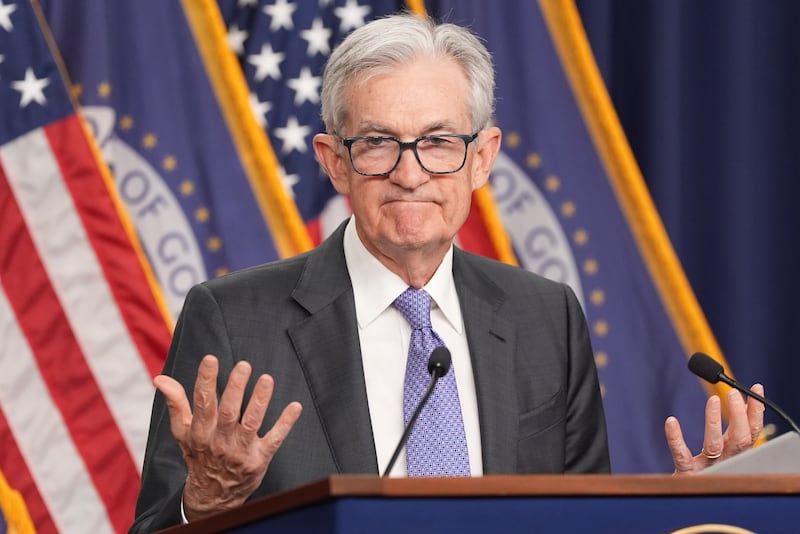
The trio of rate reductions in the Fed’s final three meetings of 2025 reflects the monetary body’s decision to prioritize the labor side of its two-part mandate. At a press conference following its December meeting, Fed chairman Jerome Powell pointed to the policy dilemma facing committee members.
“You have one tool,” Powell said. “You can’t do two things at once.”