

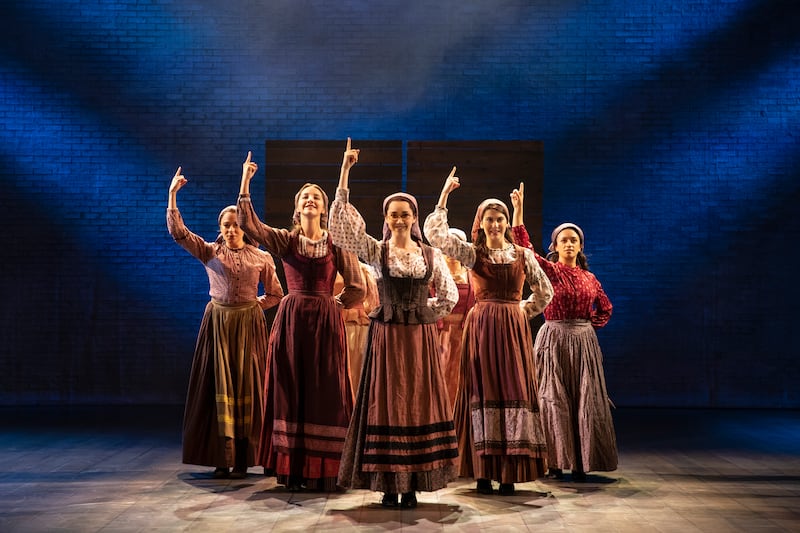

SALT LAKE CITY — Here’s a snapshot of the year 1964: The Beatles dominated the charts, Julie Andrews’ “Mary Poppins” came to the big screen and Elizabeth Taylor married Richard Burton for the first time. The Civil Rights Act was passed, America was five years away from landing on the moon and “The Fiddler on the Roof” had its Broadway debut.
Since then, “Fiddler” has won many awards and seen countless performances. But the musical’s success wasn’t always a sure thing.
“We knew what the reaction would be,” Joseph Stein, one of the musical’s writers, said of the show’s premiere, according to Playbill. “‘You want to do a musical about old Jews in Russia who are going through a pogrom? What are you out of your mind?’”
Much has changed and much has stayed the same in the 56 years since the musical debuted. After all, that’s the theme of “Fiddler”— the tug-of-war between tradition and modernity.
But the Broadway national touring production of “The Fiddler on the Roof,” which runs at Salt Lake City’s Eccles Theater through Jan. 26, is a reminder that the production has as much relevance in 2020 as it did nearly 60 years ago.
Tuesday night’s production was sold out — a testament to the way the musical continues to draw audiences. Many issues “Fiddler” first addressed 56 years ago — prejudice, refugees and women’s rights, to name just a few — are still being debated and remain at the forefront of politics today.
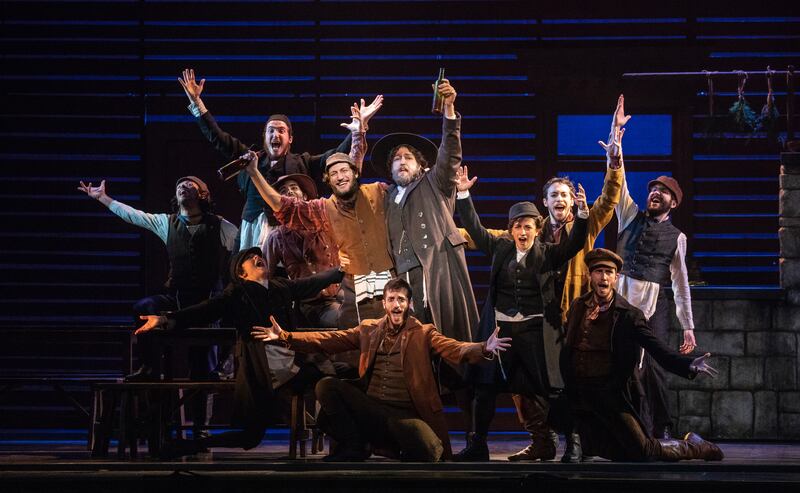
Tevye, the poor Jewish milkman who dreams of becoming rich, is at the center of the story. He works to take care of his family and clings to his traditions (even those who have never seen “Fiddler” are likely able to sing along with Tevye’s ode to his “tradition”). But things begin to change when three of his daughters each challenge that tradition.
Israeli actor Yehezkel Lazarov, who portrays Tevye in the touring show, captured the depth of his character in his opening performance at the Eccles Theater.
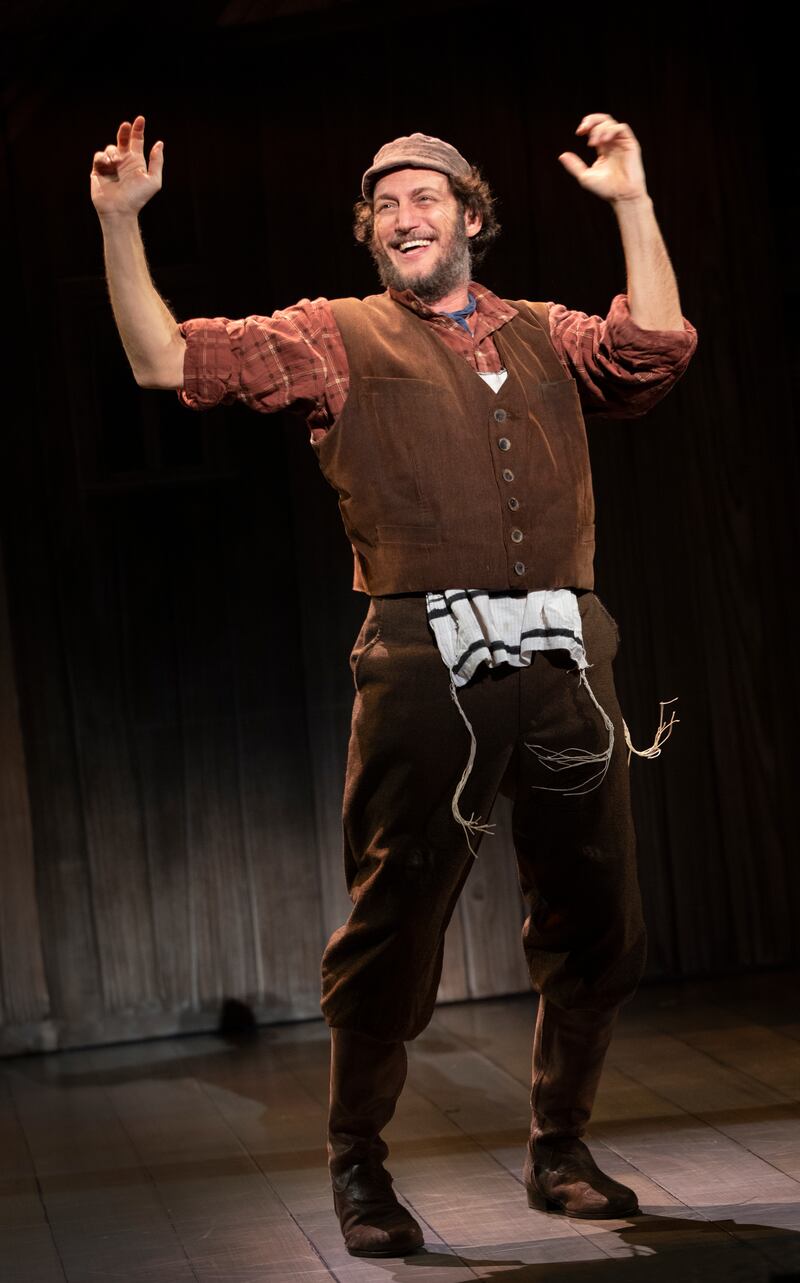
“It is wrong to see Tevye as only a naive milkman,” Lazarov told the Los Angeles Times last year. “Besides being a sensitive, caring and loving person, deep inside he’s very frustrated. He is full of potential. ... But life and tradition brought him to where we meet him in ‘Fiddler.’”
Throughout Tuesday’s performance, Lazarov beautifully expressed the conflict at the heart of his character and the show. Lazarov’s Tevye strikes the right balance of comedic energy verging on silliness with genuine emotion and pathos. His performance of “If I Were a Rich Man” is full of that energy, dancing and leaping across the stage while still causing the audience to feel the strength of his genuine desire for a better life.
Tevye’s interactions with his three oldest daughters are genuine, and performers Kelly Gabrielle Murphy, Ruthy Froch and Noa Luz Barenblat each bring unique strengths to their characters. Froch as Hodel conveys the difficulty of her choice to leave home during “Far From the Home I Love,” as she says goodbye to her father before leaving for Kiev. Lazarov’s Tevye is appropriately gruff yet tender, as he sees her off at the train station.
Ultimately, the big question Tevye faces in “Fiddler” is whether he should hold onto his traditions — even at the cost of his beloved daughters — or whether he should make room for progress and change.
In today’s world, where technology seems to change by the day, it can be easy to relate to Tevye and his desire for the continuity of tradition. The questions raised by “Fiddler on the Roof” are questions many are still looking for the answers to today.
“Fiddler” might not have all the answers, but in a world that still faces prejudice and fear in many forms, it can be a great place to start.