


Movies based on books have always been popular. Whether or not they are always successful is another question. The last few months alone have seen adaptations of everything from “Little Women” (which was nominated for Best Picture and Best Adapted Screenplay at this year’s Academy Awards) to “Dolittle” (which currently boasts a 15 percent score on Rotten Tomatoes and was expected to lose Universal nearly $100 million at the box office, according to the Deseret News).
To put it simply, book-to-film adaptations can be a mixed bag, and just because the source material is solid doesn’t mean that it will translate to the big screen. Just look at 2019’s “The Goldfinch”— even though Donna Tartt’s novel was a Pulitzer Prize winner, the film version was panned by critics and bombed at the box office, the Deseret News reported.
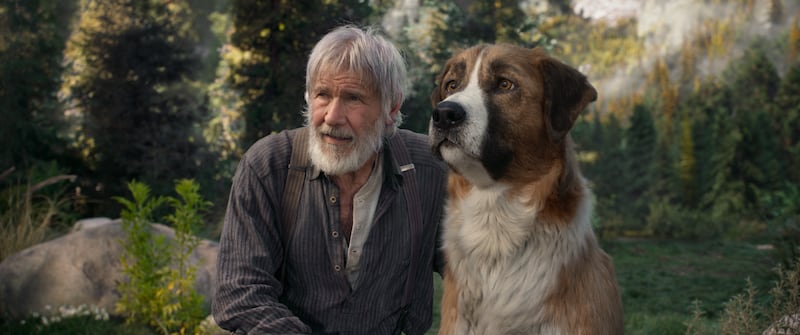
The latest big screen adaptation of a popular novel is “The Call of the Wild,” starring Harrison Ford and a CGI version of the story’s furry main character, the family pet turned sled dog Buck.

And though not perfect, “Call of the Wild” delivers in much of the same way that the book did.
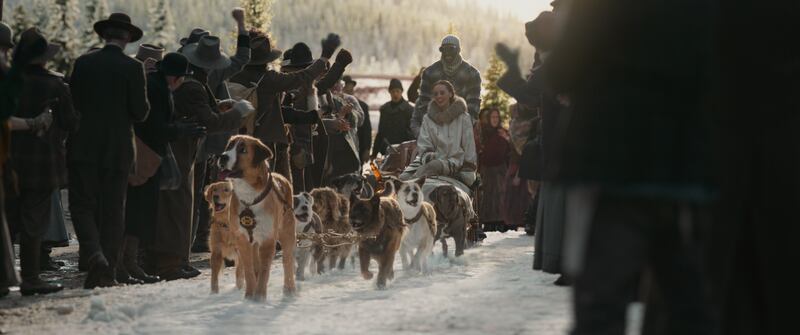
In this new adaptation of “Call of the Wild,” the film does manage to make this familiar story feel fresh while still hitting many of the original beats of the novel. The movie starts with Buck, a friendly and social St. Bernard who lives a comfortable life as the spoiled pet of the family of a judge in 1890s California. The story is set during the height of the Gold Rush, and Buck is soon stolen away from his comfortable life and sold as a sled dog in Alaska.
The film does not follow the novel exactly, however. No doubt in an attempt to make the story more family-friendly, some of the harsher and more violent scenes from the book (which was originally published in 1903) are excised in favor of more lighthearted scenes of Buck causing mayhem in his family’s kitchen and destroying a picnic lunch.
It’s understandable that a movie geared toward a family audience would not want to include some of the scenes from the book, such as one that depicts one of Buck’s dog friends being attacked and killed by a group of other dogs. Still, the film doesn’t shy away from heavy moments and even some violence, including depictions of animal abuse. Just as in the novel, as Buck ventures into the wild, he encounters cruelty from some humans but kindness and respect from others.

The film manages to strike a careful balance between keeping things family-friendly while still maintaining the heavier themes of the book — the contrast between the acts of brutality that can come from both animals and humans when they are thrust into the wild, but also the acts of decency and dignity of which they are capable.
This isn’t the first time the classic Jack London novel has been adapted for film. In fact, this version is the seventh incarnation, and that’s not even including a television series version from Animal Planet in 2000. None of the adaptations have ratings on Rotten Tomatoes.
Just because a book has been adapted before is no reason it can’t be adapted again. Greta Gerwig’s 2019 “Little Women” was also the seventh cinematic remake, and the story of “Dolittle” has also been told in movie form more than once before Robert Downey Jr. took on the title role.
So what makes an adaptation of a movie successful? Obviously there is no one formula, otherwise films like “The Goldfinch” wouldn’t bomb so spectacularly at the box office. But when it comes to adaptations like “Little Women,” part of their appeal is that they are able to “make a story that has now been around for 150 years feel both familiar and new,” according to the Deseret News.
“The Call of the Wild” is not a perfect movie, either, or a perfect adaptation of a novel. But it’s reassuring to know that a story that’s been around for over 100 years, that’s already been retold in movie form in many different ways, can still “feel both familiar and new” and have a meaningful message to convey to audiences today.