

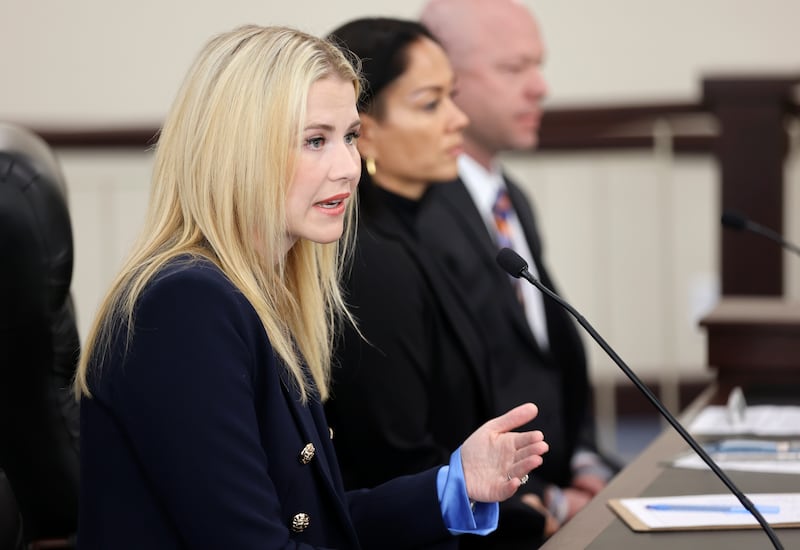

In the more than two decades since 14-year-old Elizabeth Smart was kidnapped from her Salt Lake City home, and endured nine brutal months of physical and sexual abuse, she has become a tireless advocate for sexual abuse survivors and families of missing children.
Although she never could have envisioned doing so when she was rescued at the age of 15 and safely back in her Federal Heights home, Smart has kept this part of her life’s story alive through motivational speaking, books and film — including a 2017 Lifetime movie she has called “the best movie I never want to see again.”
“I couldn’t have just come home and written a book and made a movie and started speaking. I couldn’t have done that,” Smart previously told the Deseret News in a 2017 interview. “I needed time to readjust back to my family, refigure out my life again and move on enough so that when I looked back on my life, I didn’t just see my kidnapping. I think that was really important for me.”
Now, the 38-year-old survivor and mom of three is continuing to open up about her abduction and its aftermath in the new documentary “Kidnapped: Elizabeth Smart.“
In “Kidnapped,” which hits Netflix on Jan. 21, Smart recounts harrowing details alongside her father, Ed Smart, and her sister, Mary Katherine Smart, who was the sole witness to the kidnapping. Law enforcement members and others who worked the case also make an appearance.
Warning: The following trailer contains strong language.
Elizabeth Smart reflects on the night of her abduction
On the night of June 5, 2002, Elizabeth Smart and her younger sister, Mary Katherine, stayed up late reading “Ella Enchanted.”
Finally, around midnight, Smart noticed her 9-year-old sister had fallen asleep. She closed the book and followed suit.
Later in the night, she was woken up by a man’s voice in her bedroom. He told her not to make a sound and said he had a knife at her neck. Then he demanded her to get up and go with him.
“I remember being absolutely terrified. I remember feeling like I didn’t have a choice,” Smart said in a new cover story for People magazine ahead of the documentary’s release, adding that she felt like she needed to protect her little sister and was worried about what would happen if she didn’t do what her abductor said.
In a video for People, Smart recalled reaching for her slippers, only for her captor to point to her running shoes instead. He then led her out through the back of her house and up into the mountains.
Smart was abused by Brian David Mitchell — who is serving a life sentence — and his wife, Wanda Barzee, for nine months. The best way to survive, she told People, was to be submissive and follow their instructions while always looking for an escape.
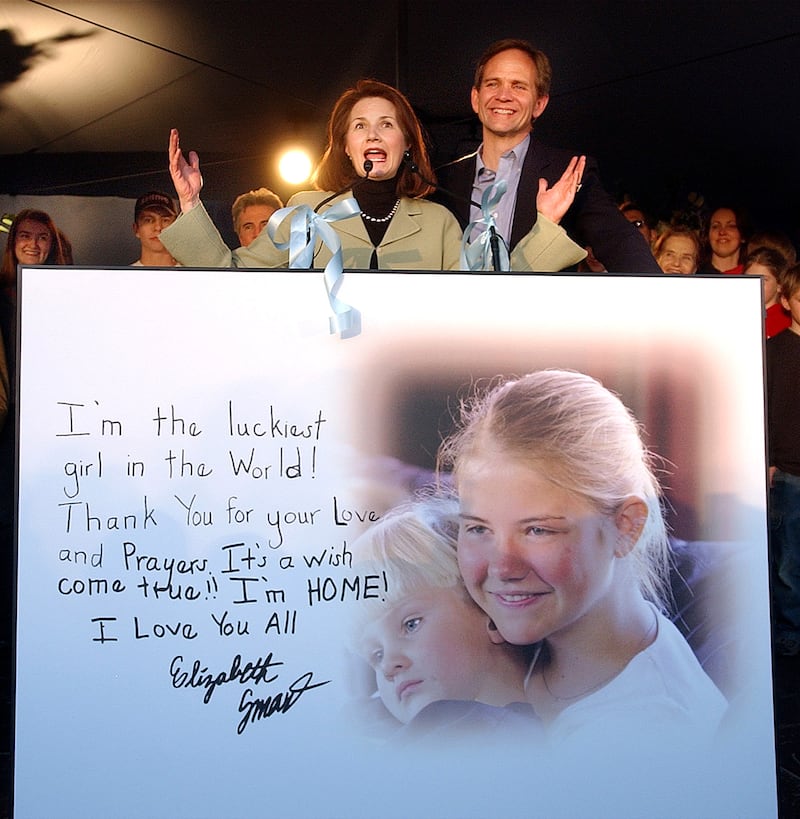
On March 12, 2003, Smart was spotted in Sandy, Utah. Law enforcement got involved and brought her home.
“It was one of the happiest days,” she told People. “I knew that my family was the reason I wanted to survive.”
Elizabeth Smart reflects on feeling shame after her abduction
Smart has said that the power of hope played a major role in surviving her abduction.
“It’s that belief in a better future, a belief in the positive in life and the good that will come,“ she told the Deseret News in a 2018 interview. ”So when I was kidnapped, it was that belief that my family would still love me, that they’d still accept me, that they still wanted me back, and that’s what I held onto and that’s how I survived my kidnapping.”
But after her rescue, Smart said in a new interview with People that she felt “embarrassed.”
“I felt a lot of shame around what had happened, even though my head totally knew that what had happened to me was not my fault,” she said in a video clip shared by People. “But I couldn’t make my heart feel the same way. Like I just felt I’d be judged for what happened. And I didn’t see or hear anyone else talking about it at the time. I didn’t know anyone who something similar had happened to, and I ended up feeling very alone and very isolated.”
Over time, Smart said, she felt inspired to share her own story in part because of others who would tell her something similar had happened to them but they were hesitant to talk about it because they weren’t believed.
Smart told the Deseret News in 2018 that she was hearing more and more survivors come forward — a societal change that gave her “big hope.”
“I want other survivors to know they’re not alone, that actually there’s so many of us,” she said in a People video clip. “And then I want everyone to be aware of the issues around sexual violence, kidnapping, assault, the shame that so many of us survivors carry. And I want them to know it’s not their fault — they don’t need to be embarrassed and they don’t need to carry this burden. They shouldn’t carry it at all, but if they are going to carry it, they’re not alone.”

Elizabeth Smart on the power of forgiveness
In a 2018 Deseret News interview, Smart said that while she never wants to see her captors again — and will never be OK with what happened to her — she has forgiven them.
Moving forward with her life and being happy, she said, is the best punishment she can give them.
“I think forgiveness is probably one of the greatest forms of self-love there is because you don’t do forgiveness for anybody else,” she said. “My captors will never care if I forgive them. … It will not make a day of difference to them at all, but it will make a huge difference to me.
“If I stay angry from holding onto this in my life, it would be eating away at me,” she continued. “It would mean I wouldn’t be 100% mother to my children; I wouldn’t be 100% wife to my husband; I wouldn’t be able to work for survivors 100% because there would always be this percentage of me inside holding onto this anger and this bitterness, and frankly … I love myself too much to do that to myself.”