



With one foot already out the door, the 45th and final Sundance Film Festival in Park City cast a spotlight on a looming local crisis unfolding just 30 miles from its downtown hub — the Great Salt Lake’s rapid, ongoing decline.
In early 2023, a report from Brigham Young University warned that excessive local water use had pushed the Great Salt Lake to the brink of collapse. The lake had already lost 60% of its surface area, and without immediate intervention, it could vanish completely in five years.
The report captured the attention of Utah filmmaker Abby Ellis, who began chronicling the lake’s decline and the desperate, ongoing scramble to save it. Through the eyes of two local scientists and a politician, Ellis shows how government, science, faith and advocacy can overcome tension and join forces to confront an environmental crisis.
Aerial footage shown in the documentary captures the shrinking perimeter of the lake, where former waters have given way to cracked, dusty earth. Bird carcasses are scattered beyond the lake’s receding shores, alarming scientists who describe the land as a graveyard.
For audiences who are unfamiliar with the current status of the Great Salt Lake, Ellis’ footage paints an ominous image. The once-thriving body of water is now in stark decline.
Unlike much of Ellis’ work, “The Lake” concludes with a message of hope — with continued advocacy, scientific research and coordinated efforts, the Great Salt Lake could be restored from the verge of collapse.
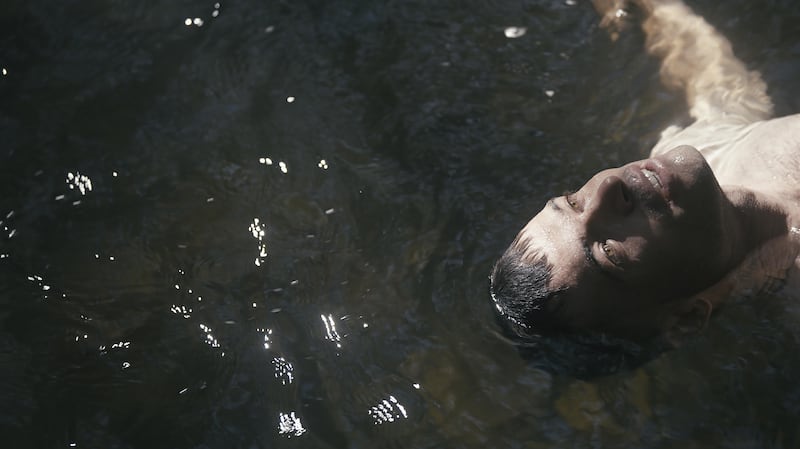
The film has not secured distribution yet, but has attracted big backers, including Leonardo DiCaprio and Jimmy Chin. It also earned a prominent placement at the festival as part of Sundance’s U.S. documentary competition.
“The Lake” premiered on opening day of the Sundance Film Festival at the Ray Theatre in Park City, a placement Ellis says reflects the deep love and appreciation festival organizers have developed for Utah over the 4½ decades Sundance has called the state home.
“I’ve been a filmmaker my whole career, and Sundance is obviously the pinnacle in many ways, it’s a dream to premiere a film opening day in the documentary competition. ... It’s a huge honor, and I’m really excited about it,” Ellis, who served as both director and producer of “The Lake,” told the Deseret News.
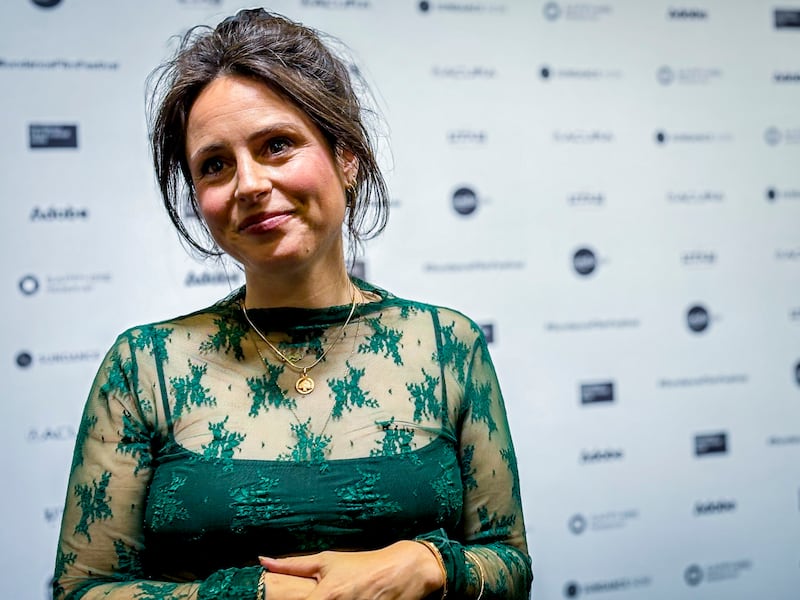
She continued, “It’s really special that the programmers felt as much as they did about this film, knowing that they’ve been doing this festival here for so long, and I think it shows that they’ve really developed a love for this place, wanting to feature (this film) as prominently as they are.”
The Great Salt Lake: What is at stake?
Roughly two-thirds of the Great Salt Lake has already vanished, exposing toxic dust in the lakebed — which contains high concentrations of arsenic, cadmium, lead, copper and mercury, according to the documentary.

Winds across the Great Salt Lake carry those toxic dust particles into surrounding communities, where it can live in the air for as long as two weeks unless cleared out by precipitation. When inhaled, that dust is harmful to human health and can cause a wide range of respiratory and systemic issues.
Unsettling footage of thick, airborne dust from the lake settling over Salt Lake Valley for weeks at a time provide additional weight to scientific claims.
If the lake dries, toxic dust storms threaten air quality for more than 2.8 million people who live along the Wasatch Front.
The Great Salt Lake is also a haven to millions of birds, and a critical body of water on the Pacific flyway, putting dozens of bird species at risk of extinction, said Bonnie Baxter, a microbiologist featured in “The Lake,” who has been studying the Great Salt Lake for over 20 years.
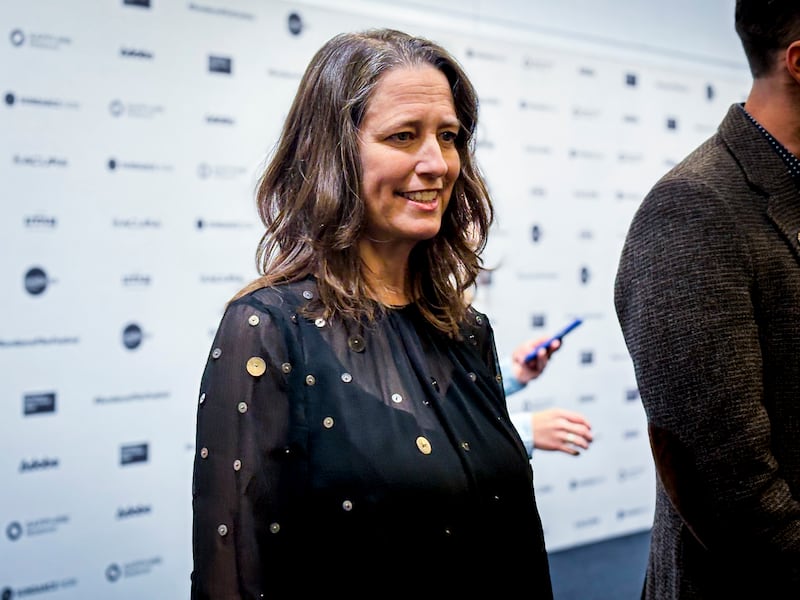
“This is our backyard. This is a potential catastrophe,” Baxter said Thursday ahead of the premiere of “The Lake.”
“The most immediate crisis for humans is air quality ... that issue is really the most pressing human health issue. And then there’s the fact that 10 million birds come here and they depend on Great Salt Lake,” she continued. “It’s both an environmental crisis and a human health crisis.”

Roughly 800,000 acre-feet, or 261 billion gallons of water is required to pull the lake out of its current status — an aim, the film demonstrates, that is an epic challenge.
Competing perspectives and motives create early tension in the film, but Ellis highlights how characters of different faith and political parties can come together to overcome the Great Salt Lake crisis, which becomes increasingly personal to every local in its own ways.
“The film demonstrates that people from different areas of expertise, whether science or politics or different political affiliations, can work together to achieve the goal that they want — and that the goal that they’re striving for, can also be the same," Ellis said.
“At the end of the day, we all want to breathe clean air, and we all want a vibrant economy, and we want to be able to live here.”
Faith also plays a role in the search for a solution to the lake crisis. Ellis spotlights the religious beliefs of Ben Abbott, an ecologist and subject of the film, who is a member of The Church of Jesus Christ of Latter-day Saints.
Throughout the documentary, Abbott relies on his faith as a guide to make difficult decisions. Oftentimes surrounded by his four children, Abbott is captured studying scripture and kneeling in prayer. He does not see scientific evidence and his religious beliefs as contradictory, rather, they steer him simultaneously.
While submerging himself in a natural stream of water, Abbott shares how he believes we are all meant to be good stewards of the land, to do our part and then expect divine intervention to fill in the gaps — Ellis found this perspective unifying.
“I was excited at the prospect of showing you know this brilliant scientist who’s a devout Mormon. The scripture and the teachings that he’s talking about all of the time, are incredibly universal, like take care of the earth that we’ve been given,” Ellis said.
“I don’t know a lot of people who disagree with that,” she added. “When faith is often used now as a tool for division, I was hoping that this could let people know that we have more in common.”
Gov. Cox vows to fill the Great Salt Lake
Gov. Spencer Cox made an ambitious projection to a Sundance crowd following a Friday screening of “The Lake.”
Cox, who makes several appearances in “The Lake,” told audiences, “the Great Salt Lake will be full in 2034,” when the Winter Olympics return to Utah.
“We’re gonna do it,” he added, noting that restoring the lake will require extra effort and involvement, and urged Utahns stay in the state and remain involved until the Great Salt Lake is filled.
“If you care about the Great Salt Lake, don’t just watch a movie or send a terse email to a legislator. We need you here. We need you here supporting the changes that are happening,” he said. “We need you advocating; we need you here donating. We need you here until the lake is full. So please, please don’t abandon us. Please stay.”
The governor’s vow to fill the Great Salt Lake follows a significant year of investments in the lake, including a private-public pledge to raise $200 million toward restoration efforts.
A philanthropic coalition launched in 2025 called Great Salt Lake Rising, pledged to raise an additional $100 million for Great Salt Lake conservation.
Cox said although current numbers “don’t look big,” efforts toward restoring the Great Salt Lake are ongoing, and major changes should be expected in the coming months.
“There’s some things I can’t share right now,” Cox told the audiences. “We are in the middle of a legislative session, and things are moving. But I’m just telling you, over the next six months, you’re going to see some really big investments — some of them coming from the state, some of them coming from other places — that will just dwarf anything you’ve seen in the past.”
