

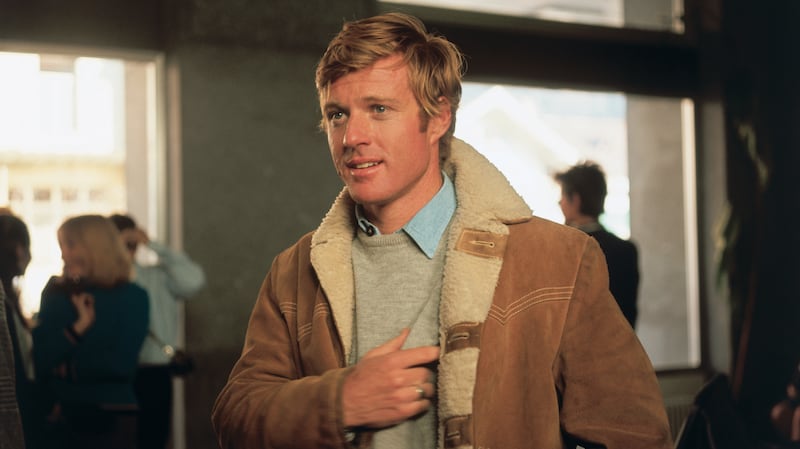

Each year during the Sundance Film Festival, Robert Redford would briefly escape the city chaos and go into the mountains.
At the Sundance Mountain Resort, tucked in the Wasatch Mountains, he would welcome filmmakers from all over to the festival’s Directors Brunch. For Redford, this was a festival highlight — a chance to connect with rising and established artists in the industry, to encourage them and to empathize with them.
Because he knew firsthand the struggles of creating independent film.
While the blockbuster Western “Butch Cassidy and the Sundance Kid” gave Redford star power, and lent its name to the festival that has become a pillar in independent film, it was “Downhill Racer,” Redford’s first independent film that came out about a month later, that really left an impression on the late actor.
The 1969 sports drama became a passion project for Redford as he fought with Paramount to get it made. For Redford, who died this past September at 89, the struggle of creating the film ended up being a catalyst in creating the Sundance Institute and festival.
So on Friday, the final weekend of the festival’s final run in Utah, Sundance organizers chose to return to the film that started it all with a special screening of “Downhill Racer.”
The uphill battle of ‘Downhill Racer’
Although she wished her father was there to present the film that meant so much to him, Amy Redford stood in his place, sharing some of that story with viewers on Friday.
“It’s been a minute since I’ve seen the movie,” she said after the screening at the Ray Theatre in Park City.
She praised the film’s artistry — in particular the shots that were captured by mounting cameras on skis and throwing viewers right into the action. Those techniques were “pretty revolutionary at the time,” she said, helping to create an authentic, documentary-like feel.
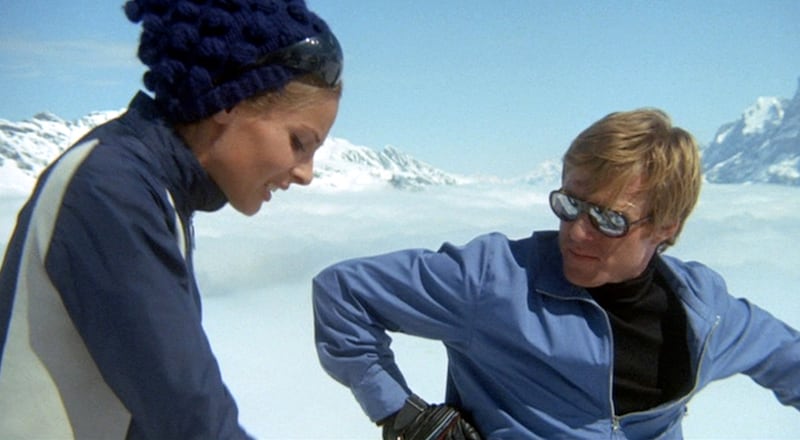
As Amy Redford tells it, one significant challenge her father faced in creating “Downhill Racer” was that his character — an ambitious, single-minded skier named David Chappellet who only has his sights on being the best — was largely unlikable.
Redford’s character shows his arrogance early on in the film as he refuses to race due to receiving a late starting position. When he finally makes his European skiing debut, he’s still unhappy about his starting position but places fourth. While getting congratulated after that race, he quickly retorts, “Maybe next time I’ll get a higher starting number.”
“The character is imperfect, and the industry didn’t want to see an imperfect Bob Redford,” she said. “They wanted to see what they wanted to see.
“He was always trying to have the freedom to investigate imperfection, humanity,” she added. “But because people cherished him as the star, there wasn’t a lot of room for that. So I think part of his drive to support writers and filmmakers who were interested in investigating complex characters was so that (filmmakers) beyond him might be able to have the opportunity to do that, still work, still have that freedom.”
He was always trying to have the freedom to investigate imperfection, humanity. But because people cherished him as the star, there wasn’t a lot of room for that.
— Amy Redford
The uphill battle of “Downhill Racer” is a saga festival programmer John Nein said he’s heard Robert Redford recount at the Directors Brunch for more than 20 years.
“It’s a fantastic story. It would change in little ways year to year — in great ways,“ Nein said with a laugh during Friday’s screening. ”He was a great storyteller.”
While Redford may have changed little details of the story here and there, the fundamental parts remained the same — enough so that the festival was able to piece together archived footage of Redford sharing his story at various brunches over the years, allowing viewers to hear it in his own words.

Robert Redford: ‘Stay the course. It’s going to be OK’
In a 3 1/2- minute montage of clips that showed Redford from 2002 to 2018, the late actor and Sundance founder opened up with filmmakers about the ups and downs of “Downhill Racer.”
“Just want to share with you that I have been there and I know what it feels like, and so I’m empathetic — not just sympathetic," Redford said. “It is always tough because of what you, the filmmaker, are putting on the line.
“I was an actor in the industry, and there was no independent world, and I began to want, and have the urge, to tell my own story, in my own way,” he continued. “To get that idea I chose skiing because I thought the visual capabilities of skiing had poetry and danger, and that was beautiful.”
It was a hard sell for Paramount, so Redford had to use his own resources to bring his vision to life.
In the Sundance clips, he talked about the scrappiness that went into creating the film. At one point, he went to a sporting goods store from his childhood in Santa Monica, California, and got a motorcycle helmet. He covered it in silver tape and put USA on the front. He cut out his own skiing bib. He and a photographer he hired wore disguises so they could secretly film footage at the 1968 Olympics in Grenoble, France.
Out of this scrappiness emerged a film that brought Redford joy.

“I was very proud of it, the studio was not excited about it,” Redford told filmmakers.
The actor recalled being “unbelievably nervous” at the first screening of the film.
As people started realizing it was a movie about skiing, Redford said he heard murmurs throughout a nearby row and people started to leave. Dead silence, and then a sigh came during a scene Redford had thought was pretty funny.
“Pretty soon whole rows were getting up,” he recalled. “And I watched that theater empty in front of my eyes, along with my insides.”
“I wanted to tell that story to share with you that it wasn’t always easy for someone that maybe it looks like it was,” he continued to filmmakers. “Stay the course. It’s going to be OK.”
Near the end of the Sundance footage, Redford offered up encouragement to his fellow filmmakers through a quote from poet T.S. Eliot: “‘There’s only the trying, the rest is not our business.’
“And that’s who we are,” he continued. “So, God bless.”