

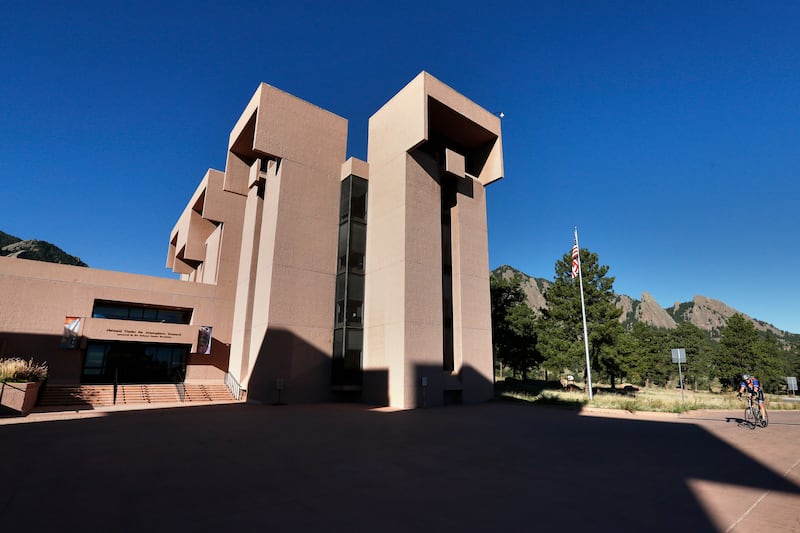

- The Trump Administration plans to shut down the National Center for Atmospheric Research.
- NCAR is a global leader on weather and climate modeling, sharing its research worldwide.
- Accused of being hotbed of "climate alarmism," its work will be moved other research centers.
The Trump administration announced last week that it is dismantling the leading climate research center in the United States.
The National Center for Atmospheric Research, based in Boulder, Colorado, is funded by the National Science Foundation, and managed by a nonprofit consortium of more than 100 universities and colleges that study the atmosphere.
It’s internationally renowned for its study of extreme weather and subsequent modeling systems for tracking their movements and potential. It describes its work as “advanc(ing) scientific breakthroughs by providing the research community with leading-edge modeling, observational tools, and computing resources.”
“The impact?” reads its website, “Delivering critical insights that protect lives, support the economy, and strengthen national security.”
The center’s research focuses on how Earth systems — like the oceans and land surfaces — interact with the atmosphere and outer space, which it then computes through various modeling programs that assist with forecasting and planning for future weather events.
Its research areas are as specific as the microphysics of cloud formation and “large-scale planetary waves,” but also include broader topics such as “weather, water, climate, atmospheric chemistry, interactions between sun and Earth, and more.”
The administration, however, determined that it’s guilty of a woke ideology, and should be closed.
“The National Science Foundation will be breaking up the National Center for Atmospheric Research (NCAR),“ wrote Russell Vought, the director of the Office of Management and Budget, in a statement posted to X.
“This facility is one of the largest sources of climate alarmism in the country. A comprehensive review is underway & any vital activities such as weather research will be moved to another entity or location.”
What are the reasons for closing NCAR?
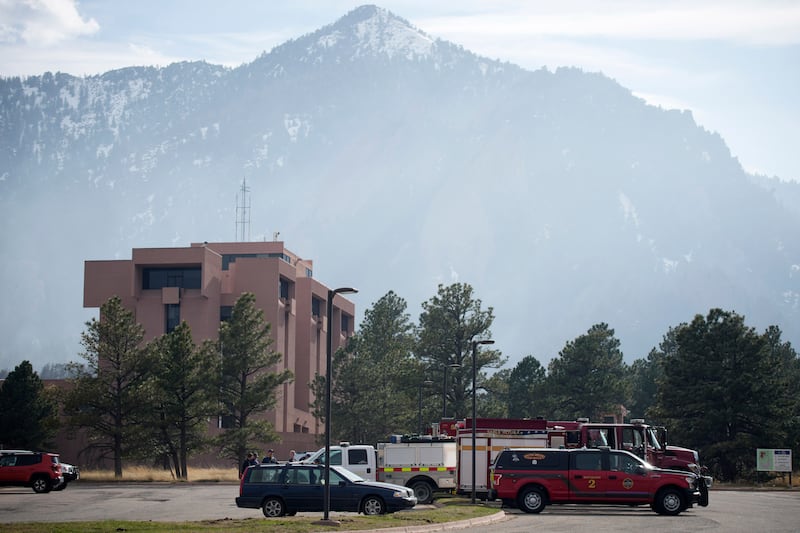
In a conversation with USA Today, a White House spokesperson referred to several specific programs that raised alarm bells.
One is the Rising Voices Center for Indigenous and Earth Sciences that was attempting to make the study of science “more welcoming, inclusive and justice-centered.” Another is an art program conducted as research and a third is looking into how climate change and weather conditions would affect off-shore wind production.
For some context, the Trump administration also temporarily paused the building of several off-shore wind farms in the Northeast this week, citing a wide variety of concerns.
But the one Vought referenced in his statement — “climate alarmism” — signals the administration’s underlying issue with the field of climate science and its ultimate finding. It’s one that President Donald Trump has often referred to as a “hoax.”
The president said in remarks at the United Nations General Assembly that climate change is “the greatest con job ever perpetrated on the world.”
Only a vanishingly small percentage of scientists agree with that perspective. In general, most research nationally and globally has confirmed that the Earth’s climate is rapidly changing as a result of human activity.
Though it was not a stated reason by the White House, NCAR is also expensive. The program employs 830 people over two facilities — the Boulder headquarters and super-computer center in Cheyenne, Wyoming — while also operating two research airplanes. The National Science Foundation distributed more than $120 million dollars to the program alone this year, Science Magazine determined, which amounts to half its budget.
Concern over closing a weather forecasting and research center
Over the course of its history, the NCAR developed many weather study innovations that people rely on today. From determining global “pulses” that have given researchers tools to predict weather patterns with months of warning through the recording devices dropped into hurricanes to gather data, it has led advances in weather research since the 1960s.
In statements reported by the New York Times, Antonio Busalacchi Jr., the president of the University Corporation for Atmospheric Research, the one that manages NCAR, said that closing the center would be “setting back science in this country by decades.”
Colorado Gov. Jared Polis released a statement following the news titled, “Trump Administration Decreasing Safety & Attacking Science.”
Referring to NCAR as “a global leader in earth system science, promoting scientific breakthroughs that support national security and the economy,” he said that by closing it “public safety is at risk.”
“Climate change is real, but the work of NCAR goes far beyond climate science,” Polis said. “NCAR delivers data around severe weather events like fires and floods that help our country save lives and property, and prevent devastation for families. If these cuts move forward we will lose our competitive advantage against foreign powers and adversaries in the pursuit of scientific discovery.”
This would not be the first change to America’s weather forecasting programs. The Department of Government Efficiency made large cuts to the National Oceanic and Atmospheric Administration earlier this year. Some of those positions have since been backfilled after the July 4th flooding disaster in Texas.
What Al Roker says about shutting down NCAR
While NCAR does study the effects of climate change on the Earth, it is the broader range of its research that advocates are lamenting the loss of.
"@realDonaldTrump Please don’t do this. This is not a center for alarmism. The science that comes from @NCAR_Science has made the United States a leader in tracking severe weather, modeling extreme floods and even the effects of increased solar activity and how it impacts our atmosphere here on Earth,“ wrote Al Roker, the weather presenter for NBC Today, in response to Vought’s announcement post.
“Research that comes from here benefits us all from a safety and infrastructure standpoint. And, economically, the science helps mitigate a growing number of #billiondollar #weatherdisasters."