


Editor’s note: This article is published through the Great Salt Lake Collaborative, a solutions journalism initiative that partners news, education and media organizations to help inform people about the plight of the Great Salt Lake.
SALT LAKE CITY — A major water provider in Salt Lake County is poised to deliver the Great Salt Lake a boost as the area’s namesake deals with a record-low snowpack this year.
The Metropolitan Water District of Salt Lake and Sandy is leasing approximately 2,500 acre feet of water to the lake every year for the next five to 10 years from water saved by residential water conservation efforts, the Great Salt Lake Watershed Enhancement Trust announced on Monday. The extra water will flow into Farmington and Gilbert bays during that time, boosting their ecosystems.
It represents the type of conservation efforts that are needed to help save the lake, which is people of all walks of life and different sectors coming together to collaborate toward solutions, said Marcelle Shoop, the trust’s executive director, as she stood by the banks of City Creek in Salt Lake City, one of the bodies of water that ultimately flows into the lake within its basin.
“This is new water for the lake, and it is going to get there as a result of the dedication and focus of our partners,” she said. “(It) goes to show that individual and collective actions to conserve water can make a difference for Great Salt Lake.”
While the agreement could direct 12,500 to 25,000 acre-feet over the next decade, it may be more important this year.
Utah’s statewide snowpack entered April at its lowest point since snowpack data was first tracked in 1930 by a “wide margin,” the Natural Resources Conservation Service reported last week. No basin in the state has been spared from the record-low snowpack either.
Unlike last year, when the Great Salt Lake Basin ended up with a fairly normal snowpack while the rest of the state endured below-normal conditions, this year’s snowpack peaked at 10.7 inches of snow water equivalent on March 8, its lowest peak since at least 1980. The previous record-low peak of 11.2 inches was set in 1992.

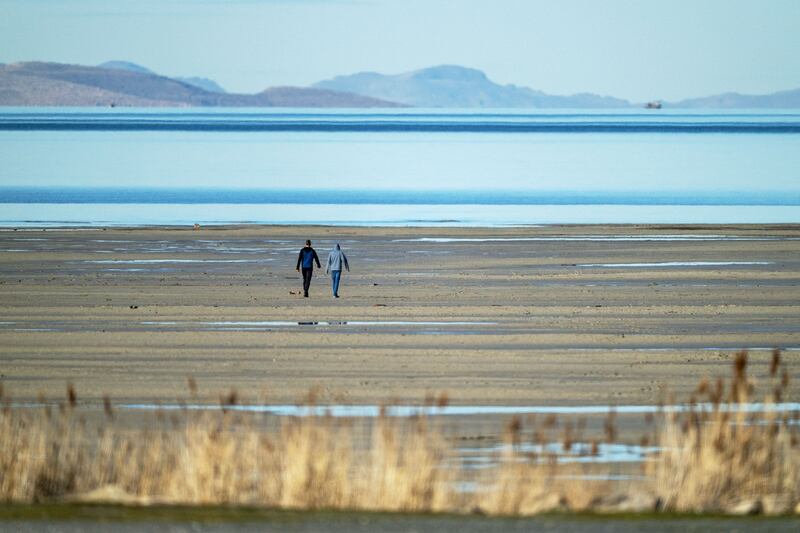
What’s worse, more than half of it is already gone, having melted during record-warm conditions at the end of March. Even with last week’s storm, which added about an inch of water to the basin and temporarily slowed the melt, experts don’t believe the Great Salt Lake’s southern arm will rise much above its current elevation of 4,192.3 feet this spring.
It’s currently slightly above the lake’s “serious adverse effects” range, but another hot and dry summer could push it back to a level that would trigger the state to close the breach in the Great Salt Lake causeway to focus on maintaining the southern arm’s levels.
Finding ways to get water to the lake isn’t easy, which is why finding new donations and leases is vital, said Hannha Freeze, Utah’s Great Salt Lake deputy commissioner.
“Often we might think — like in our homes — we can just turn a tap on, and the water is right there when we need it, but that’s not necessarily the case with these transactions,” she said, explaining that there’s a lot of coordination between agencies to ensure water dedicated to the lake ends up there.
Utah legislators passed a few laws this year to simplify the process. Yet it still requires people to cut back to have enough water shares available for it to end up in the lake. There’s been greater interest in that over the past few years, Shoop said.
Monday’s lease wouldn’t have been made possible if residents hadn’t been able to cut back in recent years. Salt Lake City has already enacted its water shortage plan, and Salt Lake City Public Utilities will push more conservation messages this year, said Jesse Stewart, deputy director of Salt Lake City Public Utilities.
Sandy Mayor Monica Zoltanski urged residents to continue reducing outdoor watering and to visit places like Sego Lily Gardens to learn more about water conservation landscaping options. New technologies have also helped residents cut back, trimming water usage by 10% in recent years, she said.

Those measures may ultimately help the lake this year by reducing diversions, Stewart added.
The water district’s lease won’t save the lake, but Schoop says it’s a nice step in the right direction.
“With every new partnership that moves water to benefit Great Salt Lake, we know it will build momentum,” she said. “It’ll have a ripple effect, and that’s true even as we navigate this historically dry winter.”