

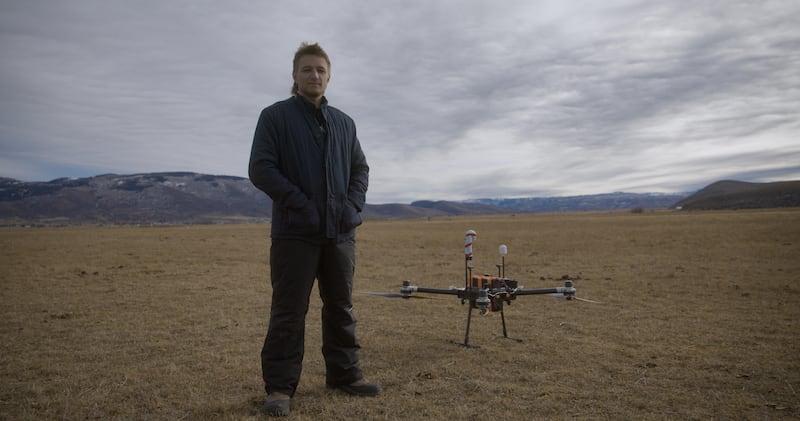

A private cloud-seeding company, Rainmaker, says it has unambiguously validated the effectiveness of its technology. On Monday, the company announced that the tech has produced 143 million gallons of freshwater for Utah and Oregon residents.
Founded in 2023, Rainmaker uses drones to disperse silver iodide into clouds, then they track precipitation with advanced radar.
However, Rainmaker — and every other rain-enhancement company — has been up against the notoriously difficult challenge of validation.
Since there is no control set to test, and because the weather is chaotic and variable, the Government Accountability Office declares the benefits of the technology to be “unproven.”
To overcome this evaluation challenge, Rainmaker flies drones in unique patterns when seeding. Then operators compare distinct radar and satellite features with where their drones operated.
As of April, Rainmaker found 82 unambiguous seeding signatures, which show their seeding operations directly caused precipitation.
In Utah and Oregon alone, the company said its cloud-seeding efforts have added enough water to match the annual usage of about 1,750 households. However, “this figure likely represents only a small fraction of Rainmaker’s total generation this season,” the company said in their press release.
Rainmaker currently operates in Utah, Idaho, Oregon, California and Colorado.
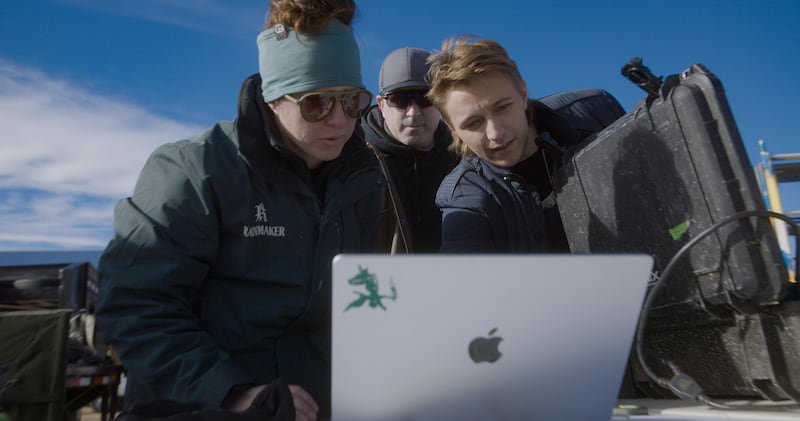
This importance of cloud-seeding validation
When asked about the significance of Rainmaker’s ability to validate their results, the director of Utah’s Department of Natural Resources, Joel Ferry, told the Deseret News, “That kind of validation is critical.”
“If we can scientifically prove and show it’s working, that’s what it’s all about,” he said. “It gets us the validation to say, ‘This is a good investment of state resources, and we should be putting our money here because it is so effective.’”
With cloud seeding, “cost per unit of water is so low; it really is the smartest thing we can be doing with our money,” Ferry said.
Utah has invested in cloud seeding in some capacity since the early 1950s to help counter the state’s ever-present droughts.
The technology deployed in Utah has evolved dramatically over the last 70 years.
Before Rainmaker, the state paid for ground-based generators, which would burn a silver iodide-acetone solution in hope that the particles would reach the clouds. The state would build the generators in willing Utahns’ farmyards, Ferry said.
When the right weather conditions rolled over the area, the state would call farmers and tell them to go out and turn on their generator.
“A lot of the time, someone didn’t answer the phone or they didn’t notice to turn it back off again after the storm had passed, so we were spending a lot of money and resources doing this, and I asked myself, ‘Okay, is this really the highest and best use? Can we do it better?’”
Then Rainmaker bought out North American Weather Consultants, a cloud-seeding company based in Sandy, Utah, and started using drones.
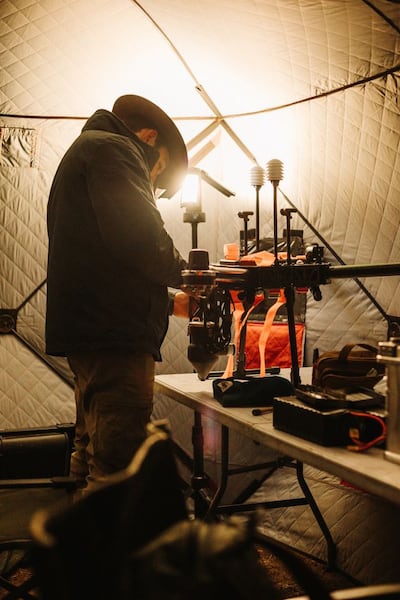
Drones allow the company to inject silver iodide directly into the clouds, making the entire cloud-seeding process much more precise.
Their drone precision, combined with their radar systems, have produced satellite images proving a direct correlation between the seeding and precipitation. Some images show cloud holes or regions of depressed cloud tops after seeding.