

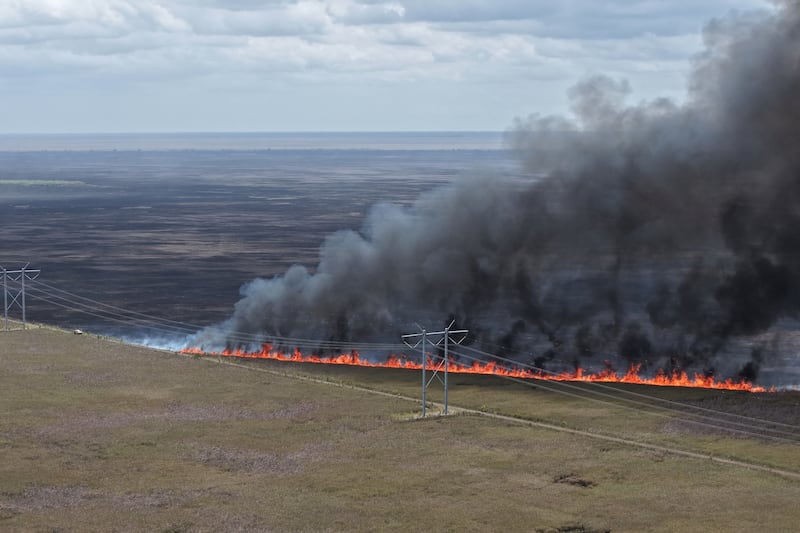

- Wildfires have burned 1.88 million acres in the U.S. so far this year, across 25,000 fires.
- The number of acres burned by May is greater than the yearly average over the past 10 years.
- The South is experiencing an unusual amount of wildfire they year.
Some 1.88 million acres of American land has already burned this year due to wildfire, spread across more than 25,000 fires in at least nine states.
The total acres burned is already higher than the yearly average over the past 10 years, according to the National Interagency Fire Center. And, ironically, May is National Wildfire Awareness Month.
Generally, it is California and the Intermountain West that drive the nation’s wildfire season, but the concentration of this year’s fires mostly span the Great Plains and the South.
The majority of current incidents are in Georgia, North Carolina and Florida, a state with several fires raging in swamps, including some in parts of the Everglades.
Though there are large fires burning this week in California, New Mexico and Arizona, the West has had an overall slower start to the year. As of May 12 in Utah, only four acres were burning in the past day and less than a thousand acres total have burned as part of 142 fires, according to the Utah Fire Info website.
The Great Plains have taken the brunt of this year’s wildfires. More than a million acres have burned across Kansas, Oklahoma and Nebraska, devastating many ranchers’ grazing lots. Nebraska cattlemen were especially devastated.
The tragedy, though, has turned into a showcase of good neighborliness and agricultural solidarity through many acts of anonymous kindness. Ranchers in those states have been the recipients of massive hay donations from farmers around the country.
After organizing a hay drive in April, Laurie Casper of the South Dakota-based Kingsbury County Cattlemen’s Association told the Keloland Media Group that, “We’re all in this together.”
What’s causing so many wildfires?
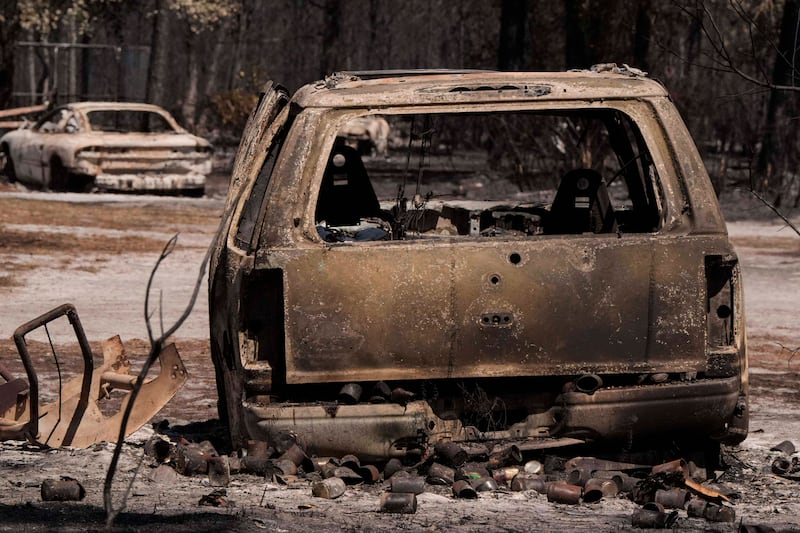
The vast majority of wildfires — some 85% — are human-caused and preventable, but there are other relevant reasons that make such incidents more likely. Aside from the larger systemic factors implicating rising temperatures and water scarcity, a primary consideration is drought.
The extreme drought that much the South has experienced this year does help to explain how swamps — not typically known for their dry nature — came to catch fire. Recent rains in those states have mitigated some concerns, but the majority of the broader region remains under “extreme” or “exceptional” drought conditions.
Such circumstances also exist in the West, though the drought is — surprisingly, considering the record-breaking low snowpack — not as pervasive as it has been in the South.
Colorado, Idaho and Wyoming have some regions classified as under “exceptional” drought conditions, while the majority of Utah is under “extreme” drought.
That has not led to many fire restrictions as of yet. But with many counties enforcing water restrictions as of March, there’s the potential for risk to rise as the summer continues to heat up.
There are a number of things people can do to prepare for a potential wildfire this year. Utahns can visit Fire Sense, a state website with detailed information about how to prepare their family and property.
Making hay donations
As of the end of April, more than a million acres had burned in Kansas, Oklahoma and Nebraska. The vast majority — some 800,000 acres — burned in the Cornhusker State.
“What we’re seeing today is significantly different, I can tell you, and I’ve been in wildland fire management for almost 40 years,” Bill Waln, the state fire management officer for the Kansas Forest Service, told Nebraska Public Media in April.
Waln also said he expects the trend to continue.
CBS reported that one ranch in the Sandhills of Nebraska that lost all 11,000 acres of land in the Morrill Fire this past March. It was the largest wildfire in the history of the state, consuming 642,029 acres.
The ranching community has turned out to help feed the 35,000 or so cattle that are without feed heading into the spring and summer. Hay donations have been coming from around the country to support the struggling ranchers.
One rancher told CBS that since the fires started, he has received at least $80,000 in anonymous hay donations.
One of the volunteers coordinating the donations who CBS interviewed, Sara Cover, told the news outlet that, “Every rancher that we have called to send them hay has asked us to send it to their neighbor first.”