

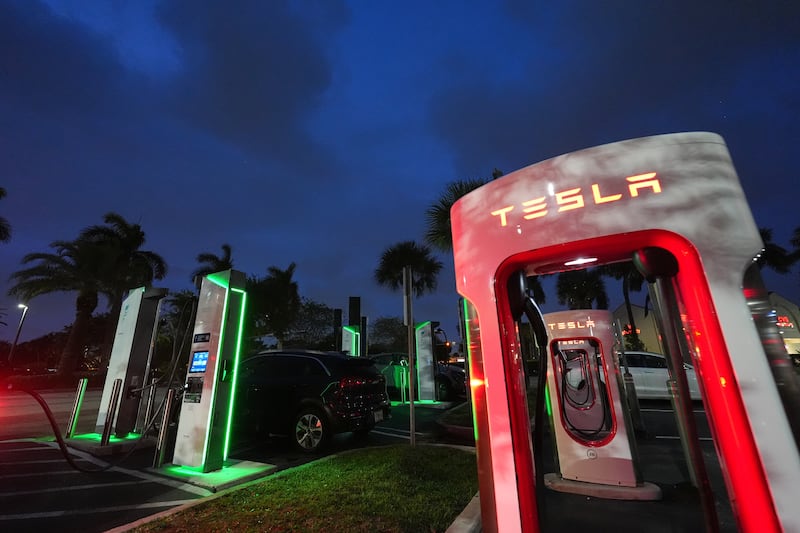

Electric vehicle owners in Florida may be spending less time at charging stations with the announcement of a new charging lane that will be tested once finished in 2029. The project is part of a new 4.4-mile road the state is building to connect Lake and Orange counties.
A Central Florida Expressway Authority press release said one objective of the new road is to “gain valuable insights into designing highways with precast concrete panels to accommodate infrastructure for an electric vehicle pilot.” The press release said the findings could impact how the state builds its roads in the future.
According to a press release, Norwegian company ENRX is tasked with introducing the technology to Florida.
Of the new highway, only a small section of less than a mile will be carved out for testing, and the EVs will need a special attachment for charging.
Key points of the new project:
- Magnetic charging coils under the road
- Vehicle owners pay for their usage of electricity
- Dramatically increased driving range
The following X post describes how the system will work.
What does this mean for EVs?
One of the biggest arguments against EVs has long been the inability to travel long distances the way traditional gasoline cars can. Though electric vehicles have made strides to increase efficiency, most EVs are limited to around 300 miles before a 30-minute charge is required, compared to a fuel-efficient car that has the ability to travel more miles and takes a shorter time to fill up a tank of gas.
With recent advancements allowing wireless charging for vehicles traveling 60-70 mph, EVs might be able to travel much further than they previously could with a smaller battery. According to a study by Purdue researchers, smaller vehicles should have no problem being charged, since the study in Indiana was able to charge semitrucks traveling 65 mph.
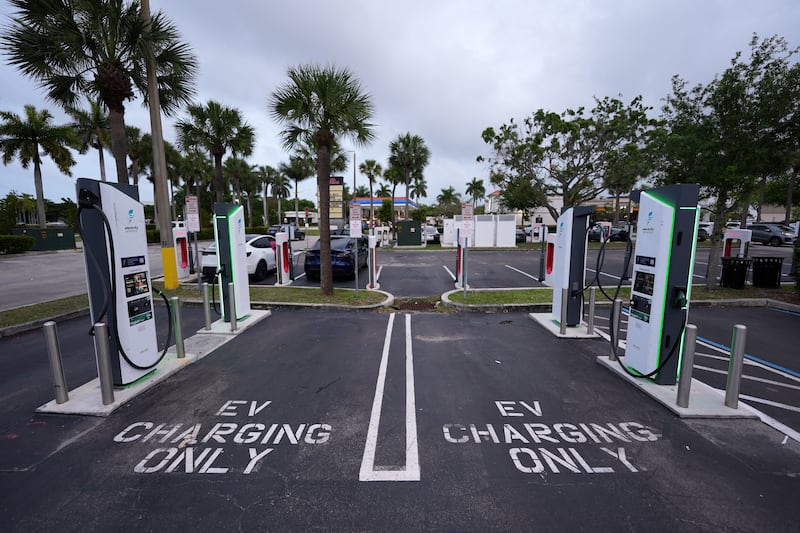
According to John Haddock, a professor of civil and construction engineering at Purdue University, one of the biggest barriers to EV adoption is “range anxiety.” Not knowing where you are going to charge next is a real concern, but those concerns can now be put to bed, he says.
“With this system, you’d be able to drive your vehicle down the road and it would charge the battery.”
Wireless charging
Putting charging coils beneath the road, magnetic fields transfer energy to special receptors attached to EVs to charge just like a phone charges wirelessly.
A previous project was successful in Detroit, but for city roads with vehicles moving much slower than on highways. The breakthrough to charge large, high-power vehicles like semitrucks is one that “could be a practical and scalable solution for real-world highway transportation,” Nadia Gkritza, a professor of civil and construction engineering and agricultural and biological engineering at Purdue, said.
Who is paying the electricity bill?
According to Electreon, another wireless EV charging company, vehicle owners will pay for the amount of electricity they use — automatically billed.
To install roads in Detroit, public investments funded $1.9 million and Electreon covered the rest, a government press release stated. It’s unsure how future projects will be funded but they could be a combination of public and private funds.
More wireless charging highways
Electreon is a big player in the wireless road-charging industry. The Israel-based company created the first wireless charging road in the United States for city roads in Detroit.
The company also put in the first road chargers in the state of California ahead of the 2028 Summer Olympic Games that will be held in Los Angeles, mainly focused on shuttles.
European projects include the Bavarian Autobahn, highways in Italy and bus routes in France.
Trucking industry
While putting charging coils under every road may sound nice, it is extremely unfeasible, according to some reports. However, Vice President of business development at Electreon, Stefan Tongur says the technology does not need to be put in every road.
“It’s not meant to deploy everywhere,” he told BBC. “It’s to be very strategic in where it makes the most sense, where the good business models are.”
He says the company is first focused on roads often frequented by commercial fleets, such as buses and large trucks.
Ashley Nunes, a Harvard researcher in behavioral economics sees the new technology alleviating carbon emissions disproportionately released by the medium and heavy duty trucking industry, according to BBC.
Tongur also claims semis can have three receivers allowing trucks to charge 100kW. He says by placing charging roads in strategic areas where charging stations are scarce, driving range will potentially be dramatically increased, while giving off less emissions.
If projects prove successful, the U.S. could see the innovative highways stretching across the country.
Social reactions
Social media weighed in on the idea, many with negative reaction to who will build the infrastructure and potential health concerns of drivers contacting magnetic fields.
Others raised maintenance concerns, citing the large number of potholes they see driving along highways. A fair point, infrastructure stretching for miles would need to be protected by roads more durable than what most roads are currently made of.
Looking outside of the everyday travel, Richard on X pointed out that the real benefit would be for large vehicles transporting goods, stating, “Passenger EVs are the marketing wrapper.”