

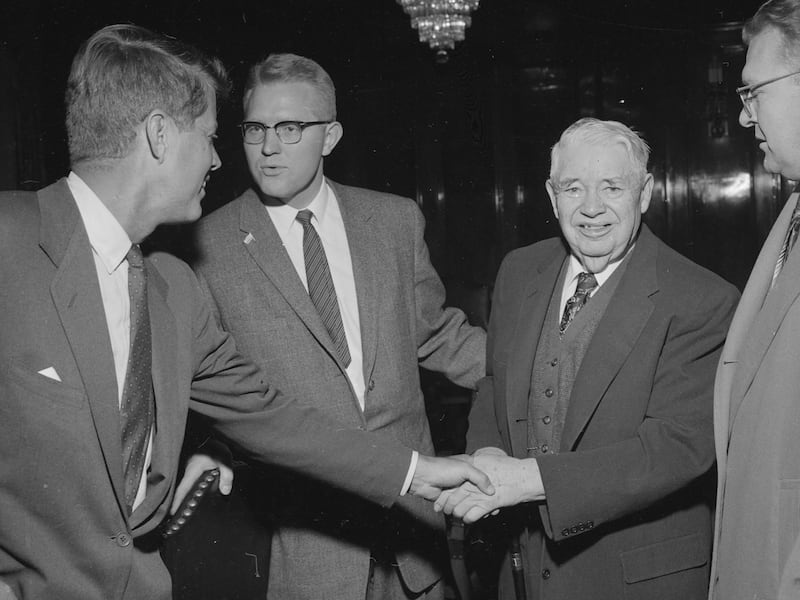

Oscar W. McConkie Jr., a gregarious, prominent Latter-day Saint and legal and political giant in Utah who served as an advance man for John F. Kennedy in the 1960 U.S. presidential campaign and was a World War II veteran, died Nov. 2 of complications from COVID-19 and was laid to rest Tuesday. He was 94.
McConkie was a founding partner of Kirton McConkie, which became legal counsel for The Church of Jesus Christ of Latter-day Saints with offices across South Temple from the Church Administration Building. He was the brother of the late Elder Bruce R. McConkie, a member of the Quorum of the Twelve Apostles.
The church’s First Presidency called him “an extraordinary man and exceptional leader” in a letter to his wife, Judy McConkie, read during Tuesday’s funeral.
McConkie served the church as a missionary, bishop, stake president, president of the Arizona Tempe Mission, regional representative and patriarch.
During the dedication ceremony for the Kirton McConkie offices in 2012, Elder Lance B. Wickman, emeritus general authority and general counsel for the LDS Church, praised Kirton McConkie for its work on behalf of the church.
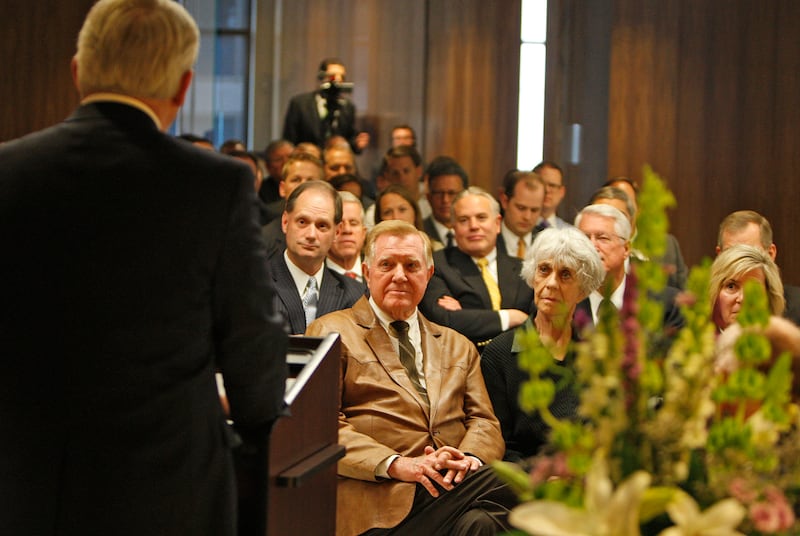
“It’s not really the building we’re dedicating,” he said then. “It’s really us, in our devotion, in our service, giving the best that we have to give in our professional capacity, realizing that in doing so we are not just representing another client, but we are representing the church of Jesus Christ himself.”
“Oscar McConkie was a dear friend, both to me and to the church,” Elder Wickman said Tuesday in a statement. “His rare combination of professional expertise, love of the gospel of Jesus Christ, leadership experience and deep faith made his counsel sought after and invariably wise and measured. We will miss him.”
McConkie was a proud Democrat who served in both branches of the Utah Legislature, including two years as president of the Senate in 1965-66, before Utah became dominated by the Republican Party.
McConkie was the Utah advance man for Kennedy’s visit during his historic presidential race. He told the Deseret News about a long discussion Kennedy had during that 1960 visit with President David O. McKay of The Church of Jesus Christ of Latter-day Saints. They talked about how creating a larger middle class in developing countries could help democratize the world.
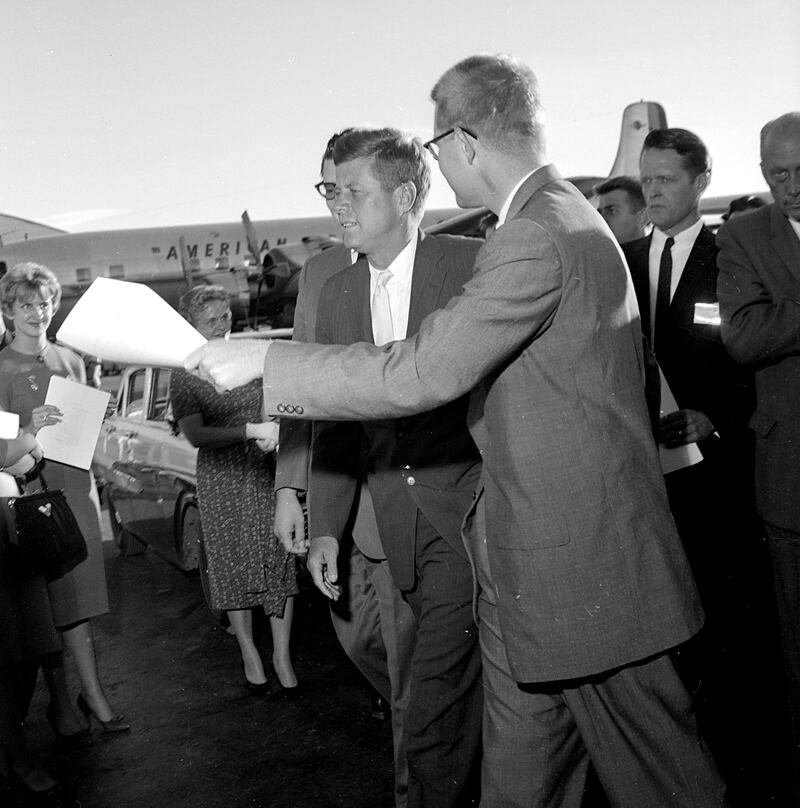
Afterward, Kennedy turned to McConkie and said, “There is the ideal religious leader for a people.”
“I was just tickled,” McConkie said. “I knew President McKay well and here we have the president of the United States talking like that about the president of the church.”
McConkie later visited JFK in the White House, a sign of the president’s fondness for him.
“He liked to joke about Oscar,” Judy McConkie once said.
McConkie contributed to the speech JFK gave in the Salt Lake Tabernacle three weeks before he was assassinated. McConkie said he burst into tears in his law office when he learned the Kennedy had been shot.
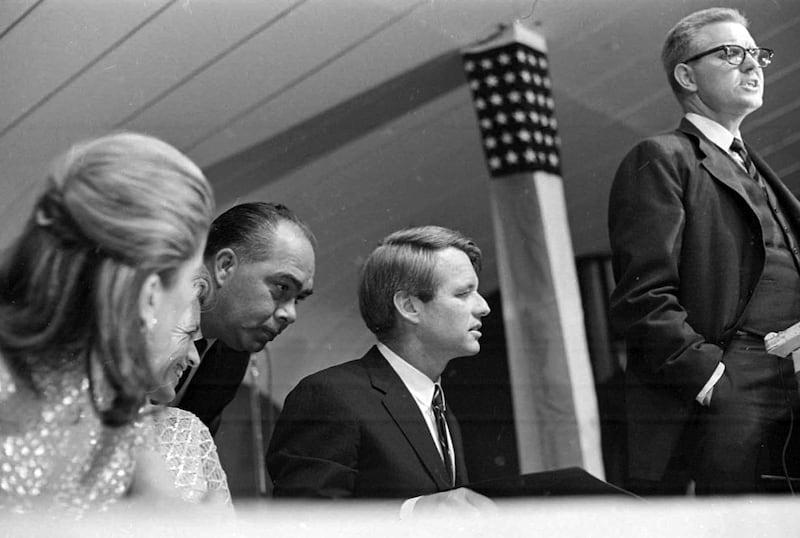
McConkie helped Robert F. Kennedy run for president in Utah before RFK was shot and killed that summer.
Born in Moab on May 26, 1926, McConkie was known for his optimism, wit, big smile, red hair and large personality. While in training during his two years in the U.S. Navy, he played on the University of New Mexico’s Sun Bowl championship team. After the war, he earned political science and law degrees at the University of Utah and married Judy. They raised eight children — Oscar III, Ann, Daniel, Gail, Clair, Pace, Roger and Edward — and have 46 children and 113 great grandchildren.
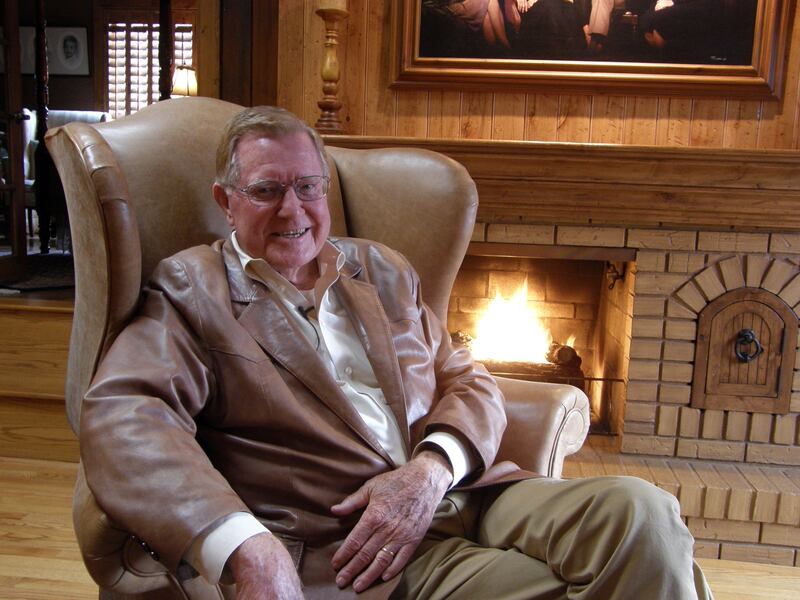
McConkie was diagnosed with melanoma in 2019 and caught COVID-19 this fall. The virus roared through the family.
Only his wife and children attended Tuesday’s funeral in person, due to pandemic precautions. Another 350 people watched on Zoom while still more viewed it on Facebook Live. An American flag was draped over the veteran’s casket.
McConkie was known for strong sermons, often holding his arms spread far and wide at the pulpit, the Bible in one hand and in the other a triple combination containing the Book of Mormon, Doctrine & Covenants and Pearl of Great Price.
He reveled in church service and the gospel of Jesus Christ. He told his oldest son, Oscar McConkie III, that he was proud to have lived during the administrations of 11 church presidents, from Heber J. Grant to Russell M. Nelson.
“He sustained and was loyal to every one of those prophets,” Oscar III said.
He helped the church gain official recognition in Zaire, now known as the Democratic Republic of Congo, where President Nelson dedicated the first temple last year.
“We’re confident your family members will take comfort in the quality of his life and in the memories you share of his abiding love for his family, his humor, his lifelong efforts to accomplish his dreams and his testimony of the gospel of Jesus Christ,” the First Presidency noted in its letter.
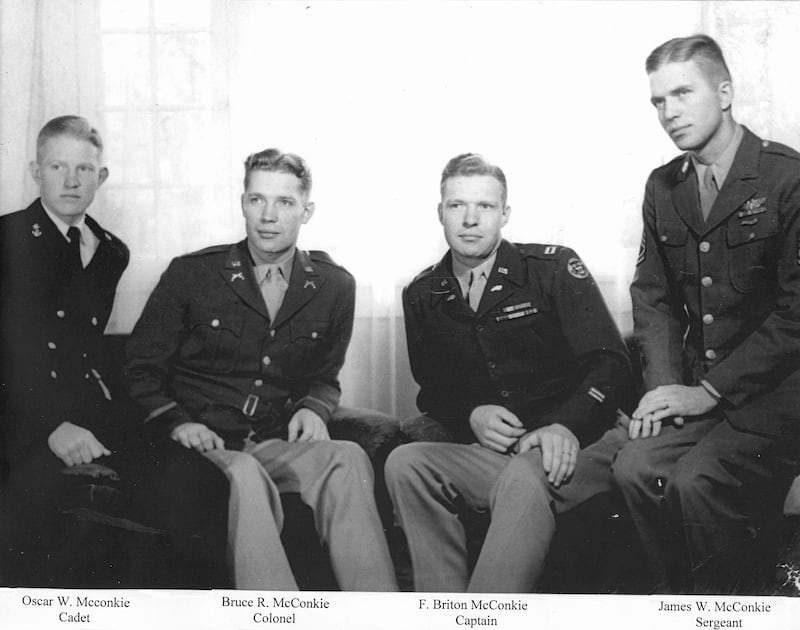
He also wrote three Aaronic Priesthood manuals for the church and several books on church subjects, including “Angels.”
His other children described how he loved, counseled and taught them, and how he made them laugh. Several mentioned that he was a terrible driver.
McConkie “couldn’t carry a note if he sat next to the Tabernacle Choir,” Daniel McConkie said.
“Dad was fearless as a lion but meek as a lamb,” Roger McConkie added. “He was the warmest individual I have ever known.”
“He was an optimist and he was happy,” said a daughter, Gail McConkie Evans. “He is what Moroni said in the Book of Mormon: ‘He that is happy shall be happy still.’”