


SALT LAKE CITY — In the First United Methodist Church, the Rev. Elizabeth McVicker counts less than a dozen youths. At Centenary United Methodist Church, a smaller congregation, it’s maybe seven or eight.
In other words, youth participation in her faith community is “very low,” the pastor said.
“We tend to lose kids when they hit junior high and high school,” Pastor McVicker said. “The Methodist Church is aging quickly and we’re not drawing in the young people the way we need to.”
Other Utah faith communities are facing the same dilemma.
The dwindling numbers of young people not embracing traditional religion is part of a global trend, said Brian Birch, director of the Religious Studies Program at Utah Valley University.
“The single most dramatic shift in religious identity over the past 20 years has been the growth of the category of ‘none.’ These so-called ‘nones’ are those who select ‘none of the above’ on surveys about religious affiliation,” Birch said in an email. “This whole phenomenon is part of a global trend away from traditional religious communities.”
What can be done to reverse this trend, or at least help faith leaders to better connect with young people and their needs? It’s a topic that is being discussed by faith leaders and youth alike.
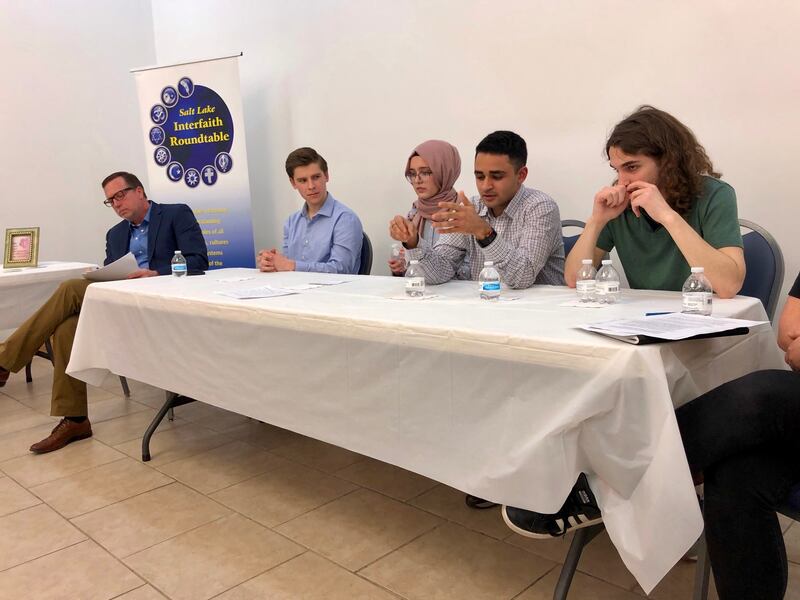
A recent Salt Lake Interfaith Roundtable panel discussion titled “Where Are the Missing Youth?” asked young people from different faith journeys to share insights on their religious views and experience. The event has also given faith leaders a chance to share their own views on the subject.
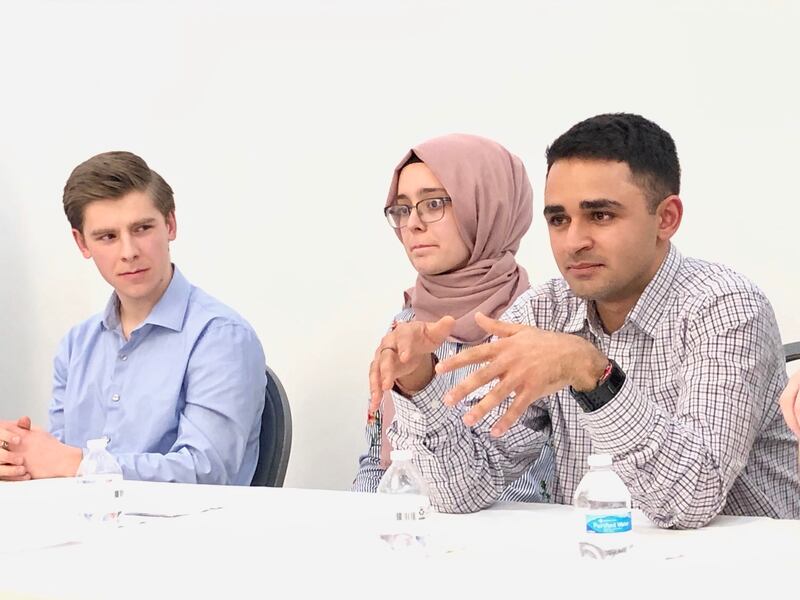
The five-member panel included Sai Mehta, from a Hindu congregation; Nihal Kariparduc, a Muslim youth from the Emerald Hills Institute; Eli Wolk, from Hillel, a Jewish University student organization; Elexis Kain, an atheist student at UVU; and Zac Adamson, a member of The Church of Jesus Christ of Latter-day Saints. The event took place in mid-February.
Birch served as the panel’s moderator and set the context by citing Pew Research Center studies reflecting the trend. A 2019 study shows the religiously unaffiliated category has risen to 26% for the entire population, Birch said.
The most cited reason for disaffiliation is a loss of belief in the religion’s teachings, Birch said.
“No other factor even comes close,” Birch said. “I don’t have a good answer for faith leaders trying to stem the tide of disaffiliation. The data suggests that it is less a matter of making younger people feel more welcome and needed, and more a matter of how religious teachings resonate in the information age.”
The young panel answered questions about what youth are seeking in an organized religion, how their parents influenced their spiritual path, how organized religion can adapt to connect more with young people and what factors defined their faith decisions.
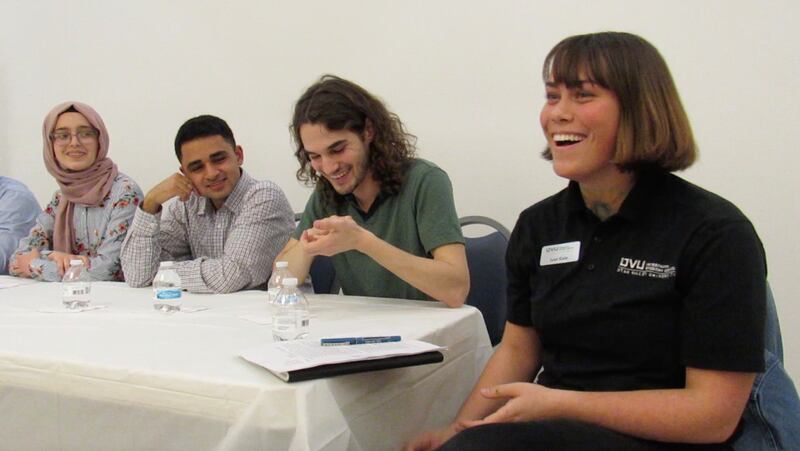
Generally speaking, the panelists, whose ages ranged from 18-25, said they want to be involved in a community where they can be active, have fun and feel comfortable. They want to be good people, serve others and appreciate making their own choices. They don’t want to feel pressured or micromanaged.
“We can become busy,” Mehta said. “Knowing you can take a few days off and still come back and not be seen as any different, that makes a big difference in acceptance of youth.”
Wolk said faith leaders don’t need to entertain young people with fancy technology. His most impactful worship experience came in nature with nothing but trees, benches, a Torah and a small group of people.
“Don’t overthink it. Don’t try to change everything you are doing because you think the next generation is going to like it,” said Wolk, who is active in his Jewish community. “There is something that religion, and the antiquatedness of religion, inherently offers to people. It is different than modern society and the secular world, it is a place to get away. I don’t think people understand that the youth still appreciate that.”
What are faith leaders saying?
Rev. McVicker said the traditional style of worship doesn’t seem to meet the needs of young people.
“Religion is not speaking the language of young people and touching their hearts,” the pastor said. “Young people are more interested in putting their faith into action through service in the community.”
“It starts with a God-centered home, with God being the construction boss, the architect and in charge of homeland security.” — the Rev. Oscar T. Moses, pastor at Calvary Baptist Church.
The Rev. Oscar T. Moses, pastor at Calvary Baptist Church, attended the panel discussion. He believes his generation has failed to transfer its faith to the rising generation. He thinks young people need a platform where they can feel safe in expressing their beliefs and leaders need to listen. This is something he plans to focus on with his congregation.
What stood out to Rev. Moses from the panel is how family foundations played a role in shaping the panelists’ world views. Four of the five followed family religious traditions started in the home. Kain, the atheist, said she was raised by a nonpracticing Catholic mother and a semi-practicing Christian father who were “pretty nonreligious,” and had no clear direction to a certain religion, although they wanted her to become a good person, she said.
“It starts in the home,” Rev. Moses said. “It starts with a God-centered home, with God being the construction boss, the architect and in charge of homeland security.”
Josie Stone, chairwoman of the Salt Lake Interfaith Roundtable and a member of Salt Lake City’s St. Mark’s Episcopal Church, agreed that parents are a key in passing along their faith to their children.
While some parents may be less spiritually-minded, children should still be encouraged to learn basic Christian values and how to serve others. Just let them get involved, she said.
“Most young people we meet say that they are spiritual but want to express that in different ways, mostly through service work and helping humanity in some way. That is perfect in my mind,” Stone said. “We adults need to get out of their way and let them experience how this work eventually brings them personal solace and satisfaction, and see there is more in life that computer games, TV and ‘hanging out.’ ... We must let them have their say, listen and not dismiss and above all see them as equals and recognize the huge value they bring to this battered world. Only in this way I feel will a thirst for faith be propelled.”