

This article was first published in the State of Faith newsletter. Sign up to receive the newsletter in your inbox each Monday night.
It was a hard night to put her children to sleep, my friend Lumina, who is Jewish, texted me yesterday.
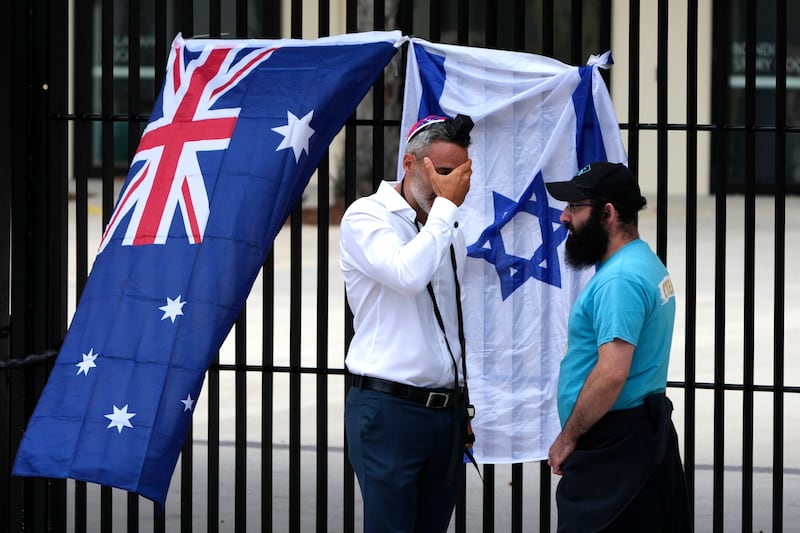
Her kids had learned about the terrorist shooting that targeted Jewish Australians on Bondi Beach earlier that day, an attack that killed at least 16 people, including a 10-year-old child, a rabbi and a Holocaust survivor who was shielding his wife from bullets, and left dozens wounded.
On Dec. 14, the first night of Hanukkah, two suspected gunmen — a father and son, according to police — opened fire on the joyful celebration “Hanukkah by the Sea,” held on one of Sydney’s most picturesque beaches. Attendees were preparing to light the menorah, a symbol of resilience, survival and freedom for Jewish people. The father was killed by police at the scene, and the son was seriously wounded.
The attack was the deadliest terrorist incident in Australian history and the most lethal assault on Jews since Oct. 7, 2023.
“The atrocity carried out today represents an escalation of extreme proportions, resembling something that supposedly only happens overseas — not here,” Australian journalist Claire Lehmann wrote on Persuasion. Jewish Australians on Bondi Beach, she noted, “could not be further removed from the politics of the Middle East.”
“And yet they, too, have been targeted — evidence that murderous ideology does not stop at borders, and does not require proximity to Israel to find its victims.”
Another Australian lawyer who writes about Jewish culture reflected on the moment in The Forward: “This moment forces a reckoning I do not want. It asks whether Jewish belonging in Australia is conditional. Whether safety is fragile. Whether the country my ancestors chose, and that I still love deeply, is willing and able to protect Jewish life.”
But the fear that Jewish people are living with is not geographically contained. It is felt in Australia; in Utah; in Somerville, Massachusetts, where I live; and across the country. Many Jews are afraid to worship openly in their communities.
At a menorah lighting in Boston this week, Rabbi Marc Baker, who is president and CEO of Combined Jewish Philanthropies of Greater Boston, spoke about the physical danger Jewish people are up against, but also spiritual and cultural as well.
“I think many in our community, when something like this happens, first of all have that community in our hearts and minds,” he said, “and secondly wonder whether it’s safe for us to gather here in Boston, to light our candles, and to leave our homes as proud, joyful Jews.”
Lumina has a daughter named Shalom, an ancient Hebrew word meaning peace, a name that makes her Jewish identity immediately visible.
“I’m tired of being scared in my own neighborhood of being openly Jewish,” Lumina told me.
Her fears have grown as Somerville, the city we both live in, has been embroiled in a heated debate over Israel-Palestine policy: after a nonbinding ballot question passed earlier this month, and city council members have said they will try to implement the ballot’s directions for divesting municipal funds from companies that “engage in business that sustains Israel’s apartheid, genocide and illegal occupation of Palestine,” language that she says is “libelous and discriminatory” and promotes hate.
Last year, a local pro-Palestine group protested at the city’s menorah lighting. This year, my friend fears attending the same local menorah lighting, worried about potential violence.
But on Sunday, in the privacy of her own home, Lumina and her family completed the ceremony that for the Bondi Beach Jewish community was interrupted by violence.
“We lit our menorahs and put them in the window with trepidation,” she told me. “And also with resolve and commitment.”
She echoed the legacy of the Maccabees, the Jewish freedom fighters, who now symbolize resistance to religious oppression.

Fresh off the press
- Perspective: Why Latter-day Saint women are everywhere
- Are young conservatives OK? Where Gen Z is taking the American right.
- A month after Charlie Kirk was shot, his book “Stop, in the Name of God: Why Honoring the Sabbath Will Transform Your Life” is out.
Religion in the news
- ‘It was a matter of conscience’: Ahmed al-Ahmed’s family reveal why he risked his life to disarm alleged Bondi shooter. — The Guardian
- Lobster Jesus: Sacrilege or the most New England Nativity ever? — RNS
- On a recent episode of The Katie Miller podcast, Elon Musk was asked where he stands with his religious beliefs. — Daily Mail
- Austria bans head scarves in schools for girls under 14. — The New York Times
- Now do you believe us? — The Free Press
- How Christian churches are responding to AI. — Juicy Ecumenism
- Why Mormonism may have an answer for our toxic politics — The Washington Post
End notes
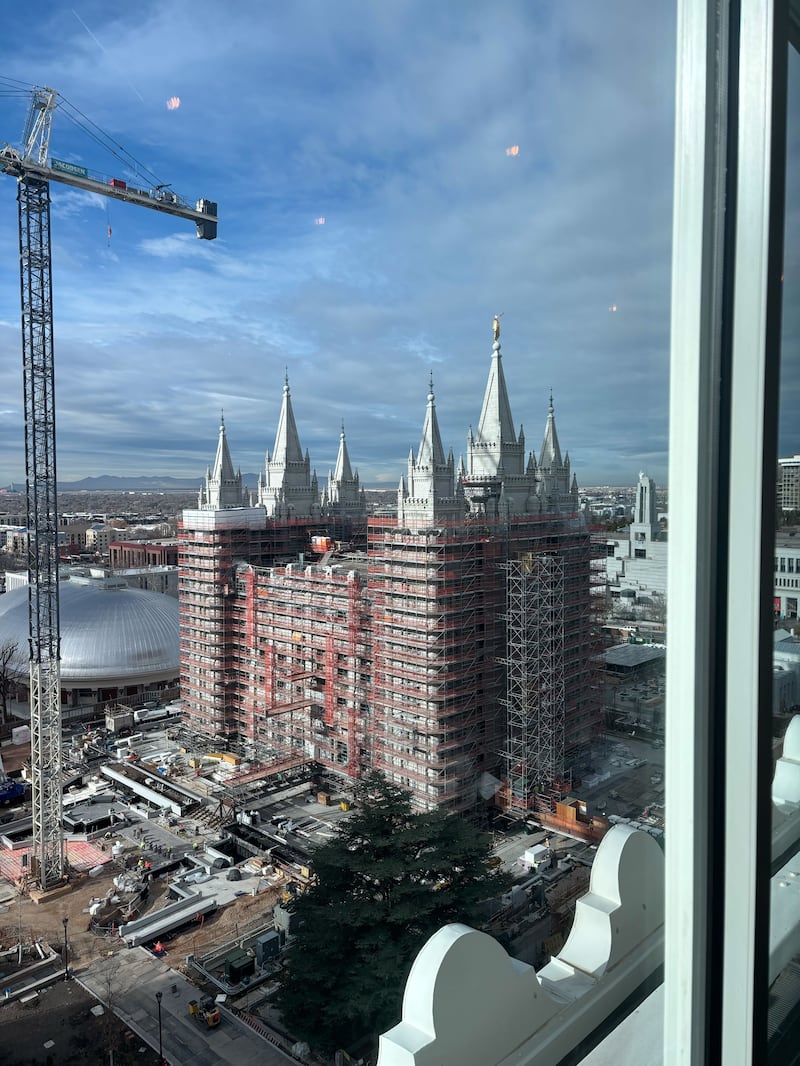
Last week, Deseret News held its staff meeting at the top of the Joseph Smith Memorial Building in the heart of Salt Lake City. It was fun to see the construction progress from above. I snapped a photo:

We opened the meeting with people sharing their most unique and favorite holiday traditions. For years, my family has hosted a Scandinavian Christmas party, julbord, where we serve an array of fish, meatballs and Swedish Jansson’s Temptation potatoes. It gets bigger and more stressful every year, but I can’t imagine Christmas without it.
I’d love to hear about your most favorite holiday tradition and the story behind it. (I hope to share some of them in an upcoming newsletter.) Reach out to me at mmanzhos@deseret.com. I look forward to hearing from you.