


New guidance for Latter-day Saints regarding the use of artificial intelligence and varying Bible translations were among the latest updates made to the General Handbook of The Church of Jesus Christ of Latter-day Saints.
Other updates included revised instructions on the use of temple clothing and garments, clarified instructions on church welfare assistance, and clarified language on church policies regarding moral issues such as abortion.
Under the direction of the First Presidency and Quorum of the Twelve Apostles, the church’s General Handbook has and “continues to be updated as needed to provide ministerial guidance, clarity and inspiration to local leaders,” states a recent release published on ChurchofJesusChrist.org.
Some of the updates published Tuesday are summarized below, while a comprehensive list of the latest changes, clarifications and additions made to the General Handbook has been added to the start of the handbook.
AI cannot replace ‘divine inspiration’ and should be used ‘responsibly’

A new section (section 38.8.47) under the General Handbook’s administrative policies provides Latter-day Saints principled guidance regarding the “appropriate use of artificial intelligence.”
“AI can enhance learning, facilitate communication, and foster innovation,” the new section states. However, AI cannot substitute the “individual effort or divine inspiration required for personal spiritual growth or genuine relationships with God and others.”
The new section instructs Latter-day Saints to use AI ‘responsibly’ by using it as a tool to enhance learning and teaching, and abstaining from using it to “create or disseminate anything that is false, misleading, illegal, or harmful.”
Interactions with AI cannot substitute “meaningful relationships with God and others,” the section further states.
“Jesus Christ had a personal and sacred relationship with His Father. He prayed to His Father, learned from Him, and fulfilled His will…. Church members are encouraged to follow the Savior’s example by developing genuine relationships with God and others.”
To guide Latter-day Saints in learning in the appropriate use of AI in their church responsibilities, the new section also provides the four following principles:
- Members should use AI in “positive, helpful, and uplifting ways” that uphold the standards and teachings of the church.
- AI cannot replace the “individual work and spiritual guidance required to prepare divinely inspired talks, lessons, prayers, or blessings.” However, it can be helpful for research, editing, translation and similar tasks.
- Leaders should not rely on AI to provide advice to members on medical, financial, legal or other sensitive matters. If members need assistance beyond the spiritual guidance provided by church leaders, competent professionals may be helpful.
- Sensitive information, such as church records or personal member data, should not be entered into AI tools that are not provided or managed by the church.
The section then pointed church members to visit ChurchofJesusChrist.org/AI for more information.
Different Bible translations can facilitate learning and understanding

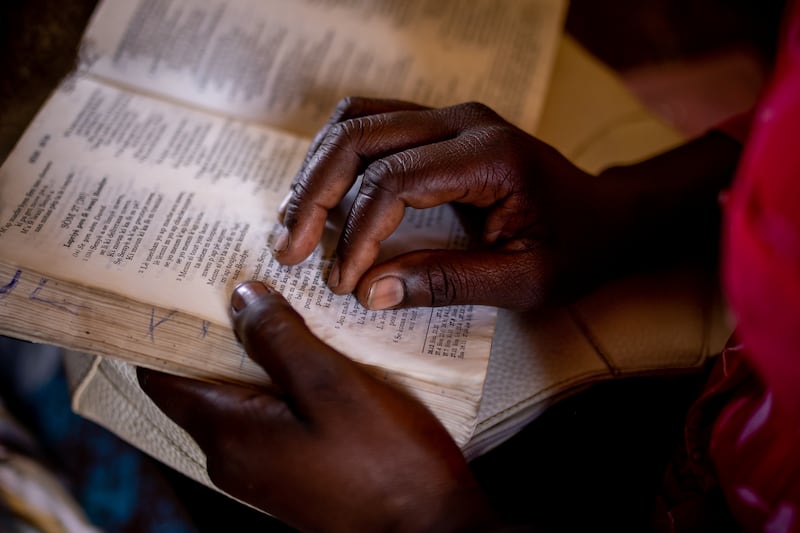
A recently adjusted section (section 38.8.40.1) containing guidance regarding the varying editions and translations of the Bible says Latter-day Saints may use other Bible translations for study and learning.
“Some individuals may benefit from translations that are doctrinally clear and also easier to understand,” the section now states.
Generally, Latter-day Saints should use preferred or church-published editions of the Bible in church classes and meetings to help maintain clarity in discussions and a consistent understanding of doctrine, the section further explains.
In English, that is the King James Version. But examples of other Bible translations that Latter-day Saints may consider using are listed in a page on ChurchofJesusChrist.org.
When members encounter “doctrinal discrepancies between Bible translations,” they should refer to the Book of Mormon, Doctrine and Covenants, Pearl of Great Price and teachings of latter-day prophets, the newly adjusted section states.
Elder Jörg Klebingat, a General Authority Seventy who serves as a member of the church’s scriptures committee, said in the recent church release: “There’s a misconception that modern translations of the Bible are less than faithful to the ancient sources — that in modernizing the language, translators have compromised or dumbed down the doctrine.
“In many cases, that simply isn’t true. Modern translators often have access to manuscripts that were not available to early translators. And most modern translations were produced by faithful scholars and linguists who are utterly convinced that the Bible is the word of God.”
The adjusted section also explains that the church identifies editions of the Bible that “align well with the Lord’s doctrine in the Book of Mormon and modern revelation.”
Preferred editions of the Bible are then chosen for many languages spoken by church members. And in some languages, the church even publishes its own edition of the Bible. For instance, in addition to the KJV in English, the church publishes the Reina-Valera (2009) in Spanish and the Almeida (2015) in Portuguese.
These church-published editions are based on standard Bible texts and include footnotes, subject indexes and other study aids.
Revised instructions on the use of temple clothing and garments
The handbook’s section (section 38.5) regarding the use of temple clothing and garments received a series of minor revisions, as well as a new subsection titled “Modifying Ceremonial Temple Clothing.”
The first of these revisions removed “socks or hosiery” from the items listed under the description of women’s temple clothing, so that the section now states:
“During the endowment and sealing ordinances in the temple, Church members wear white clothing. Women wear the following white clothing: a long-sleeve or three-quarter-sleeve dress (or a skirt and a long-sleeve or three-quarter-sleeve blouse) and shoes or slippers.”
Another one of the revisions added information for members with “physical needs or disabilities” to request modifications to their ceremonial temple clothing via store.ChurchofJesusChrist.org/contactus.
“For example, shorter temple robes are available for members who are in wheelchairs or who have other needs,” the revised section states.
The new subsection that was added regarding modifying ceremonial temple clothing says “temple ceremonial clothing should not be altered from its authorized design.”
It further states members “may repair their clothing if doing so does not alter the original design,” and says they “may also use a pin or other fastener to secure portions of the clothing as needed.”
The content in this new subsection replaced a previous one titled “Making Temple Clothing.” And the content from that previous subsection was moved under another, titled “Obtaining Temple Clothing and Garments.”
Clarified language on church policy regarding abortion
The church’s policy on abortion, listed within the church’s “Policies on Moral Issues” (section 38.6), states “human life is a sacred gift from God and central to His divine plan for the spiritual progression of His children.”
“Elective abortion for personal or social convenience is contrary to God’s plan and His commandments,” reads the section, which was recently revised for clarity. “Members must not submit to, perform, arrange for, pay for, consent to, or encourage an abortion.
“The only possible exceptions are when:
- Pregnancy resulted from rape or incest.
- A competent physician determines that the life or health of the mother is in serious jeopardy.
- A competent physician determines that the fetus has severe defects that will not allow the baby to survive beyond birth.
Abortion is a “most serious” matter, the revised section states. And even in these circumstances, “members should approach a decision with prayerful deliberation.”
The section then provides instructions on how Latter-day Saints and their leaders may counsel together as part of the process.
“Discussions with members on this subject should always be conducted with love and respect,” the section reads. “Presiding officers carefully review the circumstances if a Church member has been involved in an abortion.”
A membership council may be necessary if a member submits to, performs, arranges for, pays for, consents to or encourages an abortion, the section further states.
“However, a membership council should not be considered if a member was involved in an abortion before baptism. Nor should membership councils or restrictions be considered for members who were involved in an abortion for any of the three reasons outlined earlier in this section.”
A person who seeks forgiveness with “godly sorrow” and “full purpose of heart” may repent and be forgiven for the “sin of abortion,” the section concludes.
Bishops refer questions on specific cases to the stake president, and stake presidents may direct questions to the Office of the First Presidency, if necessary.
Other noteworthy updates
Nearly two dozen chapters of the General Handbook received updates that were published Dec. 16.
Some of these worth noting:
- Clarified that bishops may provide assistance with urgent needs before a Self-Reliance Plan has been completed (see section 22.3.2)
- Emphasized that a Self-Reliance Plan is used with all members receiving assistance (see section 22.3.3)
- Added language that members receiving assistance should be making efforts to progress temporally and spiritually (see section 22.5.1.1)
- Clarified age requirements for attending youth activities (see sections 10.2.1.3, 11.2.1.3, 20.4 and 20.7.2).
- Provided new guidance for baptism and confirmation preparation meetings (see section 12.1.8).
- Added a new instruction saying that a member of the Primary presidency must now attend missionary coordination meetings and temple and family history coordination meetings (see section 12.3.2).
- Clarified information about calling patriarchs and receiving patriarchal blessings (see sections 6.6, 18.17 and 38.2.10).