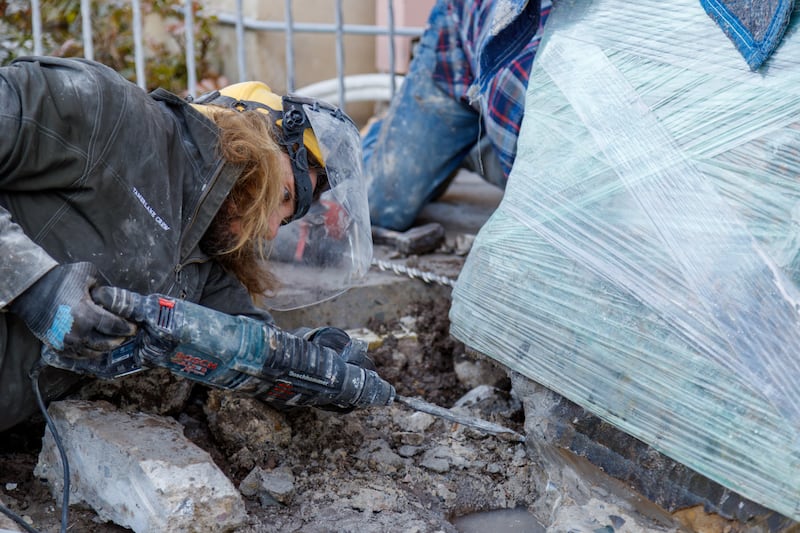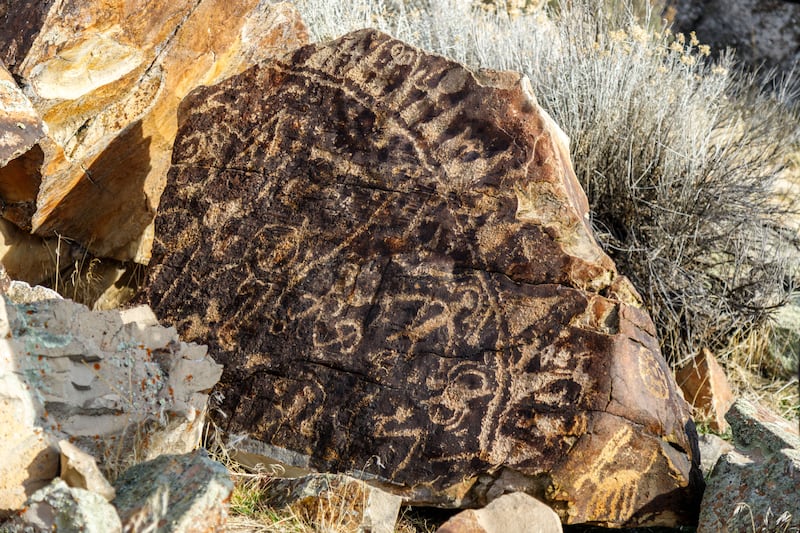

For decades, a 2,500-pound boulder etched with ancient petroglyphs sat outside a meetinghouse of The Church of Jesus Christ of Latter-day Saints in Tremonton — a quiet landmark for passing church members and neighborhood kids.
This month, it was returned to the hillside where it once belonged, according to ChurchofJesusChrist.org.
The rock, bearing petroglyphs created about 1,200 years ago by the Fremont people — identified by the Northwestern Band of the Shoshone Nation as their ancestors — was repatriated after a multiyear effort involving tribal leaders, the Utah State Historic Preservation Office, and historians and conservators working on behalf of the Church of Jesus Christ.
“To have these positive things now that are coming out — it’s rebuilding our history. I can’t overstate that,” said Brad Parry, vice chair of the Northwestern Band of the Shoshone Nation, describing the return as both spiritual and deeply personal.
‘A spiritual place’ — and a missing piece
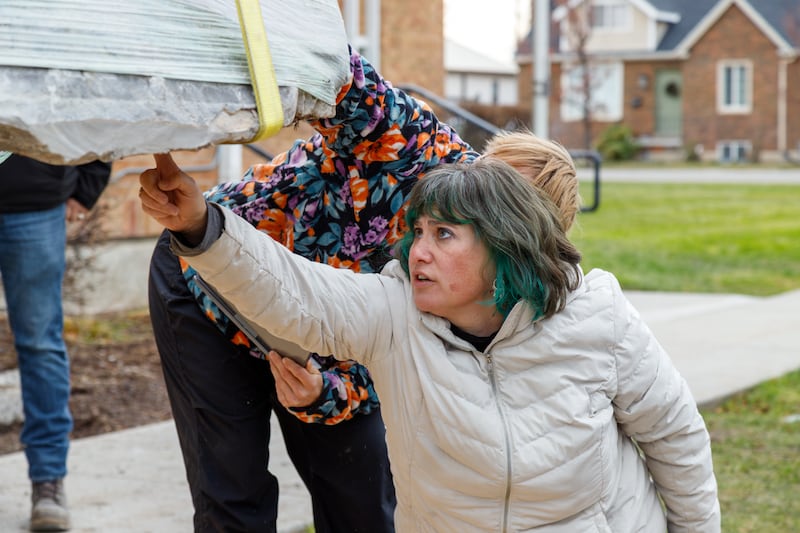
Parry said the boulder’s original site is within the tribe’s aboriginal territory — an area where Shoshone families lived, hunted, gathered and camped.
“You can definitely tell, this was where they camped. It’s a very spiritual place,” he said, adding: “This was a very important area, especially for my family.”
For the tribe, Parry said, protecting sacred objects is part of stewardship: “It’s important to us in our aboriginal territory, when we find something to ask those around it to protect it.”
How it ended up outside a meetinghouse
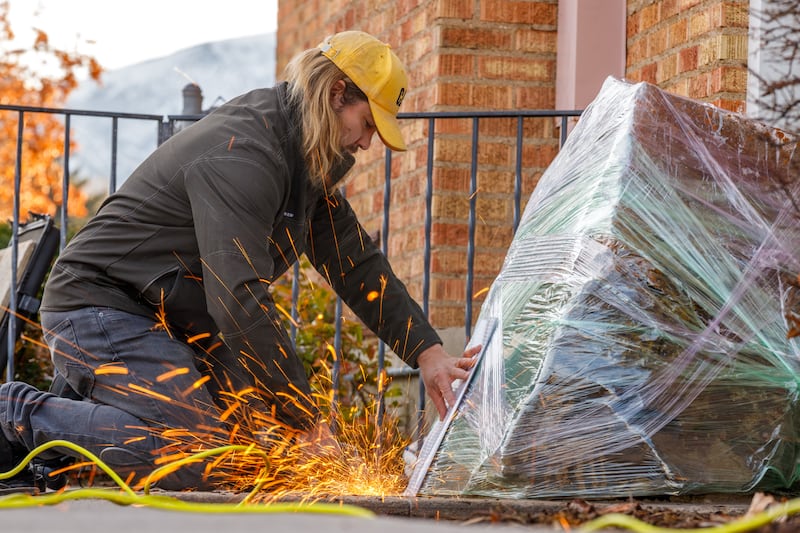
Accounts differ on how the rock was removed roughly 80 years ago, but the prevailing stories say a group of men — maybe Boy Scouts — hauled it away using their own strength and a pickup truck, eventually bringing it to the Tremonton meetinghouse.
Ryan Saltzgiver, a historic sites curator for the Church History Department, said the rock’s presence at the chapel long puzzled those now tasked with caring for it.
“Exactly why it’s here — that is a mystery,” Saltzgiver said, adding that it sat out front “until about 20 to 25 years ago” before being moved to the north side of the building.
While Parry said he can understand why someone decades ago might have viewed it as something to display, he also emphasized the difference between curiosity and rightful care for something sacred.
The repatriation effort — and why the location remains undisclosed
In 2011, amateur archaeologists used a rock-art survey to identify the rock at the meetinghouse and trace its origin. Saltzgiver said church historians and partners then worked for years to coordinate the return.
“They were able to relocate that spot and so we’ve been working since about that time on getting everything to kinda line up so that we could move the stone,” he said.
Chris Merritt, the historic preservation officer with the state of Utah, described the state’s role as largely connective, helping convene partners in a case that involved private land, private entities and the tribe.
To help protect the site and surrounding rock art, organizers said they will not disclose the exact location, beyond noting it is near the Utah–Idaho border.
Cleaning 1,200-year-old carvings without harming them
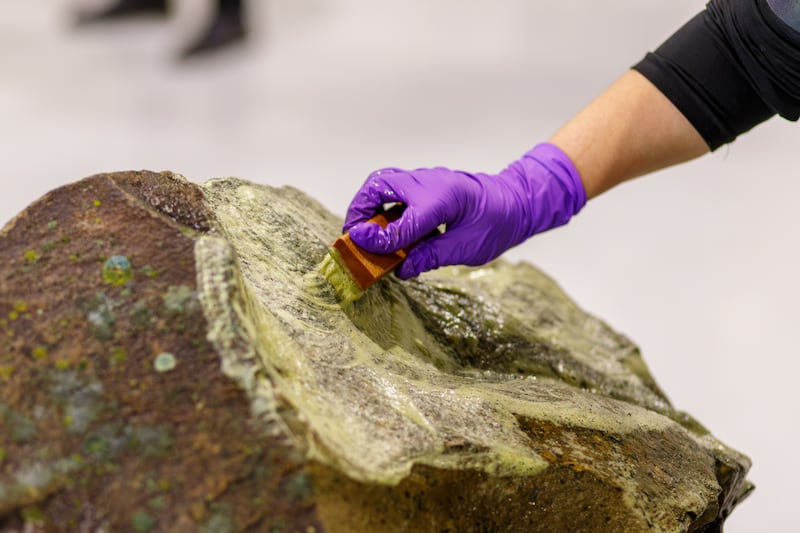
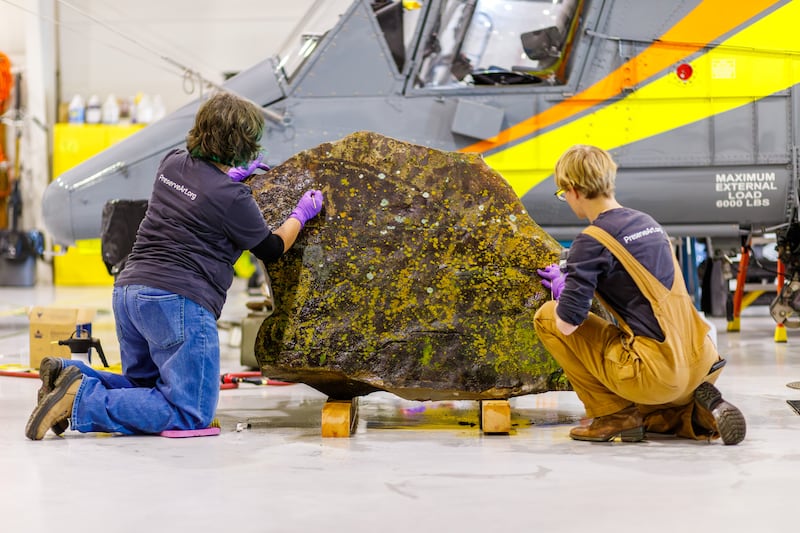
Before the boulder could go home, it needed careful conservation.
After specialized handlers freed the rock from concrete and transported it to Provo, conservators worked to remove years of lichen growth that obscured parts of the petroglyphs — without damaging the surface.
The cleaning process included soap and water, bamboo and plastic tools, a nontoxic biocide, and steam. Over time, conservators say, the stone should continue to improve in appearance as the treatment does its work.
“It’s an emotional project and I’m honored and very grateful,” said Megan Emery, chief conservator at the center, describing the repatriation as a team effort requiring coordination across multiple organizations.
A moral obligation

Saltzgiver framed the decision to return the rock as more than a logistical project.
“The church really has no legal obligation to do anything like this,” he said. “But we do have a moral and ethical obligation to care for things like this that are in our possession — and in particular to return those things that are, in this case, very sacred objects to those rightful owners.”
David Bolingbroke, a research and outreach historian for the Church History Department, said those involved see the return as a corrective step — acknowledging the rock was likely placed at the chapel not “out of malice,” but because earlier generations lacked “proper understanding.”
“For us to bring back this rock … and put it on this hillside for generations to come is a wonderful thing,” Bolingbroke said.
A return marked by prayer — and emotion
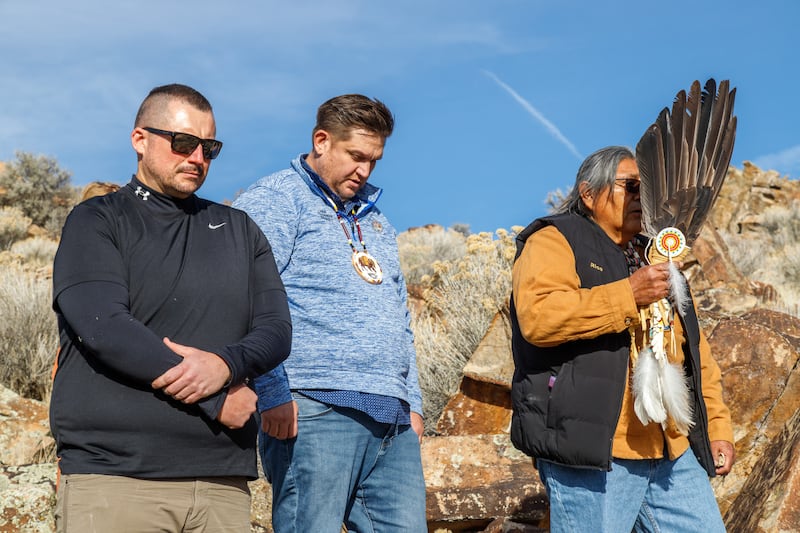
Once preserved, the rock was transported back north and airlifted into place to rejoin companion petroglyphs.
“This rock was meant to be here,” Parry said. “It’s like this rock knows it’s home.”
Parry described the final placement as “super emotional,” noting how quickly it was set “almost instantly in a perfect setting,” and said the collaboration itself was meaningful: “The experience of working with the church and all the contractors … has been just uplifting.”
A tribal spiritual leader, Rios Pacheco, offered a blessing at the site. Parry said it moved many of those present.
“He prayed that everybody will be blessed that helped,” Parry said. “And really emotional hearing him say that in Shoshone.”
Bolingbroke said the moment felt weighty in a way that crossed communities and generations.
“I felt a strong impression that the eyes of our ancestors were upon us in that moment,” he said. “Shoshone and Latter-day Saint, they were pleased with our efforts to bring this stone back (and) put it in its rightful place.”