


I did not serve as a missionary at the Utah Salt Lake Temple Square Mission of The Church of Jesus Christ of Latter-day Saints. But as a returned missionary who served a full 18 months at the Mexico City Temple Visitors’ Center within the church’s Mexico City east mission, the changes announced to take place in the Temple Square mission this year surprised me.
I was shocked to learn the mission is planned to discontinue by July, and that instead of having sister missionaries assigned to serve there full time (with only a few months proselyting outbound in other missions across the United States), sister missionaries in surrounding Utah missions will soon divide their time between a teaching area and Temple Square.
The shock I felt, however, was enveloped by a new “brightness of hope” for the future, as I thought of what my own missionary service taught me and how new and similar opportunities for sister missionaries in Utah will now shape their lives and teaching experiences.
Serving in a visitors’ center

Whenever I mention I served in the Mexico City Temple Visitors’ Center from 2021 to 2022, the list of questions that follow typically include ones such as, “What did you do?” And, “Did it ever get boring?”
My days at the visitors’ center began much like those of most missionaries: get up and exercise at 6:30 a.m., and then be ready to go by 9 a.m.
The difference, however, is that the distances we traveled each day (except for our preparation day) didn’t go further than the street block we lived in and served in. No, each hour of every day was spent serving inside the Mexico City temple square — which is why the second question I mentioned makes sense.
My honest answer to that question is that while it didn’t get boring, it was at one point easy to fall into a routine. Through faith and prayer, however, I soon learned to see the beauty of such a mission and what made it come to life.
Sure, the majority of my missionary service took place within the center’s 19,000 square feet, and each day included a routine mix of exercise, prayers, personal and companionship gospel study, in-person and virtual tours, meals, lessons, and responding to the hundreds of online requests to learn more that came to us each day. When we gave tours, we also stayed within the same walls and taught using the same paintings and resources.
However, serving there for 18 months straight taught me that what brought the visitors’ center to life was the people.
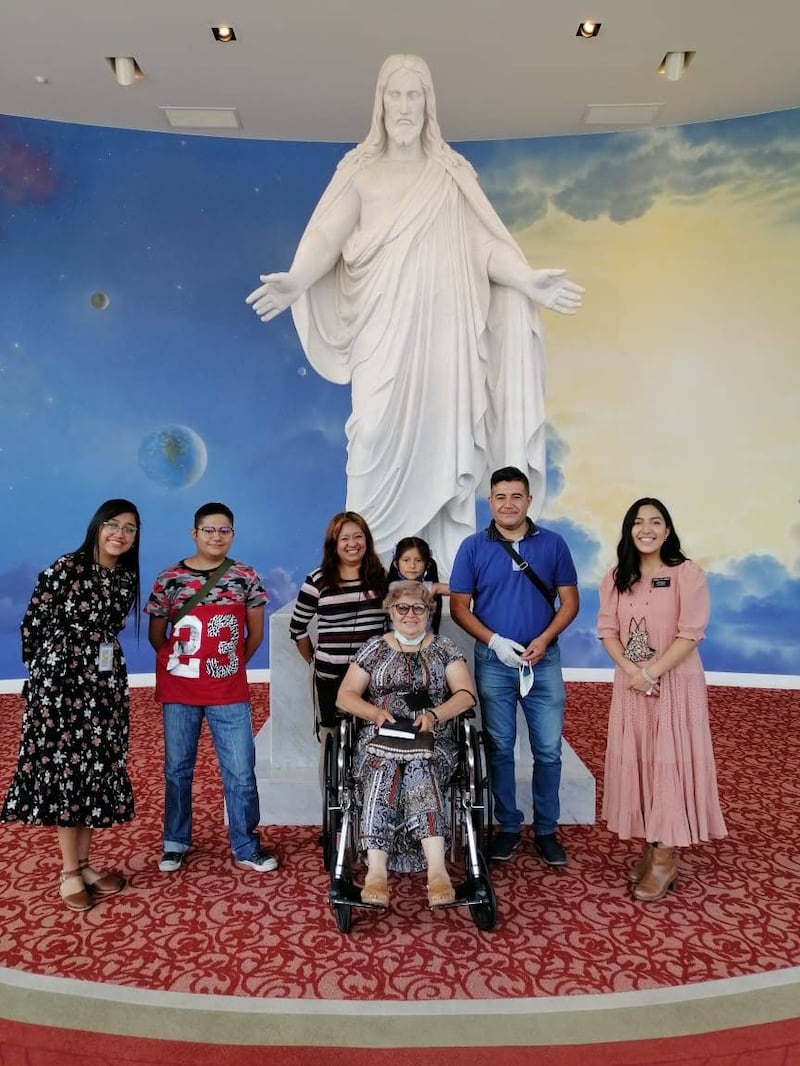
They were what made serving there each day new and different. Their unique needs, stories and experiences connected to each painting and gospel principle differently. And the training we received challenged us to find new connections, new ways of teaching the gospel of Jesus Christ using everything from the patterns on the carpet to a replica of Bertel Thorvaldsen’s well-known Christus statue.
Simply put, serving at a visitors’ center taught me that all things really do “denote there is a God.” And through thousands of experiences, I learned that art, preparation and the Spirit can truly reach hearts in ways, sometimes, words alone cannot.
To illustrate, I remember that at one point in my service, my missionary companion and I taught the message of the restoration of the gospel using Carl Bloch’s painting of Christ healing a blind man. The miracle — in our explanation — represented God’s love, Christ’s ministry and priesthood power. The man’s blindness stood in as a symbol of the spiritual blindness the world experienced during the Great Apostasy. And the man’s eventual healing, through Christ’s power, represented God’s power being manifested through the First Vision, which Latter-day Saints believe ushered in the restoration of the fullness of the gospel.
Sharing the gospel
I do not share my experience as a representation of all missionary service at visitors’ centers and historic sites, for having talked with friends and traveled to a few, I know that service at each can look vastly different.
Still, having discussed the recently announced changes with my friend Audrey Romero, who served in the Utah Salt Lake Temple Square Mission from 2022 to 2023, we were able to connect on several points and memories, as well as on our shared hope for both current and future sister missionaries serving at Temple Square.
Romero’s initial reaction to the news was shock and sadness, she told me. She remembered her mission with fondness — the sister missionaries, the buildings, the artwork and the people.
“The spirit was very present,” she said. “And that was one thing that I really loved the most, being able to use my surroundings to teach the people. … It made me understand how simple the gospel is and how it truly can connect with anything.”
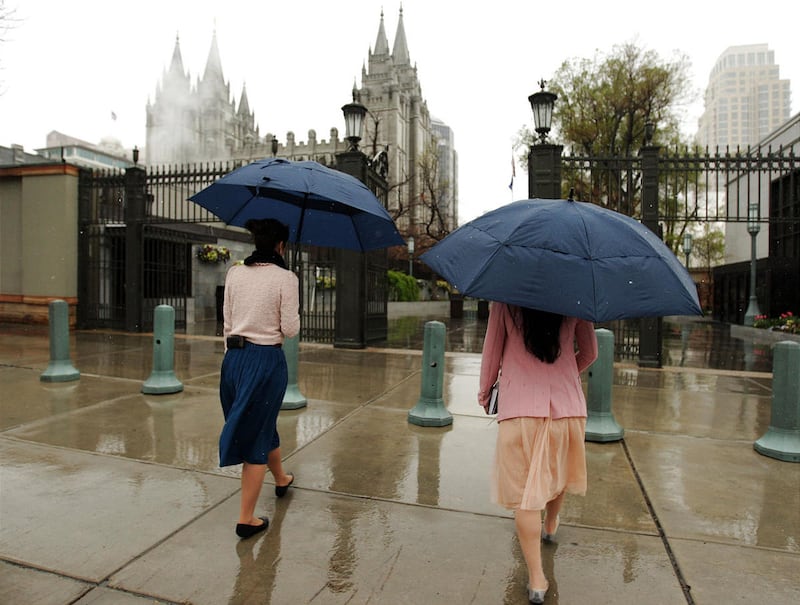
Romero also told me that serving at Temple Square strengthened her connection to the church’s pioneers. It “made me appreciate more the history of the pioneers, all of the sacrifices they made to come here and their great faith and trust in the Lord. ... They knew that this was very important, and they did literally everything they could to build a temple and establish Zion.”
Romero’s feelings of sadness and nostalgia were juxtaposed with feelings of hope, however, as she told me about her time serving outbound in the church’s Utah Layton Mission.
Her time serving in Layton made her more “bold,” she told me. Going to people instead of having them come to her was different and “intimidating” at first, but growing from the experience fortified her ability to teach and testify when she returned to Temple Square.
“When I went back to Temple Square,” she said, “I was able to bring new insights and new ways to teach people, and that also helped me to connect better and in different ways with people.”
With this experience, Romero told me her hope in the future stems from knowing the upcoming changes were “made with a bigger purpose.”

“I think these new experiences for the sisters are going to be very important and special, because they will be able to see both sides,” Romero told me. “They will be able to work with families in their homes, but then they will also receive people. … They will work with ward members and they will use the visitor centers to continue teaching, so they will have a lot of resources.”
And taking advantage of those resources will make their “mission experiences more whole and more impactful,” she added. Through them, they will learn “new abilities,” she said, and “will see the hand of the Lord and how he works … in different ways in order to gather Israel.”
My hope for both current and future sister missionaries at Temple Square and any visitors’ center or historic site is the same. I hope that they — like me and many other returned sister missionaries — will learn to see the beauty of such a mission and the opportunity that stands before them to see the Lord transform their lives and that of others in his service.
“Missionaries at Temple Square play an important role in sharing the gospel of Jesus Christ, as they welcome millions of visitors from around the world,” Elder Ronald A. Rasband of the Quorum of the Twelve Apostles said upon announcing the upcoming changes to the 128 sister missionaries at Temple Square on Friday, Jan. 9.
“The church expresses gratitude for these faithful sisters who have served in this mission over the years. Moving forward, the dedicated service of sister missionaries will continue to be a blessing and allow Temple Square to be a place of inspiration for people of all faiths and backgrounds.”


