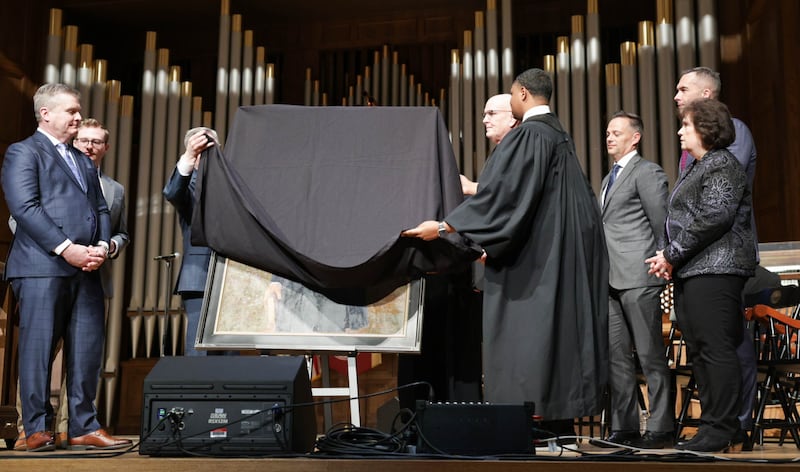

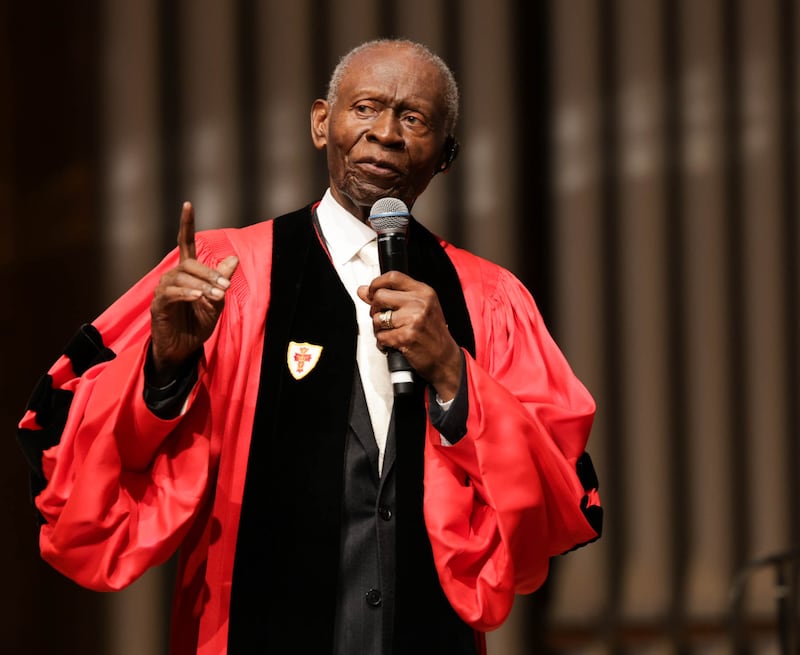
At the end of a worship service in the Martin Luther King Jr. International Chapel at Morehouse College on Sunday, Feb. 1, the Rev. Lawrence E. Carter Sr. unveiled an oil portrait of Joseph Smith to hang in the chapel’s International Hall of Honor.
The Rev. Carter honored Joseph Smith as founding president of The Church of Jesus Christ of Latter-day Saints and for his plan to abolish slavery as a United States presidential candidate in 1844.
“His opposition to slavery was rooted not merely in humanitarian sentiment but in a theological certainty: the equality of human souls before God,” said the Rev. Carter, founding dean of the Martin Luther King Jr. International Chapel, during Sunday’s Vesper Hour.
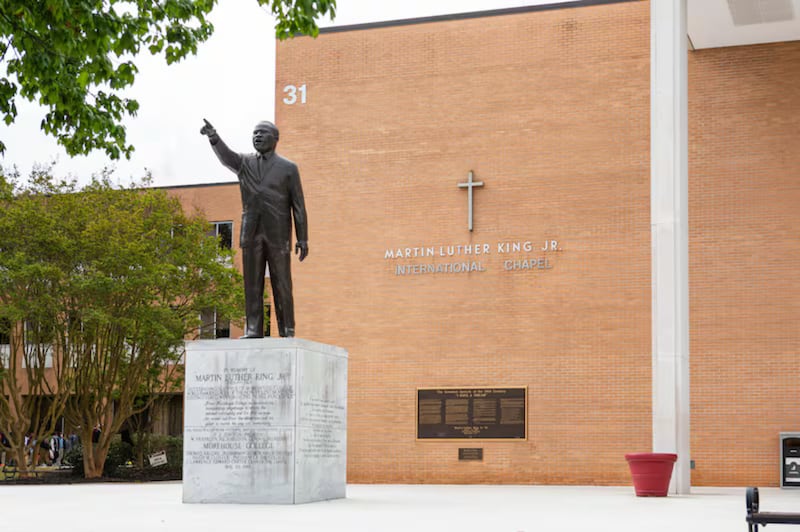
The Martin Luther King Jr. International Chapel at Morehouse College — a historically Black liberal arts college for men — is a prominent religious memorial to Morehouse alumnus the Rev. Martin Luther King Jr. and “home base for spiritual servants, scholars and thought leaders who are furthering the work of peace and justice,” according to its website.
The chapel’s International Hall of Honor includes more than 300 oil portraits of global leaders of the international civil and human rights movement.
Joseph Smith’s portrait will hang near the portrait of President Russell M. Nelson, who was inducted in the Hall of Honor in April 2023 as part of his receiving the inaugural Gandhi-King-Mandela Peace Prize from Morehouse College.
The portrait of Joseph Smith was one of two portraits unveiled Feb. 1. The other was a portrait of Harold V. Bennett, professor and Martin Luther King Jr. Endowed Chair in the Department of Philosophy and Religion at Morehouse College.
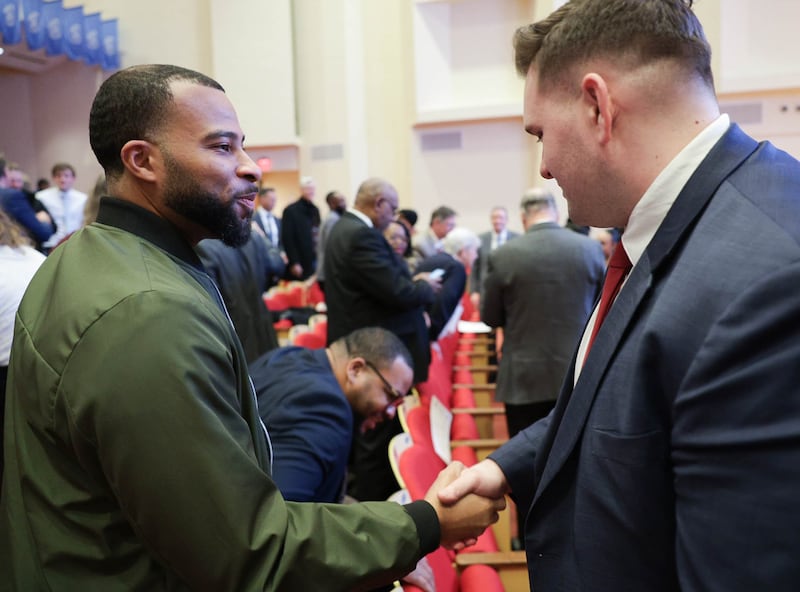
More than 100 attended the worship service, including many local members of The Church of Jesus Christ of Latter-day Saints. Guest preacher Charles E. Goodman Jr. of the Historic Tabernacle Baptist Church in Augusta, Georgia, gave the sermon.
Joseph Smith’s presidential campaign
As part of the unveiling, the Rev. Carter provided some historical context and detail about Joseph Smith’s plan to abolish slavery in the U.S. The enduring significance of Joseph Smith’s candidacy was not in the likelihood of victory “but in the moral vision it summoned,” the Rev. Carter explained.
In February 1844, Joseph Smith declared his candidacy for U.S. president. His platform addressed “the most volatile and unresolved questions of antebellum America,” the Rev. Carter said, including criminal justice reform, reordering of the national banking system, territorial expansion, protection of religious liberty and federal protection for minority groups from mob violence.
At the center of Joseph Smith’s platform was a conviction that justice must be extended to those on “the margins of the nation’s conscience,” the Rev. Carter said “The abolition of slavery was therefore not incidental but foundational to Smith’s vision of a just republic.”
The Rev. Carter quoted the Book of Mormon teaching that God invites “all to come unto him — black and white, bond and free” (see 2 Nephi 26:32-33).
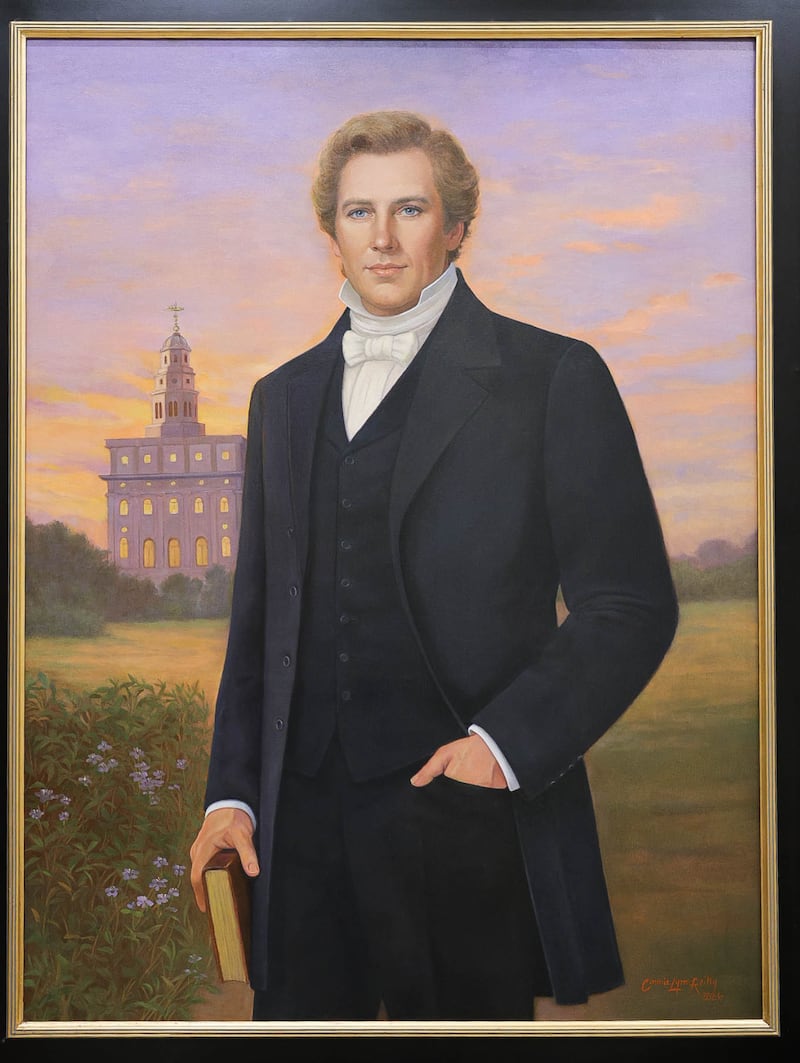
Joseph Smith’s plan was to abolish slavery by law. He called upon the national government to purchase the freedom of every enslaved man, woman and child with surplus revenue from the sale of public lands — a proposal that was unprecedented “in both scale and imagination,” the Rev. Carter told the audience.
Four months before Election Day, Joseph was murdered by a mob in Carthage, Illinois, on June 27, 1844. He became the first presidential candidate in American history to be assassinated. With his death, his campaign and antislavery proposal were silenced.
Joseph Smith was not killed because he sought the presidency nor solely because he opposed slavery, the Rev. Carter noted. Yet Joseph’s assassination extinguished “a rare and radical vision” and his plan to abolish slavery “stands among the most morally ambitious proposals of the antebellum era.”
“Though never realized, it endures as a prophetic witness to what America might have been — a testament to the belief that freedom is not merely a political achievement, but a sacred obligation, owed to every human being fashioned in the image of God,” the Rev. Carter said.
How the Joseph Smith portrait came to be
The Rev. Carter — affectionately known as “Dean Carter” in the Morehouse community — has a close relationship with M. Andrew Galt, a former Area Seventy of The Church of Jesus Christ of Latter-day Saints who was released last year.
“Dean Carter has talked about Joseph Smith for years. He always honors him in a very positive way,” said Galt. “He has wanted to honor him with an oil portrait, and the timing was right to do it now. We worked with senior church leaders to make sure we were properly aligned.”
Galt said that in his discussions with the Rev. Carter, they wanted to make sure information about Joseph Smith presented at the unveiling would be historically accurate.
In December 2025, Galt accompanied the Rev. Carter to Salt Lake City to meet with Spencer W. McBride at the Church History Library. McBride is a senior managing historian for the Church History Department and the author of “Joseph Smith for President: The Prophet, the Assassins, and the Fight for American Religious Freedom.”
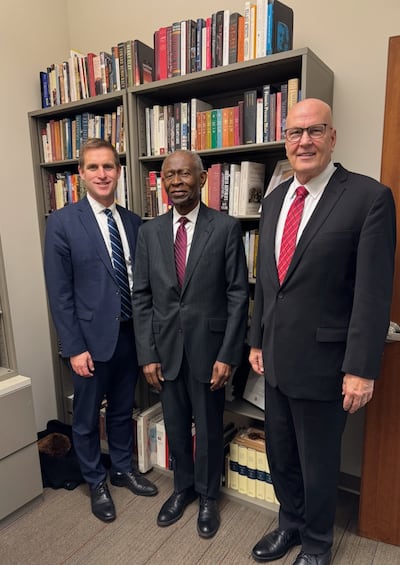
The Rev. Carter said he learned from McBride the reasons why Joseph Smith was killed, “which were very different from what I had imagined.”
“It’s just a great misunderstanding,” the Rev. Carter said after the meeting. “A lot of falsehoods have been perpetuated. And to come here to this great historical archive, it’s been an eye-opener. ...
“I am looking forward to linking Joseph Smith’s legacy to Martin Luther King Jr.’s. I think Smith was a forerunner to King, and I think if they met and had a dialogue, they’d probably find an awful lot of common ground in the name of Christ and what Christ’s love might look like realized today, which we could certainly use in the age of all the division we’re in.”
McBride said it was “incredibly rewarding” to meet with the Rev. Carter and discuss his research about Joseph Smith’s presidential campaign. “I’m just thrilled that he sees in Joseph Smith what I see in Joseph Smith — someone who was deeply committed to loving and ministering to all men and women, regardless of race,” McBride said.
A local Latter-day Saint artist, Connie Lynn Reilly, was commissioned to do the painting. She was born and raised in the South and resides in Buford, Georgia.
“I think it’s a big, big deal for the church and for the Martin Luther King Jr. International Chapel, that Latter-day Saints and other religions can join together, love one another and appreciate what each other brings to the table,” she said of the Joseph Smith portrait unveiling. “I’m so honored to be able to do it and create this for others to enjoy.”
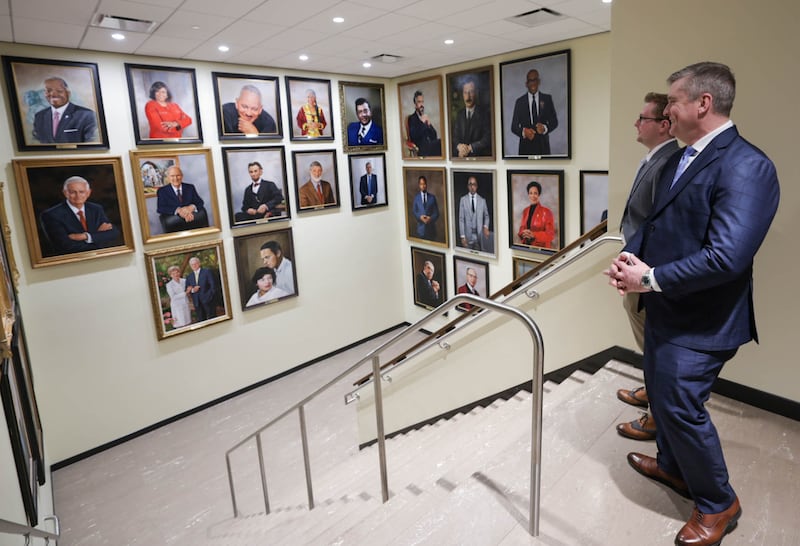
The donor of the painting was the Joseph Smith Sr. and Lucy Mack Smith Family Organization. Craig Ballard, chairman of the organization, said he and his family feel fortunate to play a small part in the Joseph Smith portrait at Morehouse. He is the son of the late President M. Russell Ballard, acting president of the Quorum of the Twelve Apostles, who founded the family organization.
“Joseph Smith was a man before his time,” Craig Ballard said. “Not only did he want to free slaves but he had a plan and a time to do it. … We’re so pleased that he is being honored at Morehouse College, and we’re pleased that our family can contribute this portrait.”
The Rev. Carter’s mission to ‘reunite the broken body of Christ’
The Rev. Carter will retire June 30 after 47 years as founding dean of the Martin Luther King Jr. International Chapel.
When asked why it is important to him to have a portrait of Joseph Smith at Morehouse, the Rev. Carter said: “Because my mission includes reuniting the broken body of Christ, building the Beloved Community, and being an exemplar of a moral cosmopolitan in search of truth and knowledge for the healing of the land.”
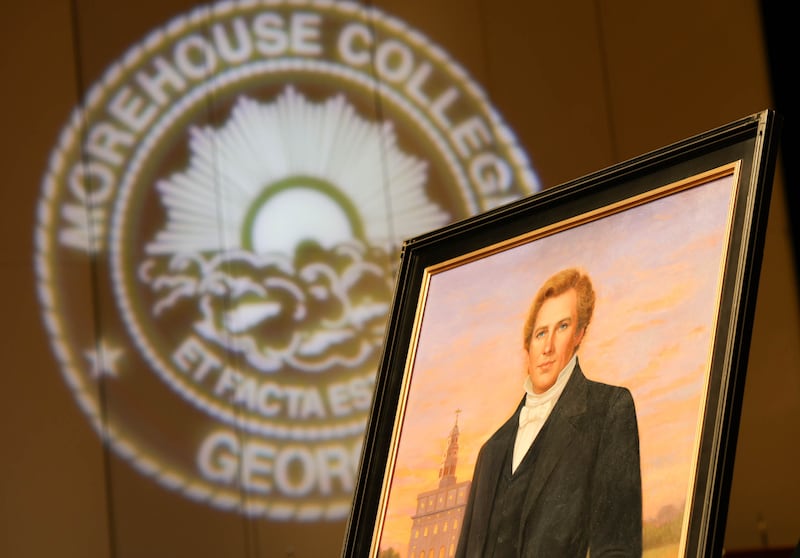
The Rev. Carter acknowledged that “it takes some courage” for him to honor Joseph Smith and induct his portrait in the chapel’s Hall of Honor, knowing there will be many people “who want to stick to their uninformed biases.”
“But you can’t say you love Jesus and be baptized in his name and think somehow you’re going to get out of this life without leaving a little blood on the threshold,” the Rev. Carter told the Deseret News. “My mother used to sing around the house as she was working, ‘Must Jesus bear the cross alone and all the world go free? No, there’s a cross for everyone, and there is a cross for me.’
“So I’m trying to bring people together. … Everybody is yearning for heaven, and they don’t realize that Jesus has already told us it’s within us. We have got to be the answer to the prayers, the fulfillers of the vision and the mission. It’s going to have to start with us — how we show up in the world. That means getting out of some boxes, traveling, and meeting our distant cousins,” he said.