

In the middle of the humble Paradise, Utah, cemetery is an oversized grave marker stating that Elder John H. Gibbs “died a martyr to the cause of truth” at Cane Creek, Tennessee.
In the nearly a decade we’ve lived in Paradise, I was never aware that four others died in what historians call the “Cane Creek Massacre” or the “Tennessee Massacre” in 1884.
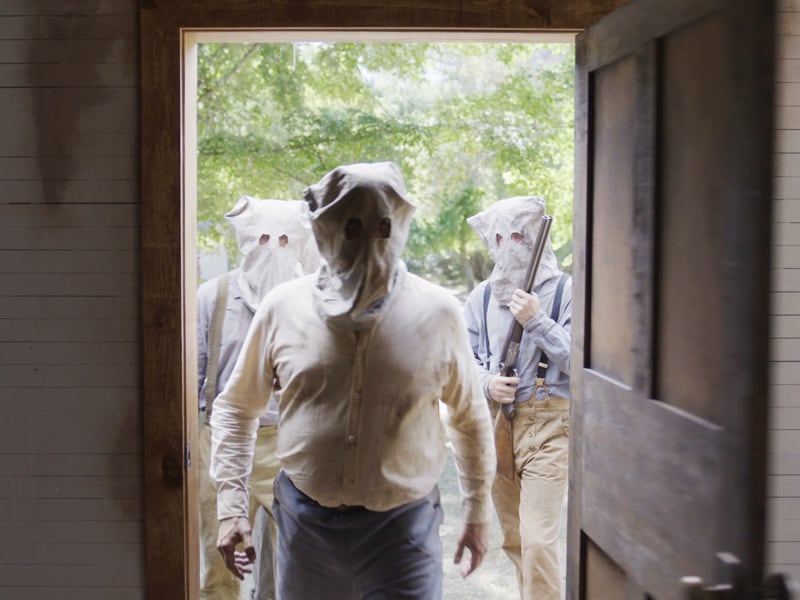
It’s that general lack of awareness that prompted Josh Coates, executive director of the B.H. Roberts Foundation, to create a new 7-minute film, “Cane Creek,” which has been featured at three film festivals so far, including the Culver City Film Festival, the recent Utah International Film Festival and the upcoming Zions Indie Film Festival on Feb. 27 in Orem, Utah.
“It’s a story that very few people have heard,” said Coates, who wrote and directed the film, co-producing it with Jonas Sappington and Devin Anderton. The story, he said, was “something that should be brought to light.”
“Obviously we still live in a world of violence,” Coates said, “and this is sort of a reminder that — especially nowadays with so much ideological conflict in society — disagreements can turn into violence and tragedy very, very easily.”
The attack
Hymns had just finished being sung at the home of James Conder on Sunday, Aug. 10, 1884, when 12 to 15 masked men ran into the home’s front yard from the surrounding woods. As the 52-year-old father of the family, Conder, was confronted; he shouted to his sons Riley and Martin Conder, both in their 20s, to get their guns and protect the missionaries.
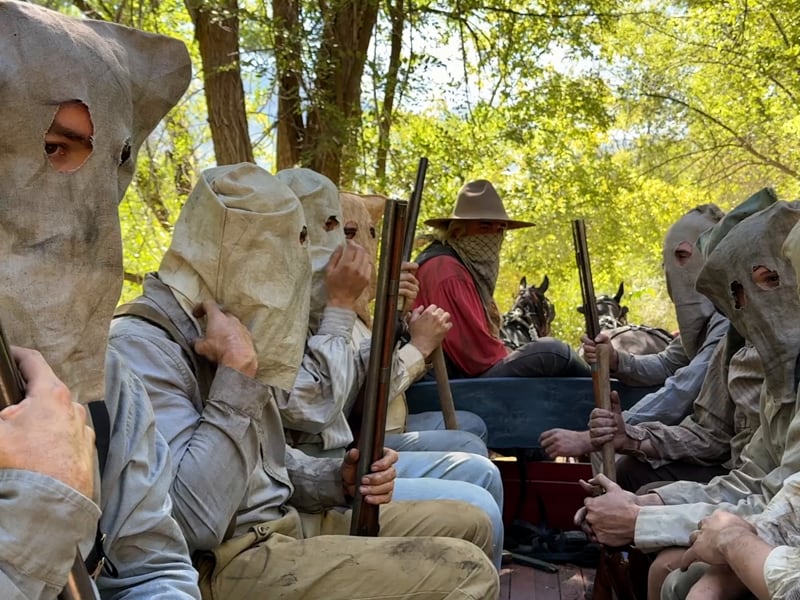
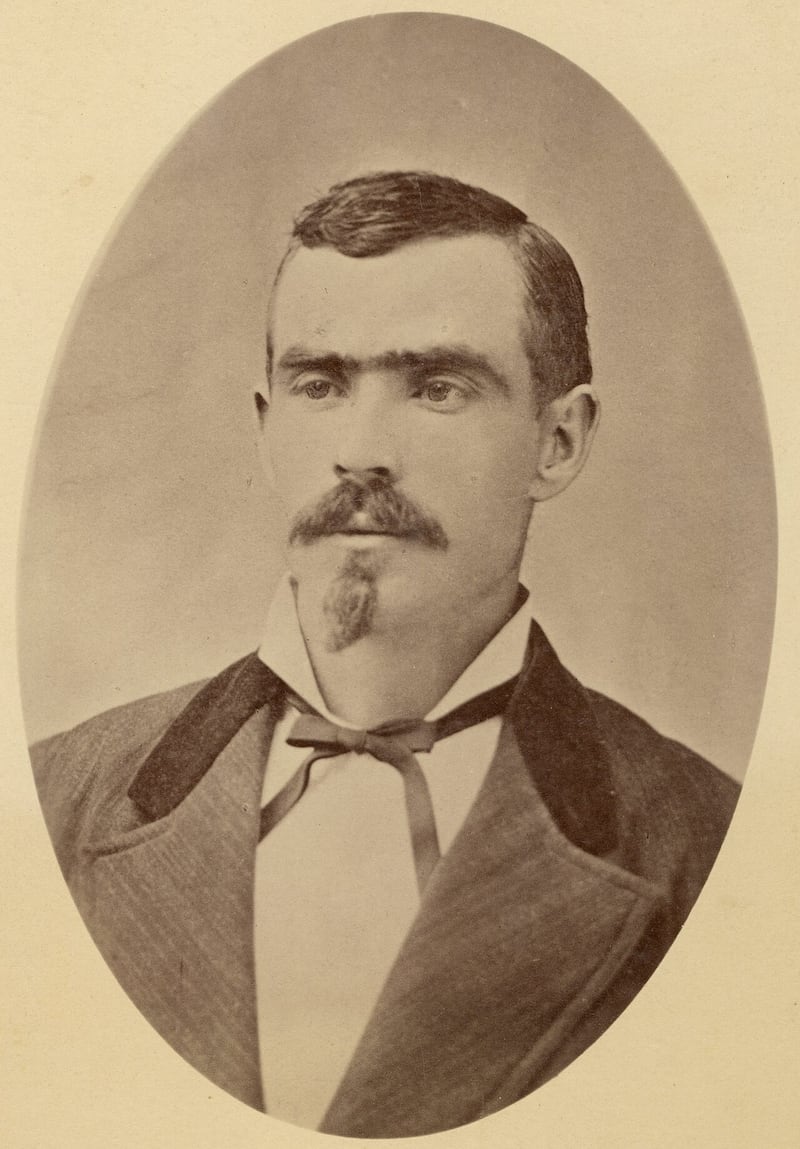
Utah State University historian Patrick Mason synthesized historical accounts of these events in a chapter about the Cane Creek Massacre in “Violence and Anti-Mormonism in the Postbellum South.” Mason reported that 21-year-old Martin Conder arrived at the house the same time as the mob leader, David Hinson — wrestling for control of the shotgun that rested above the fireplace. When Hinson wrenched the gun free, he fired it at the well-known missionary leading the work in the area, Elder John Gibbs, who died instantly.
Right before being shot, Elder Gibbs had been preparing for his sermon by looking up a verse in the Bible the hymn just sung had brought to mind.
A second missionary, William Berry, was then shot by several attackers, who later shot at his body to make sure he was dead. Martin and Riley Conder were also killed by the mob, but not before Riley Conder fatally shot Hinson, the mob leader.
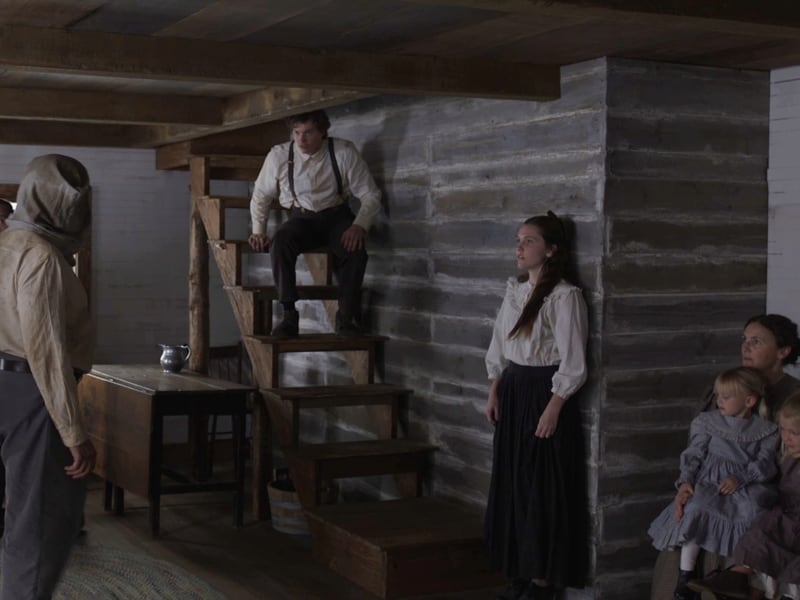
Within a few minutes, five men lay dead, with the boys’ mother Malinda — who had been baptized by one of the murdered elders months earlier — also shot in the hip, causing her to walk with a painful limp the rest of her life. Malinda later recollected waking that morning with a heavy heart, having dreamed something terrible would happen.
Missionary success and refusal to leave
There were good reasons for Malinda Conder’s premonitions. Three months earlier, Mason notes the recently constructed Latter-day Saint log meetinghouse in the area had been burned down by an arsonist who left a note stating, “This is the last time that we will notify you that we will not have any more Mormans preaching (here) …. we are going to have it stopped as we will take some or all of your lives … if you dont leave at this order … you are low down scrapings of the devil and we are going to stop it if we will have to cause wore (war).”
Standing next to the meetinghouse ruins, Elder Gibbs ignored the “pistols and shotguns brandished by a few of his enemies in the small crowd gathered around the rubble,” according to Mason — and instead, began teaching the gospel. As several members of the mob watched from the creek, Gibbs then entered the water baptizing several people who were touched by his message.
This accelerating rate of conversions had worried local settlers — with 44 baptisms into the Church of Jesus Christ recorded in the nine months prior to the church destruction. One of the surviving missionaries, William Jones, later said that the missionaries’ success was “one of the chief causes of the bitter enmity against us.”
Right before leaving on a speaking tour of southern states, Gibbs had personally baptized 26 people in the two months before the church was burned. Mason said that “as Gibbs’s ministry in the region enjoyed increased success, the incidence of threats and minor violence” against Latter-day Saints had risen dramatically. (Gibbs subsequently became a special target of the mob, with one of them overheard by a captured missionary saying, “Time is flying; Let us get Gibbs!”)
Despite being repeatedly warned — by written threats, by the postmaster, by the burned building — Gibbs refused to instruct the missionaries to leave. “The obstinate refusal of Gibbs and many of his fellow missionaries to pay attention to intimidation only served to further frustrate and infuriate their opponents,” Mason added, “which consequently drove them to apply increasingly extreme measures.”
During this ominous time, Gibbs wrote, “We cannot tell what lies in the future, so all I can say is let the morrow take care of itself.”
A narrative inflaming tensions
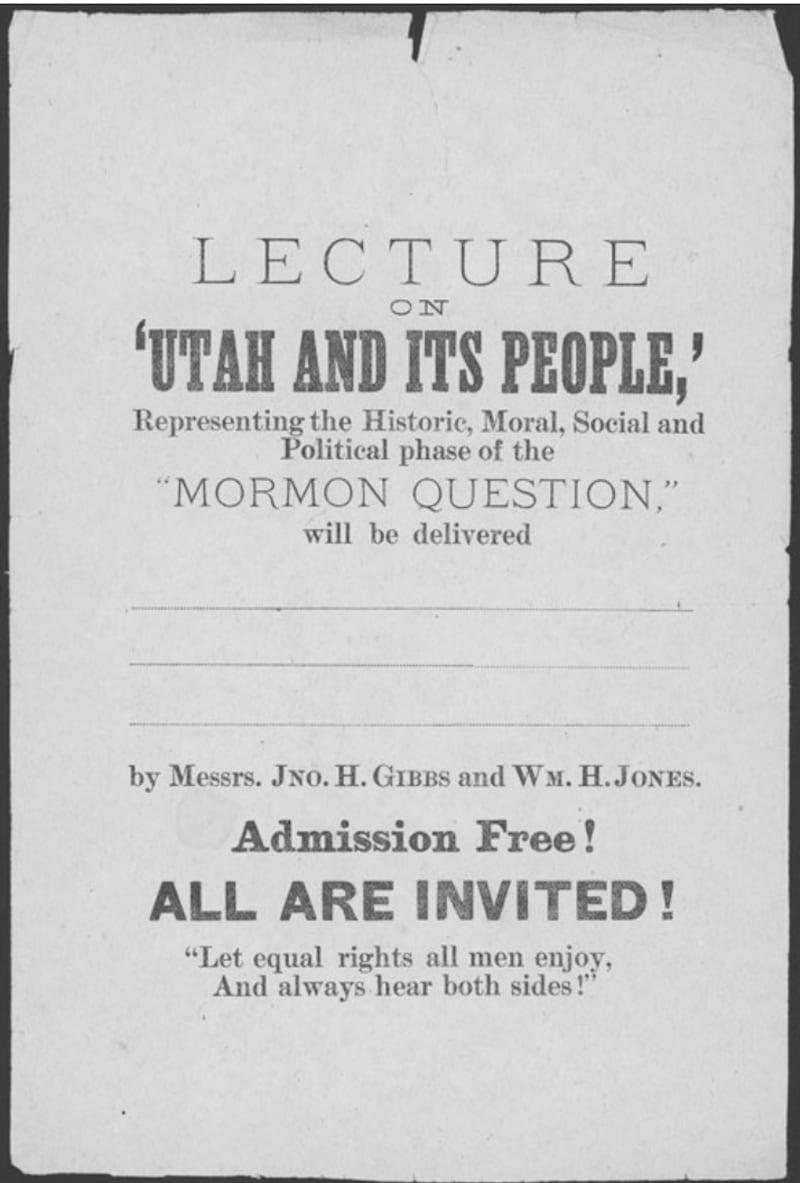
That increase in baptisms alone, however, was not enough to rationalize such murderous rage. According to Mason and other historians, local Tennessee residents had became radicalized by messaging portraying Latter-day Saints as dangerous and licentious.
For context, enforcement and political pressure against the Latter-day Saint practice of polygamy was at full throttle in 1884, which would be ended by President Wilford Woodruff’s manifesto six years later to comply with U.S. law.
Yet during this decade, hyperbolic rhetoric spread across the country accusing Latter-day Saints of being permissive and menacing — messaging Americans were predisposed to believe.
Mason noted that on March 15, 1884, The Salt Lake Tribune published, “A Red Hot Address” — purporting to be a transcript of a talk given the previous weekend from a “Bishop West” in Juab, Utah, calling for all-out war against the “Gentiles,” who were “eyesores in the sight of the Lord.”
This turned out to be a fake sermon, with no church meeting on that date and no “Bishop West” anywhere in the entire church, Mason says. Yet as he emphasizes, this did not prevent the incendiary remarks “from being reprinted and circulated around the nation” — including in many Southern newspapers.
Mason cites evidence that this exact newspaper article as used by Baptist preacher John Clayborn Vandiver in Lewis County, Tennessee (where Cane Creek is) “to stir up hostility against John Gibbs and the other Mormon elders laboring in the region.”
Elder William Jones would later say this incendiary address was “thrust at me wherever I went,” and that “quite a feeling of enmity was created owing to the false newspaper stories so industriously circulated.”

Not everyone believed the rhetoric. One mob member, Rube Mathis, purposely allowed Elder Jones, to get away — telling the missionary that he had been forced into the gang, and “had always been a friend to the Mormons and had never seen anything wrong in them” (According to Coates, Jones would send Matthis a Christmas card for years afterward).
Others have speculated on other influences on the tragedy. One early historian of the event, W.W. Pollock wrote in 1943 that “had all members of the mob been sober, there would have been no killing.”
The aftermath
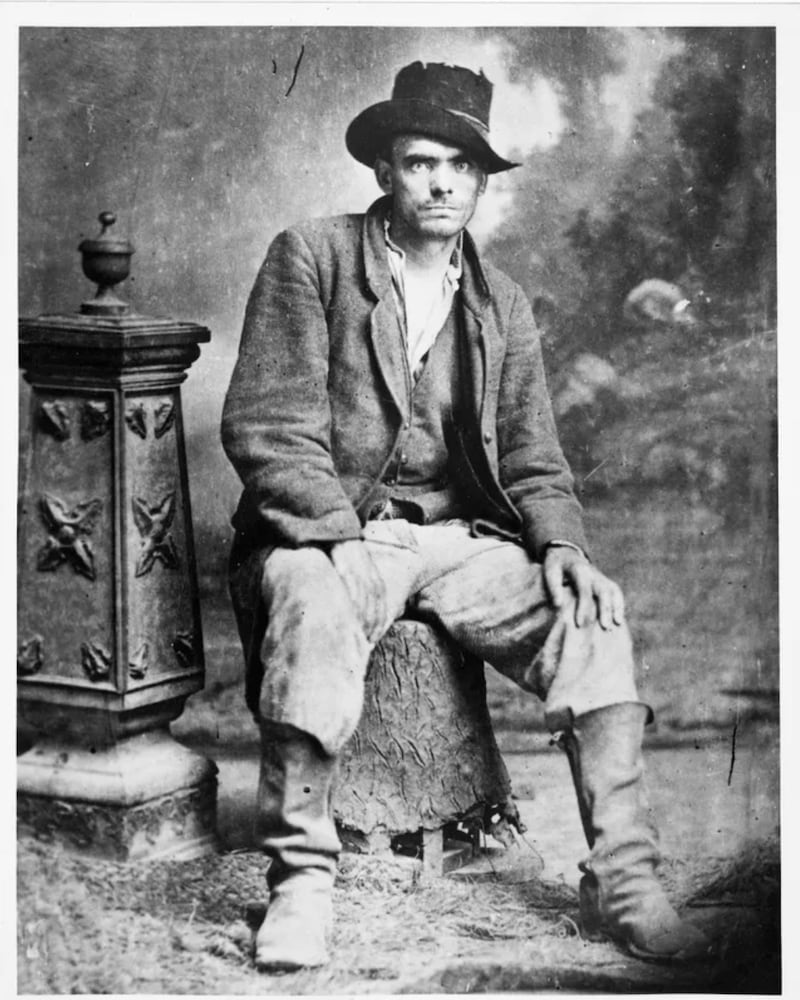
Soon after the tragedy, Brigham (B.H.) Roberts traveled to Cane Creek under disguise to retrieve the bodies. As the acting president of the mission, Roberts was well-known to vigilantes in the area, who staked armed guards planning to thwart his attempt.
Yet Roberts succeeded in reclaiming the bodies of the murdered missionaries by a convincing disguise: dressing as a tramp, wearing a hat with holes, shaving off his beard and mustache, and smearing soot across his face.
Two weeks after the massacre, notices illustrated with the drawing of a coffin appeared in four different counties — and in the Nashville Daily American newspaper — warning: “Mormons, leave! Members of the Latter Day Saints are notified to leave this county, and 30 days are given for you all to go …. If any are found in this county after 30 days, you will go like the others.”
Mason cited sources describing “masked men, armed with revolvers and wearing robes decorated with a red cross, skull and crossbones” seen riding near the Latter-day Saint settlements to enforce these orders.
After additional warnings were issued later that fall, it is estimated that hundreds of Latter-day Saints and “people who had been friendly” to the missionaries, were forced to leave. These exiles hastily closed down businesses and sold farms, Mason said, “usually far below their actual value.”
“The entire scene, with bedraggled Latter-day Saint families uprooted, piling their possessions in wagons and leaving their homes for an unknown future,” Mason said, was sadly reminiscent of earlier traumas in Missouri and Illinois.
It would be more than 60 years before the next Latter-day Saint baptism took place in Middle Tennessee.
Days after the massacre, an editorial in Nashville’s Daily American argued forcefully that “no matter” the prejudices held against Mormons, the county and state authorities could not afford to “ignore the crime of murder … Butchery of this savage character for any cause cannot be tolerated in a civilized country.”
A week after the massacre, however, The New York Times reported that “the authorities have taken no steps in the matter. Whether any attempt will be made to discover the perpetrators of this crime is a question concerning which there is much doubt. The general impression is that there will not be.”
The Times was correct. No one was ever arrested or prosecuted for the killings.
Actor Morgan Gunter, who played the lead role in “Cane Creek,” described his character as a “normal everyday man caught up in, deceived, and ultimately spurred on to irreversible action by violent rhetoric.” He expressed hope the short film would be a “reminder of the impact our words, language, and ideologies can have on those around us, and to be deeply wary of those who, through their language, would pit us against any other group or people, and paint them as, ‘the enemy.’”
Both deceased missionaries left behind young families — with 31-year old Gibbs leaving his wife Louisa with three children, ages 9, 7 and 5. Louisa lived as a widow for the next 43 years, learning to be a nurse and midwife to support her family.
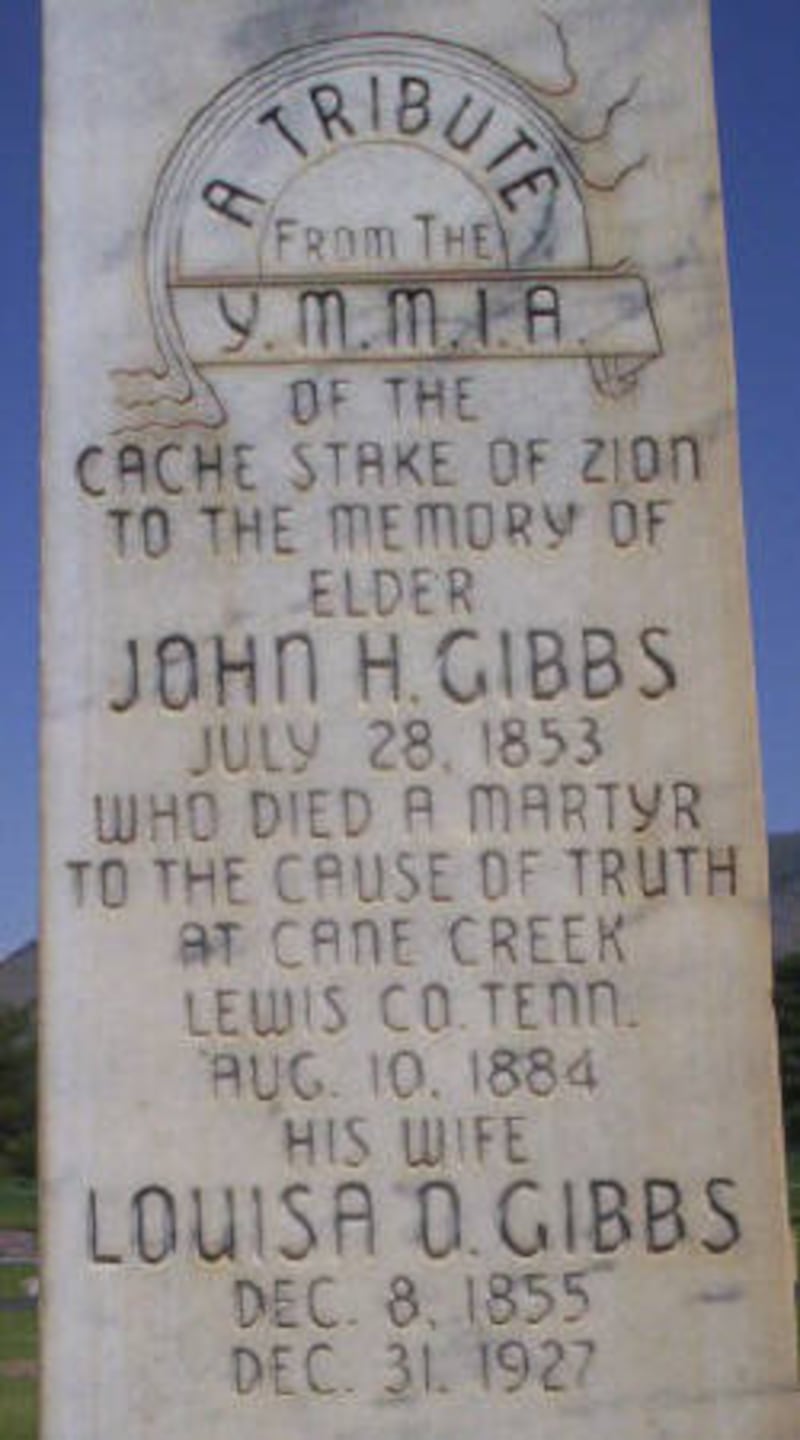
At the dedication of the monument erected to honor the memory of Elder Gibbs’ sacrifice, President Orson Smith said, “We are looking forward in fond anticipation of the day when we shall meet again. When we shall meet father, mother, wife, husband and little ones to part no more.”