



This article was first published in the ChurchBeat newsletter. Sign up to receive the newsletter in your inbox each Wednesday night.
All that’s left is the signature of Utah’s governor and a bill backed by The Church of Jesus Christ of Latter-day Saints and passed by the Legislature will become law.
It’s a deeply significant moment for a faith with a staunch policy of political neutrality.
That policy comes with major, vital exception.
“However, as an institution, (the church) reserves the right to address issues it believes have significant moral consequences or that directly affect the mission, teachings or operations of the church,” the policy states.
The church is wielding that exception right now over the crucial issue of deepfakes generated by artificial intelligence. It considers Utah Senate Bill 256 one of those issues of moral consequence.
The bill’s title is “Identity Protection Modifications,” and it reminds me of sitting in the meetinghouse adjacent to the Manhattan New York Temple and hearing Elder Jack N. Gerard issue a warning in a meeting of Latter-day Saint young adults.
It was 2019. It made a significant enough impression that it became the subject of a ChurchBeat newsletter back then.
“The experts tell us that within the next year or two that we will not, unless things change or unless we become highly skilled, we will not be able to discern what is true and what is reality in the form of videos, memes, etc., and what is not true,” said Elder Gerard, a General Authority Seventy.
Needless to say, he was right.
That same fall, Elder Gerard even entertained a BYU-Idaho devotional audience with two humorous, obviously doctored videos of then-university President Henry J. Eyring.
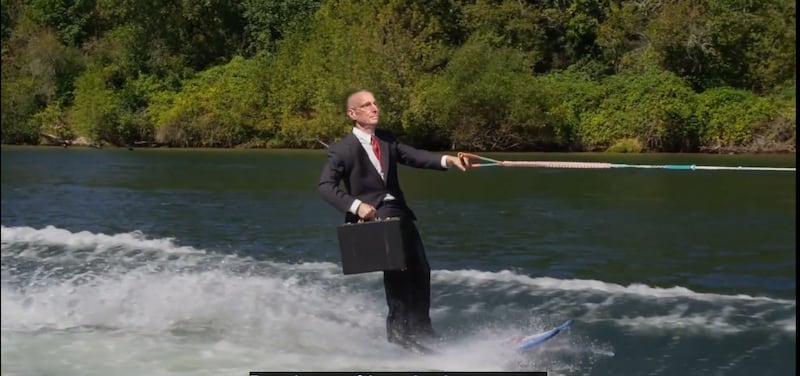
His videos weren’t deepfakes. They were obviously fake. Deepfakes are videos that are fake but appear completely real or, as Elder Gerard said, they have “the ability to take someone’s image or voice and make it appear to do or say something that they did not do or say.”
Church leaders understandably take the ramifications seriously enough that the church successfully lobbied for passage of SB256.
“This bill encourages transparency and avoids intentional deception brought about by AI or AI-generated images,” church spokesman Doug Andersen said in a statement provided to the Deseret News. “Using AI to give the false impression that someone has said or done something they have not said or done can harm people.”
If signed into law, SB256 would make AI-generated content a possible basis for defamation claims. It establishes a pathway for people whose identity is abused to sue for damages. That right would extend for 70 years after a person’s death.
So, keep your eyes out for news about whether Utah Gov. Spencer Cox has signed the bill into law.
The wait comes at the same time as the release of a story by Deseret News alum Sam Benson about Utah, AI, Big Tech, President Donald Trump and the church’s positions on AI. You can read it here.
Benson made a point that recalled a formative moment I had as a young reporter.
While working for the student newspaper at BYU in 1992, I covered a briefing for reporters about an initiative that would have legalized pari-mutuel gambling in Utah. I found myself in a room with professional journalists and high-ranking church officials, including a senior leader.
He explained why the church was taking a rare political stand on an issue of moral consequence. Gambling, of course, is something that church leaders have preached against since Joseph Smith. Utah voters eventually rejected that 1992 initiative.
Gambling is part of Benson’s new piece, because Utah leaders also have vowed to make prediction markets illegal in the state.
Benson pointed out that while social media and AI development are relatively new compared to gambling — and they also have great positive impacts, as apostles have noted frequently — it is clear that church and Utah leaders believe the dangers of their misuse can be equally damaging.
My Recent Stories
Women may serve in ward Sunday School presidencies, Church of Jesus Christ says in handbook update (March 18)
About the church
- The First Presidency encouraged church members to invite friends to Palm Sunday worship services on March 29.
- The First Presidency also is asking members to fast and pray for religious liberty on July 5 as part of celebrating America’s 250th birthday.
- The stats are in for donations at the Light the World Giving Machines this past Christmas season. Here’s a look by the numbers.
- Young Women President Emily Belle Freeman called pornography “the plague of our time.”
- A group of quintuplets are all serving missions at same time.
- March Madness in college basketball starts this week. Take a look at the Latter-day Saint players in the thick of it.
- Construction began on Guatemala’s fifth Latter-day Saint temple.
What I’m reading
- If you like BYU sports or are just interested in how the school is now integrating players who aren’t Latter-day Saints, you really will be interested in this story: The strong message AJ Dybantsa and Bear Bachmeier sent while attending this BYU class.
- Who was St. Patrick? A ‘sinner’ turned patron saint of the land that first enslaved him.
- Men and women talked at a conference about finding lasting freedom from pornography.
- Research finds regular church attendance is associated with lower likelihood of mental health diagnoses.
- The most significant obstacle to peace? Leaders who don’t want peace.